
- Home
- Company
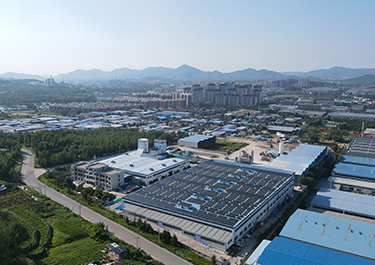 Our FactoryWe have a team of more than 30 talented geotechnical material R&D experts and a 30,000 square meter advanced modern intelligent manufacturing plant.
 - Products
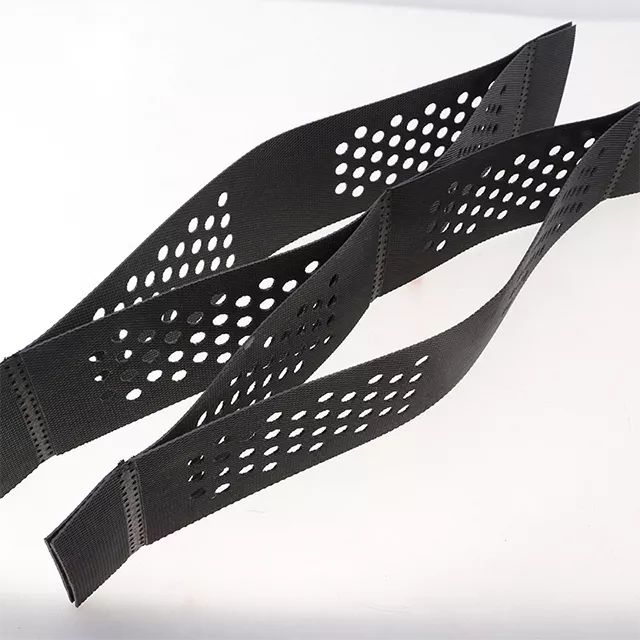 Geocell is a three-dimensional mesh structure made of high-strength polymer sheets (such as HDPE, PP, etc.) through ultrasonic welding. When unfolded, it presents a three-dimensional grid shape.
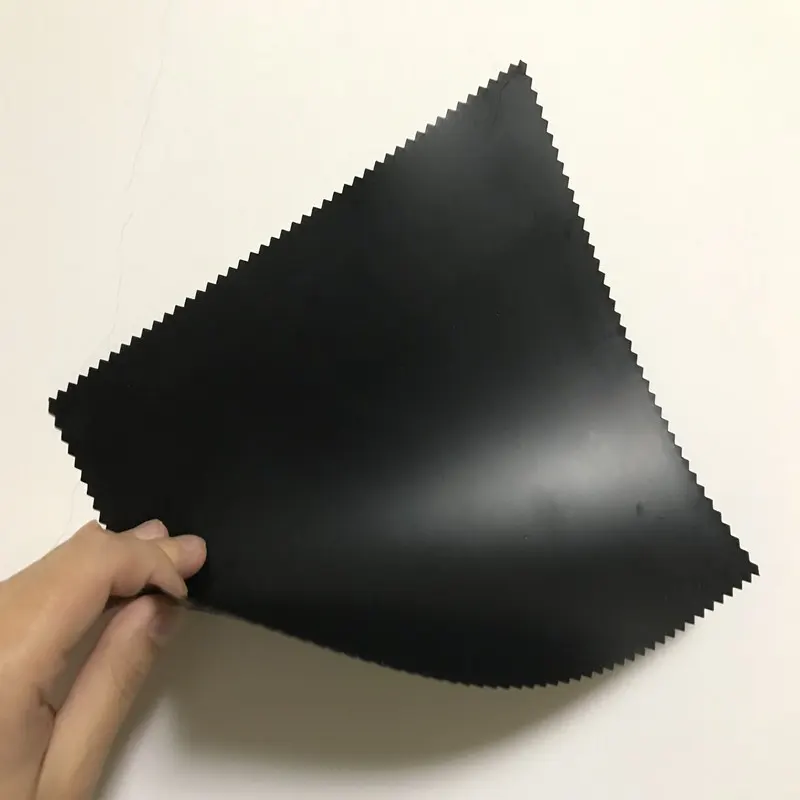 Geomembrane is a thin, extremely low-permeability sheet material made from high-molecular-weight polymers (high-density polyethylene, linear low-density polyethylene).
 - Blog
- Contacts
Woven vs Nonwoven Geotextile: 5 Applications You Need to Know


Discover 5 critical applications where woven vs nonwoven geotextile performance makes all the difference. Learn which fabric suits separation, drainage, reinforcement, filtration, and protection. Lianxiang Group supplies high-quality geotextiles for civil engineering projects worldwide.
When specifying geotextile for a civil engineering or environmental project, one of the first—and most important—decisions you'll face is whether to choose woven or nonwoven fabric.
Both materials belong to the geotextile family, but their manufacturing processes, physical properties, and ideal applications are vastly different. Selecting the wrong type can lead to clogging, inadequate reinforcement, premature failure, or unnecessary project costs.
This guide breaks down the fundamental differences between woven and nonwoven geotextiles, followed by 5 key applications where making the right choice is critical.
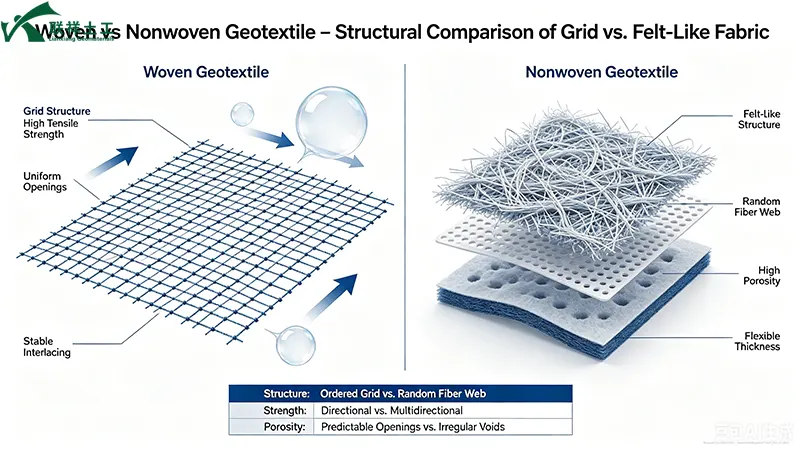
The Core Difference: Manufacturing Process
Woven geotextiles are manufactured by weaving yarns (typically polypropylene or polyester) together on a loom—similar to how clothing fabric is made. This creates a regular, grid-like structure with high tensile strength and low elongation. Woven geotextiles are characterized by their high load-bearing capacity but limited permeability.
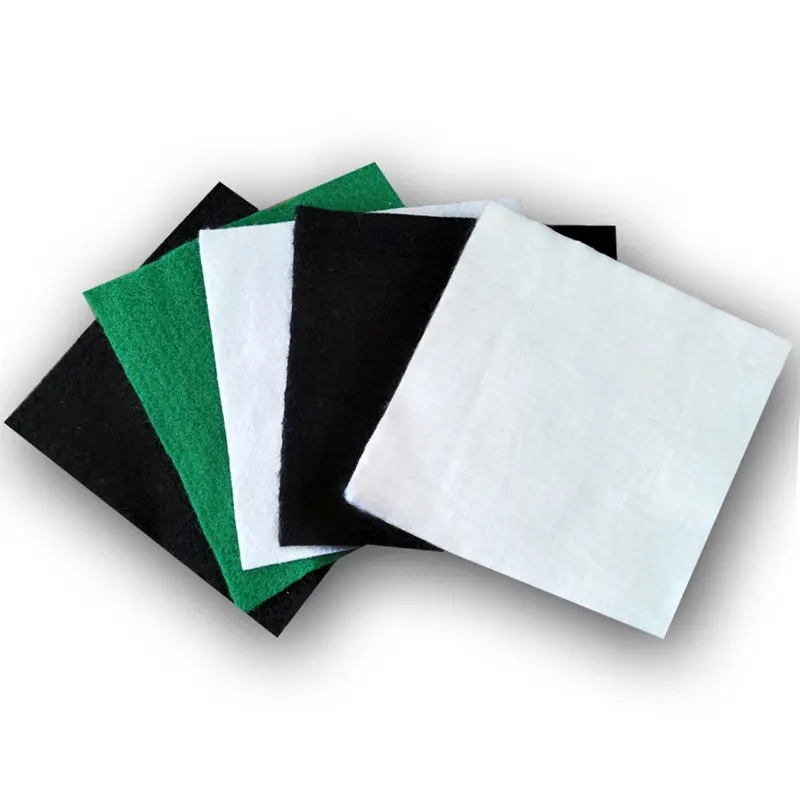
Nonwoven geotextiles are manufactured by bonding synthetic fibers (polypropylene or polyester) together through mechanical needling, thermal bonding, or chemical adhesion. This creates a random, felt-like structure with excellent permeability, filtration capability, and flexibility, but lower tensile strength compared to woven fabrics.
| Property | Woven Geotextile | Nonwoven Geotextile |
| Manufacturing | Weaving yarns on a loom | Needling, thermal, or chemical bonding |
| Structure | Regular grid (like canvas) | Random felt-like (like felt) |
| Tensile strength | High | Moderate |
| Elongation | Low | High |
| Permeability | Moderate–low | High |
| Filtration | Limited | Excellent |
| Flexibility | Low | High |
| Puncture resistance | Moderate | Good |
Application 1: Separation – Keeping Layers Distinct
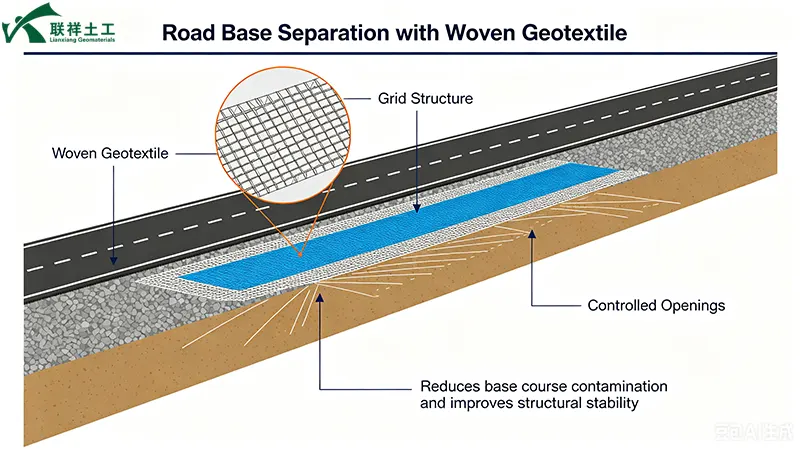
The need: In road construction and earthworks, different soil layers often need to remain separate to prevent intermixing. Without separation, aggregate can sink into soft subgrade, leading to loss of bearing capacity and premature pavement failure.
Woven geotextile is the preferred choice for separation applications. Its high tensile strength and low elongation make it ideal for stabilizing granular layers over soft soils. The fabric acts as a barrier, preventing aggregate from punching into the subgrade while allowing the reinforced layer to support traffic loads.
Nonwoven geotextile can also be used for separation, but it is generally less effective under heavy loads due to its lower tensile strength. It may be suitable for light-duty separation where filtration is also required.
Typical applications:
- Road base separation over soft subgrade
- Railway ballast separation
- Parking lot construction
- Working platforms
Best choice: Woven geotextile (for load-bearing separation)
Application 2: Drainage – Channeling Water Away
The need: Water accumulation in soil can destabilize structures, cause frost heave, and reduce bearing capacity. Drainage geotextiles allow water to flow through while preventing soil particles from migrating into drainage systems.
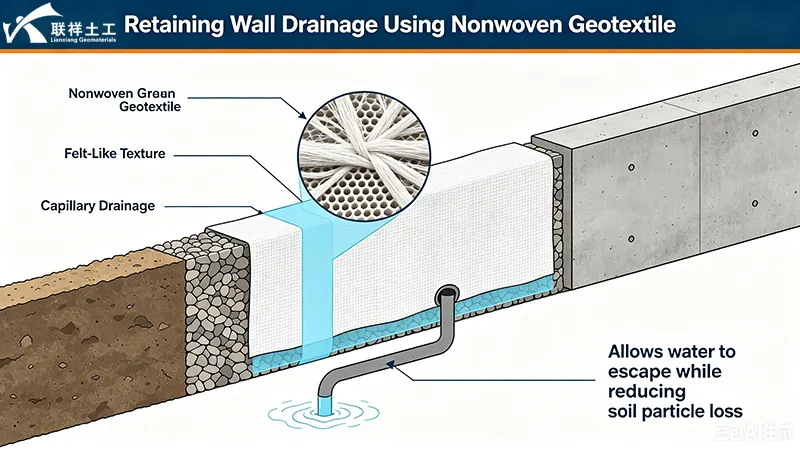
Nonwoven geotextile excels in drainage applications. Its high permeability (cross-plane flow) and random fiber structure allow water to pass through freely while retaining fine soil particles. The thickness and porosity of nonwoven fabrics make them highly effective as drainage filters in retaining walls, French drains, and sub-surface drainage systems.
Woven geotextile has limited permeability due to its tight weave. While water can pass through the grid openings, it generally cannot match the flow capacity of nonwoven fabrics. Woven geotextiles are rarely used as primary drainage filters.
Typical applications:
- Retaining wall drainage systems
- French drains and trench drains
- Sub-surface drainage (agricultural and sports fields)
- Highway edge drains
Best choice: Nonwoven geotextile
Application 3: Filtration – Letting Water Through, Keeping Soil In
The need: Filtration requires the geotextile to allow water to pass from the soil into a drainage layer while preventing fine soil particles from being washed away. This is critical for preventing clogging of drainage systems and maintaining soil stability.
Nonwoven geotextile is the clear winner for filtration. Its random fiber network creates a three-dimensional pore structure that effectively retains soil particles while allowing water to flow through. The needled or thermally bonded structure provides excellent soil retention and permeability balance – exactly what filtration demands.
Woven geotextile has larger, more uniform openings that may allow fine soil particles to pass through, making it unsuitable for most filtration applications. Under certain conditions, woven fabrics can become clogged or permit soil migration.
Typical applications:
- Underdrains for landfill caps
- Retaining wall filter layers
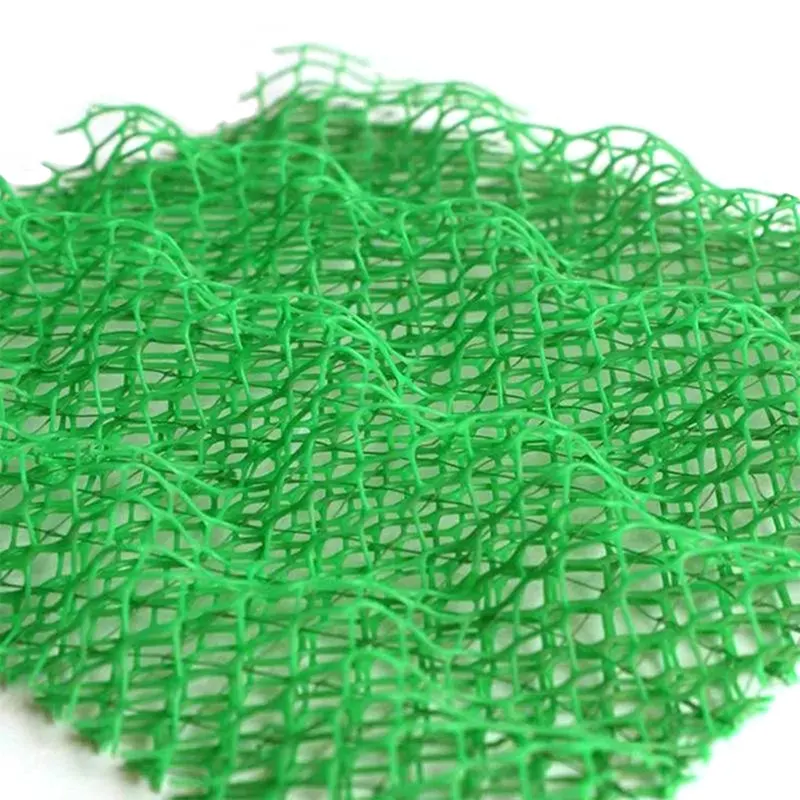
- Erosion control blankets
- Drainage blankets under pavements
Best choice: Nonwoven geotextile
Application 4: Reinforcement – Strengthening Weak Soils
The need: When subgrade soils lack sufficient bearing capacity, reinforcement geotextiles provide tensile strength to distribute loads and limit deformation. This is particularly important in unpaved roads, working platforms, and steep slopes.
Woven geotextile is the go-to material for soil reinforcement. Its high tensile strength and low elongation allow it to carry significant loads and distribute them across a wider area. The grid-like structure interlocks with aggregate, creating a mechanically stabilized layer. Woven geotextiles are manufactured with high-modulus yarns that provide the strength needed for heavy-load applications.
Nonwoven geotextile has limited tensile strength compared to woven fabrics. While it can provide some reinforcement in light-duty applications, it is not suitable for heavy-load reinforcement where high strength is required.
Typical applications:
- Unpaved road reinforcement
- Crane pads and working platforms
- Steep slope stabilization
- Embankment reinforcement over soft soil
- Heavy-duty haul roads
Best choice: Woven geotextile (for heavy reinforcement)
Application 5: Protection – Cushioning and Impact Resistance
The need: Protection geotextiles are used to shield other geosynthetics or sensitive surfaces from mechanical damage – punctures, abrasion, or impact from sharp objects. This is especially critical when geomembranes are placed over rough subgrades.
Nonwoven geotextile is the preferred choice for protection applications. Its thick, felt-like structure provides excellent cushioning and distributes concentrated loads over a wider area, reducing the risk of punctures. The random fiber network absorbs impact energy and protects the underlying geomembrane from abrasion and puncture.
Woven geotextile has limited protection capabilities due to its thin, flat structure. It does not provide significant cushioning and offers minimal puncture resistance compared to nonwoven fabrics.
Typical applications:
- Geomembrane protection (landfills, ponds, mining)
- Cushion layer under hard armor (riprap, concrete blocks)
- Pipeline protection
- Subgrade protection during construction
Best choice: Nonwoven geotextile
Quick Reference: Woven vs Nonwoven by Application
| Application | Woven Geotextile | Nonwoven Geotextile |
| Separation | Excellent – high strength, low elongation | Suitable for light-duty only |
| Drainage | Poor – limited permeability | Excellent – high flow capacity |
| Filtration | Poor – may allow soil migration | Excellent – optimal soil retention |
| Reinforcement | Excellent – high tensile strength | Light-duty only |
| Protection | Poor – minimal cushioning | Excellent – thick, impact-absorbing |
How to Choose? – A Simple Decision Framework
Choose Woven Geotextile when:
- Your primary need is soil reinforcement under heavy loads
- You require high tensile strength and low elongation
- The application involves separation of aggregate layers over soft soil
- You are building unpaved roads, working platforms, or haul roads
- Filtration and drainage are not the primary requirements
Choose Nonwoven Geotextile when:
- Your primary need is filtration or drainage
- You need protection for geomembranes or sensitive surfaces
- The application involves retaining wall drainage or French drains
- You require flexibility and puncture resistance
- The load conditions are light to moderate
Final Thoughts
Woven and nonwoven geotextiles are not interchangeable – they serve distinct roles in geotechnical engineering. Choosing between them requires a clear understanding of the project's primary function: reinforcement and separation (woven) or filtration, drainage, and protection (nonwoven).
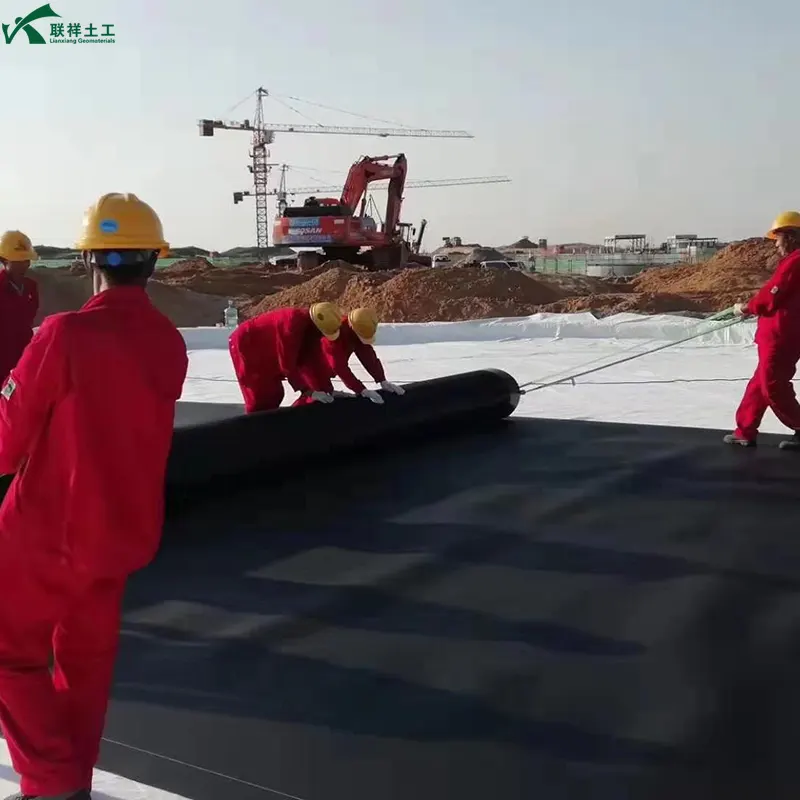
In many large-scale projects, both types are used in different layers to achieve optimal performance. For example, a landfill liner system might use a woven geotextile for reinforcement beneath the subgrade, and a nonwoven geotextile above the geomembrane for protection and drainage.
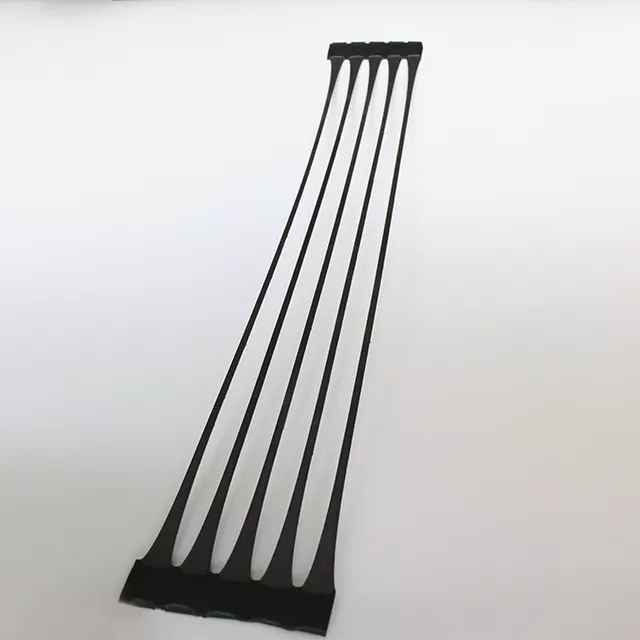
Lianxiang Group supplies both woven and nonwoven geotextiles, along with geomembranes, geocells, and geogrids for civil and environmental projects worldwide. Our technical team can help you select the right geotextile type based on your site conditions, load requirements, and performance goals. Contact us for free samples, technical data sheets, or a customized solution.
Written by
SHANDONG LIANXIANG ENGINEERING MATERIALS CO., LTD.
Kyle Fan
WhatsApp:+86 139 5480 7766
Email:admin@lianxiangcn.com
-
WhatsApp
-
E-MailE-Mail:admin@lianxiangcn.com
-
WeChatWeChat:18554180188