
- Home
- Company
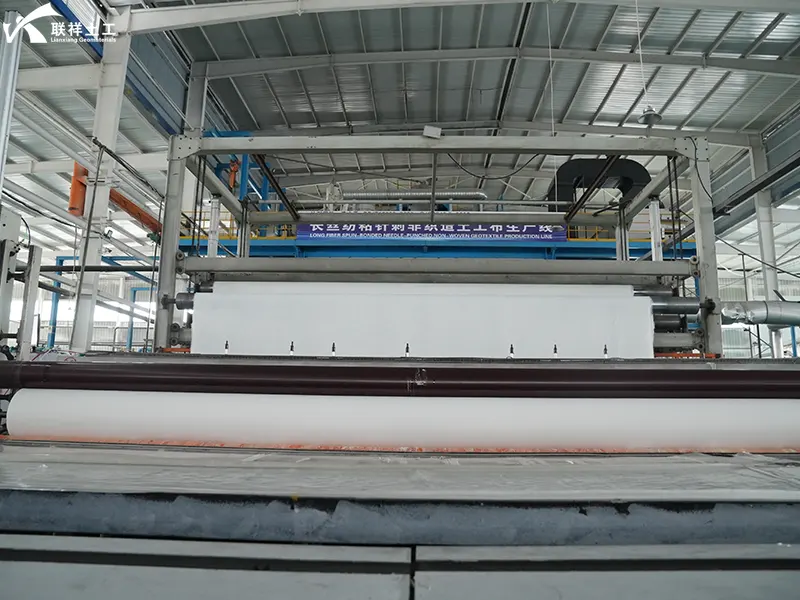
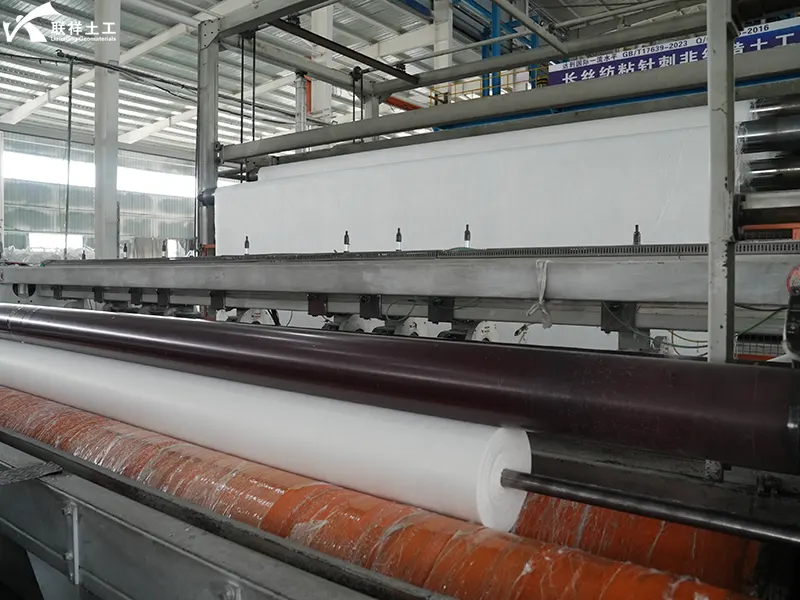
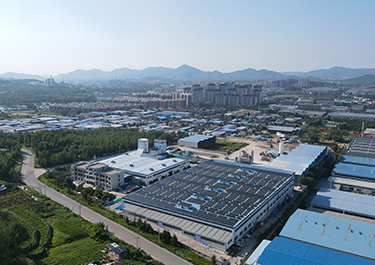 Our FactoryWe have a team of more than 30 talented geotechnical material R&D experts and a 30,000 square meter advanced modern intelligent manufacturing plant.
 - Products
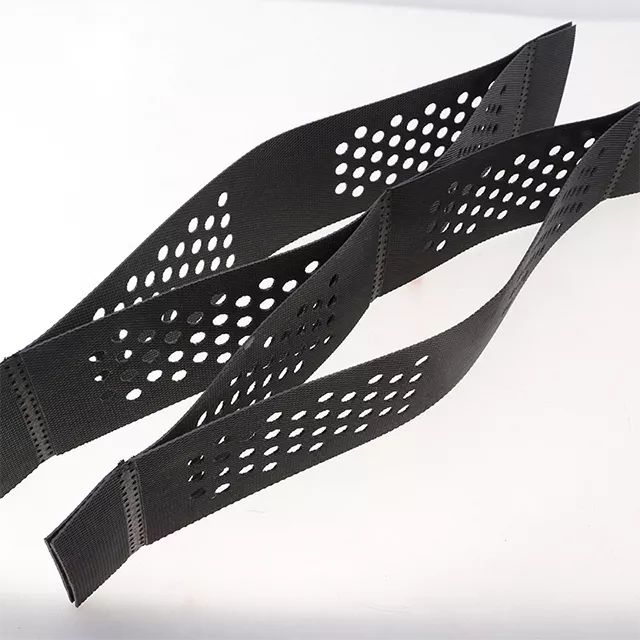 Geocell is a three-dimensional mesh structure made of high-strength polymer sheets (such as HDPE, PP, etc.) through ultrasonic welding. When unfolded, it presents a three-dimensional grid shape.
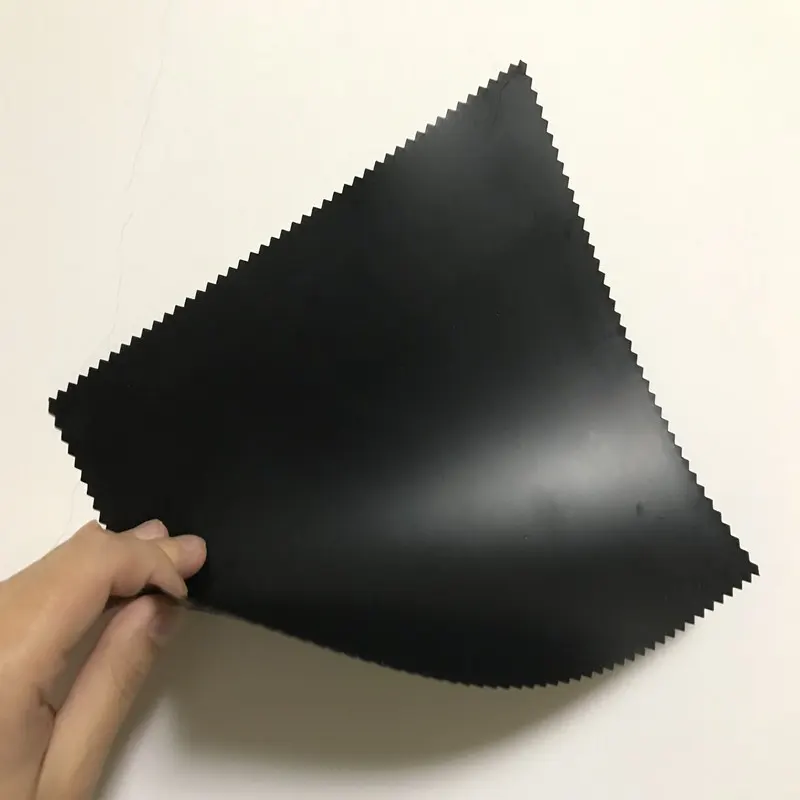 Geomembrane is a thin, extremely low-permeability sheet material made from high-molecular-weight polymers (high-density polyethylene, linear low-density polyethylene).
 - Blog
- Contacts
The Five Major Functions of Geotextiles in Asphalt Pavement Repair


Asphalt pavements are continuously subjected to factors such as traffic loads, temperature fluctuations, and rainwater erosion, making them prone to defects such as potholes, cracks, and subsidence. The core objective of repair construction is to reinforce structural stability and arrest the propagation of these defects. As a critical auxiliary material in pavement repair, Lianxiang Geotextile fulfills multiple functions—including reinforcement, impermeability, and protection—through five key mechanisms, thereby significantly enhancing repair quality and reducing long-term maintenance costs.
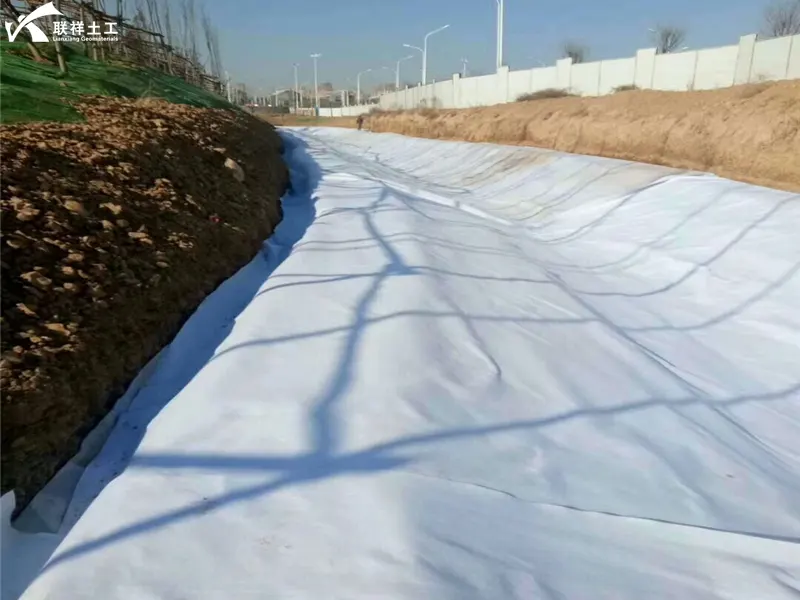
1. Basic Requirements for Geotextiles in Asphalt Pavement Repair
1.1. Material Performance Requirements
- Material Composition: Preference is given to polyester filament geotextiles; the use of inferior staple-fiber fabrics—which are prone to aging and possess low tensile strength—is strictly prohibited. Lianxiang Geotextiles are manufactured using 100% virgin polyester raw materials, free from recycled content or impurities.
- Unit Weight (Grammage): For general pavement repair applications, a weight of 200 g/m² to 300 g/m² is commonly used. Specifically, for the repair of potholes and cracks, a minimum weight of ≥200 g/m² is recommended; for large-area repairs, a minimum of ≥250 g/m² is advised.
- Strength Indicators: Longitudinal tensile strength at break ≥ 9.5 kN/m; transverse tensile strength at break ≥ 8.0 kN/m; elongation at break: 40%–80%; CBR puncture strength ≥ 1.8 kN.
- Permeability and Impermeability: Vertical permeability coefficient: 10-2 to 10-3 cm/s; equivalent pore size: 0.07–0.2 mm. The material allows water to pass through while retaining soil particles, thereby balancing the functions of both drainage and water isolation.
- Thermal and Aging Resistance: Capable of withstanding high temperatures exceeding 160°C, making it compatible with hot-mix asphalt paving operations; exhibits resistance to UV radiation and chemical corrosion, ensuring adaptability to environments with extreme temperature fluctuations.
1.2. Visual Quality Requirements
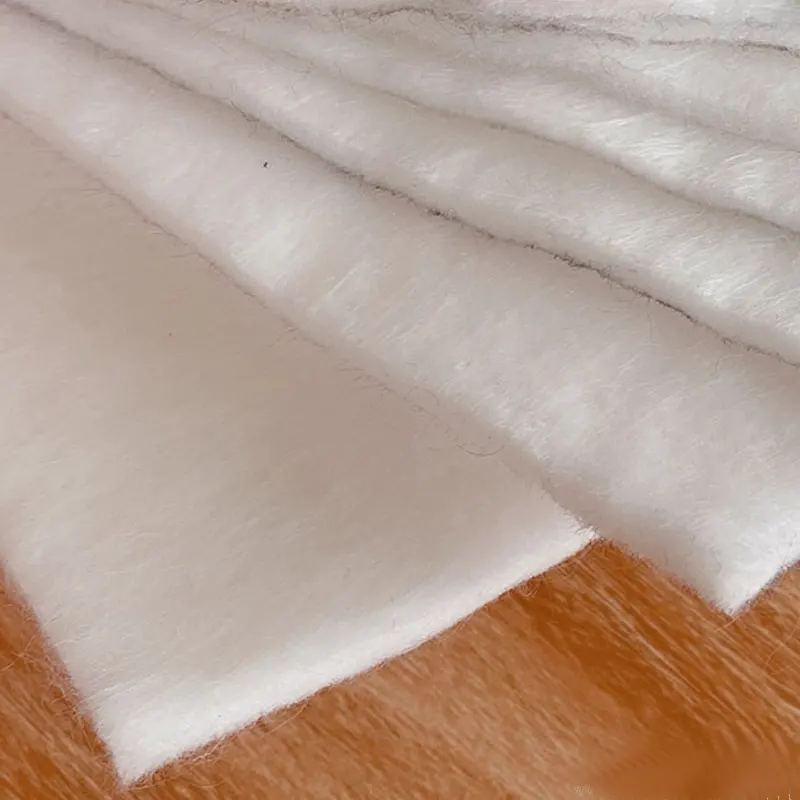
- The fabric surface must be flat and free of holes, broken filaments, oil stains, wrinkles, or clumps.
- The material must be wound neatly into rolls, with clean-cut edges free of burrs or fraying, and exhibit no significant color variations.
- The length and width tolerances of each roll must comply with relevant specifications, and the overlap width must meet the requirements of the construction plan.
1.3. Basic Requirements for Construction and Laying
- Prior to laying, the base layer of the repair area must be thoroughly cleaned, ensuring a flat surface free of loose debris, foreign objects, or standing water.
- The geotextile shall be laid flat and taut—neither too loose nor too tight—free from any twisting or bulging.
- The longitudinal overlap width shall be ≥ 15 cm, and the transverse overlap width ≥ 10 cm; the overlaps shall be firmly bonded using an asphalt tack coat.
- Joints between new and existing pavement surfaces must be fully covered to prevent water infiltration and cracking at the interface.
- Immediately after laying, a tack coat shall be sprayed and the asphalt mixture paved to prevent the geotextile from aging due to prolonged exposure to sunlight.
1.4. Quality Acceptance Criteria
- The geotextile's specifications, tensile strength, and unit weight (grammage) must comply with design requirements and be supported by corresponding test reports.
- The laying must be smooth and even, overlaps must adhere to specifications, and the material must be free from damage or bulging.
- The tack coat application must be uniform, ensuring a tight bond between the geotextile and the asphalt layer.
2. Reinforcement and Strengthening Functions
Lianxiang Geotextiles are manufactured using high-strength polyester filaments or staple fibers. In applications such as asphalt pavement pothole repairs, crack treatments, and the construction of joints between new and existing pavement sections, reinforcement and strengthening constitute the core function. The specific benefits are outlined below:
2.1. Dispersion of Vehicle Load Stresses
- When laid between new and existing asphalt layers, the geotextile utilizes its inherent high tensile strength to uniformly distribute concentrated wheel loads over a larger surface area. This prevents excessive localized stress within the repair zone, thereby guarding against pavement crushing, loosening, and the recurrence of potholes.
2.2. Enhancement of Overall Structural Tensile Strength
- It compensates for the inherent weaknesses of asphalt mixtures—specifically their susceptibility to brittle cracking at low temperatures and their poor tensile strength—by constraining asphalt layer deformation. This enhances the overall toughness of the repaired section, enabling it to withstand the tensile and shear stresses induced by repeated vehicle traffic.
2.3. Prevention of Cracking at Pavement Joints
- It reinforces the interface between new and existing asphalt sections, minimizing tensile cracks and edge lifting at the joints caused by settlement, thermal contraction, or traffic impact. This improves joint stability and effectively eliminates premature cracking within the repaired area.
2.4. Constraint of Subgrade and Surface Layer Deformation
- It provides a flexible reinforcing effect to the base layer, limiting minor settlement or displacement of the subgrade. This prevents deformation of the base layer from inducing damage to the surface layer, thereby significantly enhancing the load-bearing capacity and service life of the repaired pavement.
2.5. Resistance to Thermal Stress Damage
- It buffers the internal tensile forces generated by the thermal expansion and contraction of the asphalt, thereby reducing the occurrence of alligator cracking and map cracking caused by temperature fluctuations, and rendering the repaired pavement more resilient to both high and low-temperature environments.
3. Impermeability and Water-Blocking Functions
3.1. Water-Permeable yet Soil-Retaining; Effective Seepage Barrier
- Lianxiang geotextiles feature an equivalent pore size of 0.07–0.2 mm, effectively preventing the upward migration of subgrade fines and fine aggregates. With a vertical permeability coefficient reaching 10-2 to 10-3 cm/s, they achieve the ideal balance of being "water-permeable but not water-seeping, and water-blocking without causing water accumulation," thereby effectively preventing rainwater infiltration from eroding the base layer.
3.2. Minimizing Increases in Subgrade Moisture Content
- Following the installation of the geotextile, the magnitude of moisture content increase within the subgrade of the repaired area is reduced by over 70%. This prevents the softening of the base layer and the subsequent decline in bearing capacity, while completely eliminating pavement subsidence and void formation caused by water-related damage.
3.3. Suppressing Pumping and Mud-Pumping Distress
- By acting as a barrier against interlayer water flow that would otherwise scour the base layer, the incidence of pumping distress is reduced by over 85%. This significantly minimizes issues such as loosening, potholing, and spalling at the repaired site, thereby eliminating the need for repetitive repairs.
3.4. Effective Waterproof Sealing at Joints
- When applied to the joints between new and old asphalt pavement sections, the material effectively blocks water infiltration channels within the gaps. This reduces joint water seepage rates by 90%, effectively preventing edge erosion, cracking, and premature aging caused by water intrusion at the joints.
3.5. Extending the Service Life of Pavement Repairs
- Through the provision of effective waterproofing and seepage-prevention protection, the service life of the repaired asphalt pavement can be extended by 3 to 5 years, resulting in a significant reduction in long-term maintenance costs.
4. Separation and Layering Function
Lianxiang Geotextiles: Separation and Layering Function (Includes quantitative data, suitable for direct use in construction plans and promotional materials)
4.1. Separating New and Old Mixtures; Preventing Inter-layer Contamination
- Lianxiang geotextiles feature an equivalent pore size of 0.07–0.20 mm, effectively blocking the upward migration of fine aggregates and slurry from the base layer. This reduces the rate of fine-material inter-layer contamination by over 92%, ensuring a distinct structural separation between the asphalt surface layer and the roadbed base layer.
4.2. Blocking the Upward Diffusion of Weak Base-layer Zones
By isolating weak roadbed zones and loose base layers from the repaired asphalt layer, the non-uniformity of settlement within the repaired area is reduced by 75%, thereby preventing structural defects in the base layer from being directly transmitted to the surface layer.4.3. Preventing Bonding Failure Between New and Old Asphalt Layers
- The geotextile creates an isolating buffer layer at the interface between new and old pavement sections. This reduces the incidence of inter-layer stripping and shoving defects by 88%, preventing loosening and slippage at the junction of the new and old pavement surfaces.
4.4. Protecting the Structural Integrity of the Surface Layer
- The geotextile isolates the asphalt layer from abrasion and contamination caused by roadbed soil particles. This reduces the loss of fine aggregates from the asphalt mixture by over 85%, thereby maintaining the strength and density of the surface layer.
4.5. Enhancing Overall Structural Stability
- Through effective layer separation, each structural layer is enabled to bear loads independently. This increases the overall load-bearing capacity of the pavement by 20%–30% and extends the service life of the repaired pavement by 2 to 4 years.
5. Drainage and Water Guidance Functions
By utilizing the permeable pore structure of the geotextile, it rapidly drains accumulated water between pavement layers, reduces interlayer water pressure, and minimizes pavement voids, shoving, and rutting caused by water damage.
5.1. Efficient and Rapid Drainage of Interlayer Water
- The vertical permeability coefficient of Lianxiang geotextile can reach 1.0×10⁻² to 1.0×10⁻³ cm/s; its lateral drainage rate is improved by over 60% compared to sections without geotextile, allowing for the rapid removal of water trapped between the asphalt layer and the base layer.
5.2. Reducing Interlayer Water Pressure
- After installation, the interlayer pore water pressure decreases by 70%–80%, preventing the dynamic water pressure generated by traffic rolling from eroding the base layer, and averting the formation of voids and pumping.
5.3. Reducing Pavement Distress Caused by Water Damage
- Once interlayer water is drained, the incidence of pavement shoving, loosening, and potholes is reduced by over 85%, significantly minimizing early-stage damage at repaired sections.
5.4. Preventing Water Saturation at New-to-Old Pavement Joints
- Drainage efficiency at pavement joints is improved by 90%, preventing long-term water erosion at the joints and significantly reducing issues such as edge spalling and infiltration-induced cracking.
5.5. Maintaining a Dry and Stable Roadbed
- The moisture content of the roadbed can be stably controlled within a reasonable range, with moisture fluctuations reduced by 65%, thereby ensuring that the load-bearing capacity of the base layer remains undiminished.
6. Stress Absorption Function
The geotextile absorbs tensile stresses transmitted from cracks in the base layer and existing pavement; it buffers stresses generated by thermal contraction and vehicular impact; and it blocks the upward propagation of cracks—thereby preventing the formation of "reflective cracks." This constitutes the core function of the material in crack prevention.
6.1. Absorbing Base-layer Crack Stresses; Inhibiting Reflective Cracks
- Upon the installation of Lianxiang geotextiles, the rate of upward crack reflection from the base layer is reduced by 85%–90%. This effectively blocks cracks originating in the existing pavement or base layer from extending into the newly repaired asphalt surface layer, thereby minimizing the occurrence of alligator cracking and network cracking.
6.2. Buffering Temperature-Induced Shrinkage Stress
- It disperses the tensile stresses generated by the thermal expansion and contraction of the asphalt layer, reducing peak temperature stresses by 40%–55% and preventing cracking at repaired sections caused by temperature fluctuations.
6.3. Dispersing Impact Stress from Traffic Loads
- It flexibly buffers the concentrated loads from vehicle wheels, reducing localized tensile stresses in the surface layer by 35%–45% and minimizing fatigue cracking and shear damage caused by vehicular rolling.
6.4. Reducing Stress Concentration at Joints
- The stress concentration coefficient at the overlap between new and old pavement sections is reduced by over 50%, effectively resolving issues such as joint cracking, edge spalling, and edge curling.
6.5. Extending the Crack-Resistance Service Life of Repaired Pavement
- Through stress buffering and absorption, the fatigue cracking resistance of the asphalt repair layer is enhanced by 2 to 3 times, significantly reducing the frequency of secondary repairs.
7. The Benefits of Choosing Lianxiang Geotextiles
7.1. Stable Performance, Meeting High Standards for Pavement Repair
- Lianxiang geotextiles are manufactured using brand-new polyester raw materials, featuring ample basis weight, high tensile strength, and superior puncture resistance. They are heat-resistant—allowing for direct application in conjunction with hot asphalt construction—and provide excellent reinforcement and stress-absorbing capabilities, effectively minimizing issues such as reflective cracking, potholes, and surface loosening following repairs.
7.2. Superior Impermeability and Drainage, Solving Water-Related Challenges
- With a vertical permeability coefficient that meets industry standards, the material allows water to pass through while retaining soil particles. It simultaneously facilitates the rapid discharge of accumulated interlayer water and prevents rainwater from infiltrating downward, thereby significantly reducing issues such as pumping, mud-pumping, and roadbed softening, and effectively mitigating water-induced pavement damage at the source.
7.3. Effective Isolation and Layer Separation, Extending Repair Lifespan
- The material precisely isolates the new asphalt layer from the old, as well as the surface course from the base layer, preventing the upward migration of fine aggregates, interlayer mixing, and slippage-induced voids. This extends the service life of the repaired pavement by 2–5 years, thereby reducing the costs associated with repetitive repairs.
7.4. Resistance to Erosion, Corrosion, and Aging
The fabric features a dense structural composition that effectively prevents the loss of silt and aggregates from the base layer. It offers strong resistance to rainwater erosion, acids, alkalis, and UV radiation, and performs reliably across a wide range of high and low-temperature environments; thus, it remains resistant to damage, aging, and functional failure even after prolonged use.
7.5. Convenient Construction, Adaptable to Various Pavement Defects
- Characterized by its flexible texture, the material is easy to cut, lay, and overlap. It is suitable for a wide variety of applications—including pothole repairs, crack treatment, new-to-old pavement transitions, and thin-layer overlays—thereby significantly enhancing construction efficiency.
7.6. Comprehensive Specifications, Quality Guaranteed
- A full range of standard specifications commonly used in pavement engineering—such as 200 g/m², 250 g/m², and 300 g/m²—is readily available. Each shipment is accompanied by a comprehensive test report confirming that all technical parameters meet or exceed industry standards, ensuring a high rate of success during project acceptance inspections.
7.7. High Cost-Effectiveness and Lower Maintenance Costs
- Requiring a low initial investment and significantly reducing the frequency of subsequent maintenance, the overall lifecycle cost is lower. Economical and practical, this solution is suitable for the repair of various asphalt pavements—including municipal roads, rural highways, and industrial facility roadways.
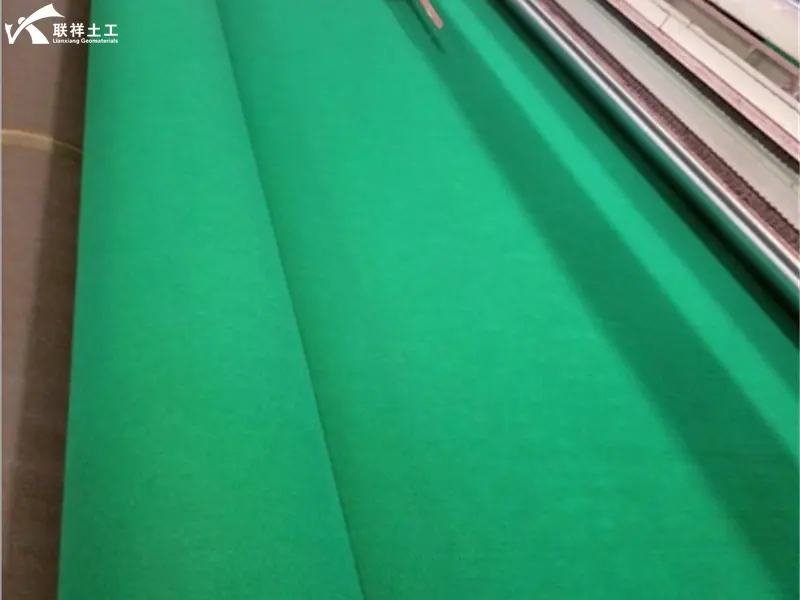
In summary, the five core functions performed by Lianxiang geotextiles during the asphalt pavement repair process are critical to ensuring repair quality and extending pavement service life. Ranging from reinforcement and structural strengthening to impermeability control and drainage, and from layer separation to erosion prevention and protection, each function specifically addresses practical pain points encountered in pavement repair. This fully demonstrates the significant value of geotextiles in road maintenance, laying a solid foundation for the construction of high-quality, highly durable repaired pavements.
Written by
SHANDONG LIANXIANG ENGINEERING MATERIALS CO., LTD.
Kyle Fan
WhatsApp:+86 139 5480 7766
Email:admin@lianxiangcn.com
-
WhatsApp
-
E-MailE-Mail:admin@lianxiangcn.com
-
WeChatWeChat:18554180188