
- Home
- Company
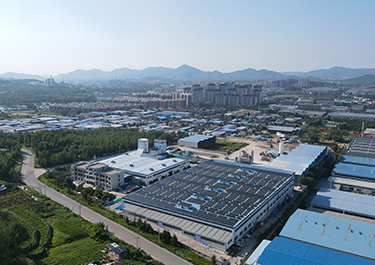 Our FactoryWe have a team of more than 30 talented geotechnical material R&D experts and a 30,000 square meter advanced modern intelligent manufacturing plant.
 - Products
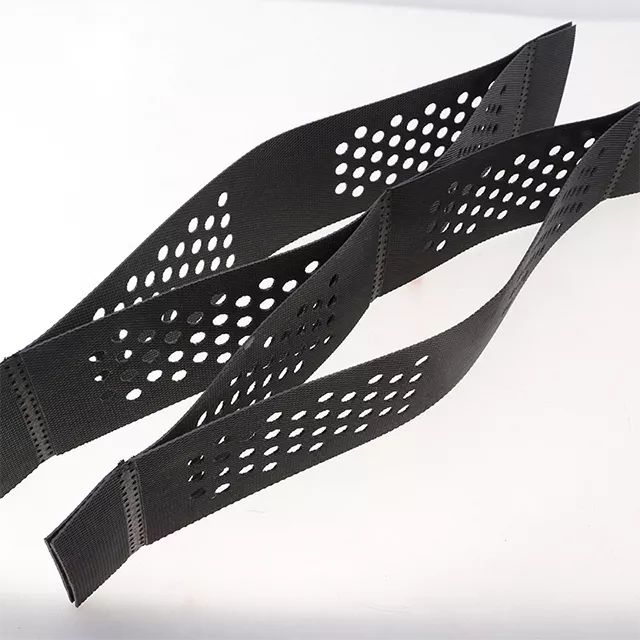 Geocell is a three-dimensional mesh structure made of high-strength polymer sheets (such as HDPE, PP, etc.) through ultrasonic welding. When unfolded, it presents a three-dimensional grid shape.
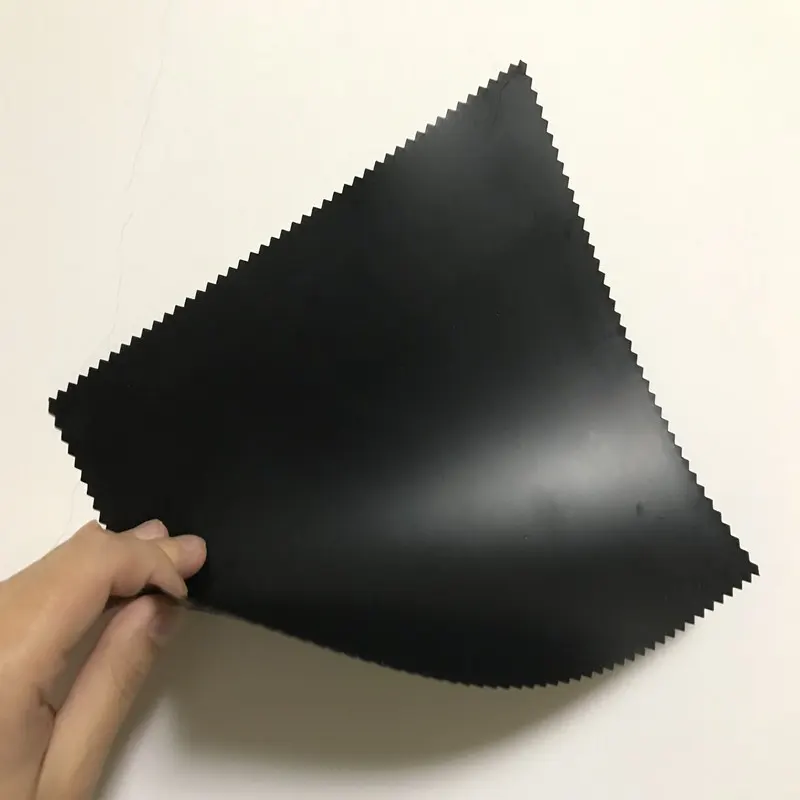 Geomembrane is a thin, extremely low-permeability sheet material made from high-molecular-weight polymers (high-density polyethylene, linear low-density polyethylene).
 - Blog
- Contacts
The 7 Key Aspects Demonstrating the Importance of Puncture Strength to Geotextile Performance


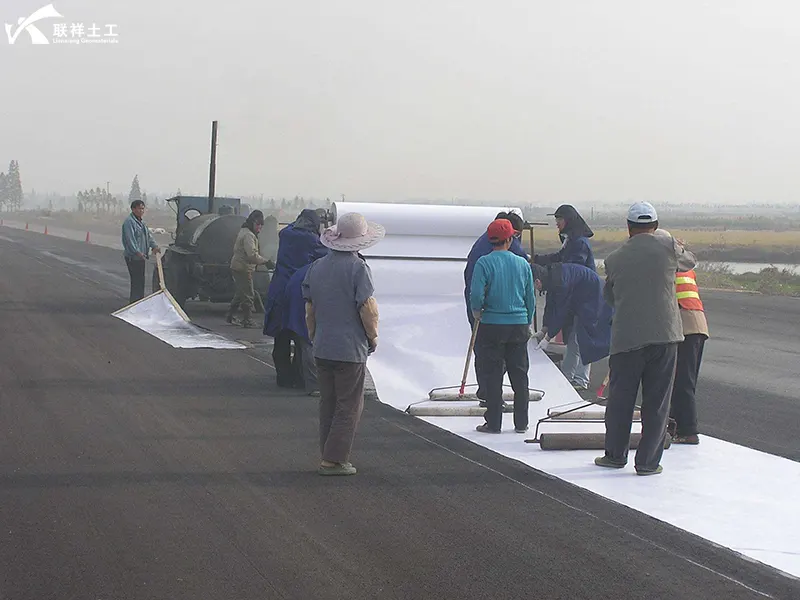
In various civil engineering projects, geotextiles—serving as essential geosynthetic materials—widely undertake critical functions such as reinforcement, separation, filtration, drainage, and impermeable protection. However, construction sites are often characterized by complex and highly variable stress environments: sharp crushed stone, uneven foundation settlement, compaction by construction machinery, and impacts from riprap slope protection—all of which exert concentrated vertical thrust forces upon the geotextile. Should the geotextile fail to withstand this localized puncture force, its structural integrity will be compromised, leading to a cascade of severe consequences such as reinforcement failure, intermingling of separation layers, and leakage within impermeable systems. Puncture strength is precisely the key performance indicator used to quantify a geotextile's capacity to resist such concentrated vertical loads. It serves not only as a reflection of the material's inherent mechanical strength but also directly determines the geotextile's performance during installation, throughout its long-term service life, and under extreme operating conditions. This article will systematically elucidate the significance of puncture strength to geotextile performance across seven key aspects, offering valuable reference material for engineering design and material selection.
1. Definition of Puncture Strength
1.1. What is "CBR Puncture Strength"?
- This refers to a specific test designed to simulate the scenario in engineering practice where a blunt object exerts a thrusting force. During the test, a flat-ended cylindrical plunger is driven vertically at a constant speed against a specimen—which is securely clamped within a ring fixture—until the specimen ruptures. The critical data yielded by this test is the "puncture force" (or puncture strength), defined as the maximum thrust force recorded at the precise moment of the specimen's rupture; this value is typically expressed in kilonewtons (kN).
1.2. Relevant Standards
1.2.1. Chinese Standards (GB)
- In China, the primary standard governing puncture strength is GB/T 14800-2010, Geosynthetics—Static Puncture Test (CBR Method). This standard supersedes earlier versions and currently stands as the authoritative, effective standard in force.
1.2.2. International Standards (ISO)
- The corresponding standard issued by the International Organization for Standardization (ISO) is ISO 12236:1996; its technical content is substantially consistent with that of GB/T 14800.
1.2.3. U.S. Standards (ASTM)
These correspond to two sets of standards established by the American Society for Testing and Materials (ASTM):
- ASTM D6241: Corresponds to the Chinese "CBR Method," utilizing a 50 mm diameter plunger.
- ASTM D4833: Corresponds to the Chinese "Puncture Method," utilizing an 8 mm diameter plunger.
2. CBR Bursting Strength Test Procedure
- Sample Preparation: Condition the geotextile specimen in a standard temperature and humidity environment for 24 hours to eliminate the influence of environmental factors.
- Instrument Setup: Use a constant-rate-of-extension (CRE) tensile testing machine fitted with a flat-ended cylindrical plunger having a diameter of 50 mm (or 89 mm).
- Sample Clamping: Securely clamp the conditioned specimen using a ring clamp, ensuring that the test area remains flat and free of wrinkles.
- Test Execution: Start the testing machine to drive the plunger vertically against the specimen at a constant speed (typically 60 mm/min or 50 mm/min) until the specimen ruptures completely.
- Data Recording: The system automatically records the plunger force-displacement curve throughout the entire process and extracts the maximum plunger force; this maximum value represents the bursting strength of the specimen.
3. The Importance of Geotextile Bursting Strength
3.1. Puncture Resistance: Preventing Punctures by Hard Objects and Ensuring Integrity
- Significance: Resisting concentrated puncture forces—such as those from stones, steel bars, or tree roots—is a fundamental protective performance indicator.
- Data: 300 g/m² ≥ 1.5 kN (National Standard ≥ 1.2 kN); 500 g/m² ≥ 2.9 kN (National Standard ≥ 2.4 kN); 800 g/m² ≥ 5.3 kN (National Standard ≥ 4.0 kN).
- Conclusion: For equivalent unit weights, Lianxiang products demonstrate a bursting strength that is over 25% higher than the National Standard, thereby offering superior puncture resistance and safety.
3.2. Load-Bearing Stability: Resisting Concentrated Loads in Roadbeds/Cushion Layers and Preventing Settlement
- Significance: Dispersing localized high-pressure loads generated by vehicles or stockpiled materials to prevent localized bursting failures that could lead to settlement or mud pumping.
- Data: Highway base layer application (400 g/m²)—CBR puncture strength ≥ 2.0 kN; capable of withstanding wheel loads ≥ 800 kPa. Railway ballast cushion layer application (600 g/m²)—CBR puncture strength ≥ 3.9 kN; capable of resisting contact stresses ≥ 3 MPa from sharp-edged ballast.
- Conclusion: For every 0.5 kN increase in puncture strength, localized subgrade settlement is reduced by approximately 15%.
3.3. Construction Durability: Resists Puncture During Paving/Compaction; Reduces Rework Rates
- Significance: Withstands the impact and compressive forces exerted by construction machinery and backfill aggregates, thereby minimizing damage and the need for repairs.
- Data: 200 g/m² product (CBR puncture strength ≥ 0.8 kN)—damage rate during manual installation ≤ 3%. 400 g/m² product (CBR puncture strength ≥ 2.0 kN)—damage rate during mechanical compaction ≤ 0.5%.
- Conclusion: Lianxiang’s high-puncture-strength products can reduce construction-related damage by 90%, leading to significant cost savings and improved efficiency.
3.4. Long-Term Durability: Resistance to Aging and Creep; Extends Project Lifespan
- Significance: Maintains integrity under prolonged exposure to soil pressure, groundwater immersion, and temperature cycling; resists creep deformation and aging-induced cracking.
- Data: 500 g/m² product (CBR ≥ 2.9 kN)—retains ≥ 85% of its original puncture strength after 5,000 hours of accelerated aging. A lower-quality product of the same weight (CBR ≈ 1.5 kN) retains ≤ 50% of its strength after undergoing the same aging process.
- Conclusion: High-puncture-strength products offer a service life that is more than double that of standard products, making them ideally suited for water conservancy and municipal engineering projects with a 50-year design life.
3.5. Filtration and Soil Retention: Prevents Soil Particle Loss; Maintains Permeability Stability
- Significance: Insufficient puncture strength can easily lead to localized bulging or rupture, resulting in filter layer failure, soil particle loss, and piping (internal erosion).
- Data: Lianxiang’s 300 g/m² product (CBR ≥ 1.5 kN) features an equivalent pore size (O95) ≤ 0.075 mm and demonstrates a soil retention efficiency of ≥ 98%. If the puncture strength is < 1.0 kN, the pore size expands by over 30% after prolonged seepage, and soil retention efficiency drops below 70%.
- Conclusion: Meeting the required puncture strength is a prerequisite for the long-term stability of the filtration function.
3.6. Reinforcement Synergy: Synergistic interaction with geogrids/soil to enhance overall strength.
- Significance: Puncture strength determines local confinement capacity; when combined with a geogrid, it facilitates synergistic deformation and stress distribution.
- Data: Lianxiang 500 g/m² geotextile (CBR ≥ 2.9 kN) combined with a geogrid resulted in a 40% increase in the ultimate bearing capacity of the composite layer. In contrast, a geotextile with low puncture strength (CBR ≈ 1.5 kN) resulted in a composite bearing capacity increase of less than 15%.
- Conclusion: High puncture strength allows the reinforcement system to perform at its full potential, preventing scenarios where "the fabric ruptures first, rendering the reinforcement ineffective."
3.7. Engineering Safety: Mitigating the risk of sudden failure and preventing accidents.
- Significance: Under extreme loads (e.g., heavy loads, seismic activity, subsidence), the material avoids brittle puncture failure, thereby providing a buffer period for emergency repairs.
- Data: Lianxiang 600 g/m² geotextile (CBR ≥ 3.9 kN) exhibits an ultimate puncture displacement of ≥ 25 mm, demonstrating ductile failure behavior with clear warning signs. Conversely, low-quality products (CBR < 2.0 kN) undergo brittle fracture at displacements of less than 10 mm, offering no prior warning.
- Conclusion: The combination of high puncture strength and high ductility significantly reduces the probability of sudden engineering accidents.
4. Lianxiang Geotextile Puncture Strength at a Glance (Typical Basis Weights)
| Basis Weight (g/m²) | National Standard CBR ≥ (kN) | Lianxiang CBR ≥ (kN) | Improvement Margin |
| 200 | 0.6 | 0.8 | +33% |
| 300 | 1.2 | 1.5 | +25% |
| 400 | 1.8 | 2.0 | +11% |
| 500 | 2.4 | 2.9 | +21% |
| 800 | 4.0 | 5.3 | +33% |
5. Typical Engineering Applications and Numerical Requirements
Standards serve as the baseline; however, the specific "hard requirements" for any given project are typically stipulated within the procurement documents. The table below compiles examples of specific requirements drawn from actual engineering projects.
| Project Type | Geotextile Type / Specification | Required CBR Puncture Strength (kN) | Core Reference Standard |
| Highway Renovation & Expansion (National Roads) | Short-fiber Needle-punched Nonwoven Geotextile (≥ 300 g/m²) | ≥ 1.8 | GB/T 17638-2017 |
| Tunnel Engineering | Short-fiber Needle-punched Nonwoven Geotextile (> 300 g/m²) | > 2.9 | GB/T 17639-2023 |
| Water Conservancy (Irrigation Districts) | Polyester Filament Needle-punched Geotextile (350 g/m²) | ≥ 3.4 | SL/T 225, GB/T 50290 |
| Water Conservancy (River Channel Management) | Polyester Filament Spunbond Needle-punched Nonwoven Geotextile (350 g/m²) | > 3.9 | GB/T 17639-2008 |
| Water Conservancy (Bank Protection) | Composite Geotextile (520 g/m²) | ≥ 7.3 | GB/T 18887-2023 |
| Water Conservancy (Irrigation Districts) | Short-fiber Needle-punched Nonwoven Geotextile (400 g/m²) | ≥ 2.5 | GB/T 17638-2017 |
| Landfills | Filament Spunbond Needle-punched Nonwoven Geotextile | ≥ 3.0 (3000 N) | CJ/T 430-2013 |
6. Key Advantages of Lianxiang Geotextiles
- Substantial Strength Margin: At the same unit weight, strength is 20%–30% higher than national standards, and over 40% higher than generic brands.
- Longitudinal & Transverse Uniformity: Longitudinal/transverse variation is ≤ 10%, ensuring consistent tear resistance in all directions.
- High Wet Strength Retention: Retains ≥85% of its tear strength after immersion in water, making it suitable for hydraulic engineering and wet environments.
- Aging Resistance and Stability: Retains ≥80% of its tear strength after 5,000 hours of UV aging exposure.
7. Frequently Asked Questions (FAQs)
7.1. How do I choose between filament geotextiles and staple fiber geotextiles?
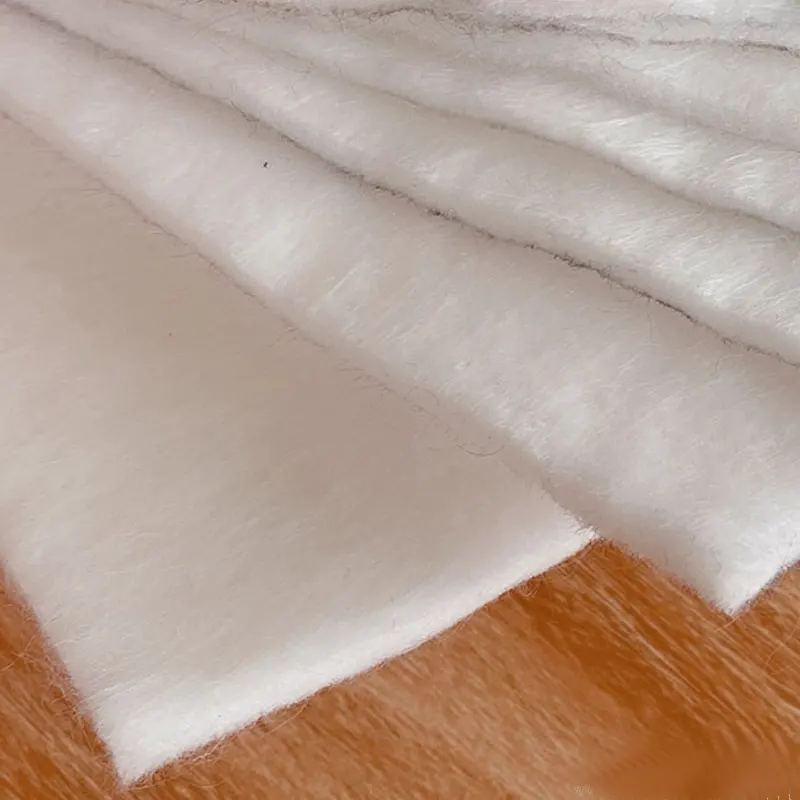
- Staple Fiber Needle-Punched Geotextile: Offers high cost-effectiveness; primarily used for reverse filtration, separation, and seepage protection. Suitable for temporary municipal access roads, landscaping, standard roadbeds, and anti-seepage liners for fishponds. Standard basis weights range from 200 to 400 g/m².
- Filament Spun-Bonded Needle-Punched Geotextile: Exhibits superior tensile strength, puncture resistance, tear resistance, and aging resistance. It offers a significant margin of structural strength, making it suitable for high-grade highways, railways, dams, river channels, landfills, and large-scale hydraulic engineering projects. Standard basis weights range from 300 to 800 g/m².
7.2. What basis weight of geotextile should be used for different types of engineering projects?
- Simple Separation/Curing Applications: 200 g/m² Staple Fiber
- General Municipal Roadbeds & Slope Protection: 300 g/m² Staple Fiber / Filament
- Main Arterial Roads & Utility Pipeline Bedding: 400 g/m² Filament
- Heavy-Load Roadbeds, Dams, & Landfills: 500–800 g/m² Filament
7.3. Is it considered a quality defect if there are slight variations in thickness or density within the same batch of fabric?
- No, this is not considered a quality defect. The inherent characteristics of the needle-punching process mean that minor, localized deviations in thickness fall within the permissible limits defined by national standards. At Lianxiang, we ensure that errors in fabric width and basis weight are controlled within a tolerance of ±3%, which does not compromise the material's mechanical properties or functional performance.
In summary, puncture resistance is a critical attribute that spans the entire lifecycle of a geotextile—from the initial installation and laying phase through to its long-term service life. It serves as the primary line of defense against damage incurred during construction; it acts as a prerequisite for ensuring the proper functioning of key applications such as reinforcement, separation, filtration, and seepage control; and, most importantly, it stands as a mandatory performance indicator for handling challenging site conditions involving complex foundations, impact from coarse rock fill, and exposure to high-temperature asphalt. Furthermore, the magnitude of the CBR puncture strength value directly reflects the quality of the raw materials and the standard of the manufacturing process; it serves as a crucial basis for material selection and quality acceptance in engineering projects. Within the performance evaluation framework for geotextiles, CBR puncture strength is by no means an isolated figure; rather, it is a core parameter inextricably linked to engineering safety, durability, and economic efficiency. Consequently, during the design and procurement phases, geotextile products possessing adequate puncture strength must be selected in strict accordance with the project's actual load conditions and regulatory requirements; similarly, during the construction and acceptance stages, puncture strength must be treated as a critical quality control point. Only through such measures can we ensure that the geotextile effectively fulfills its intended function within the engineering structure, thereby laying a solid foundation for the long-term safety and integrity of the structure.
Written by
SHANDONG LIANXIANG ENGINEERING MATERIALS CO., LTD.
Kyle Fan
WhatsApp:+86 139 5480 7766
Email:admin@lianxiangcn.com
-
WhatsApp
-
E-MailE-Mail:admin@lianxiangcn.com
-
WeChatWeChat:18554180188