
- Home
- Company
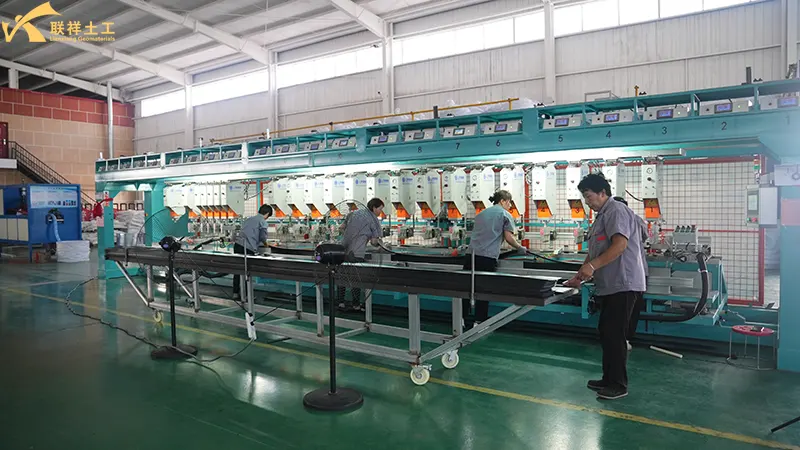
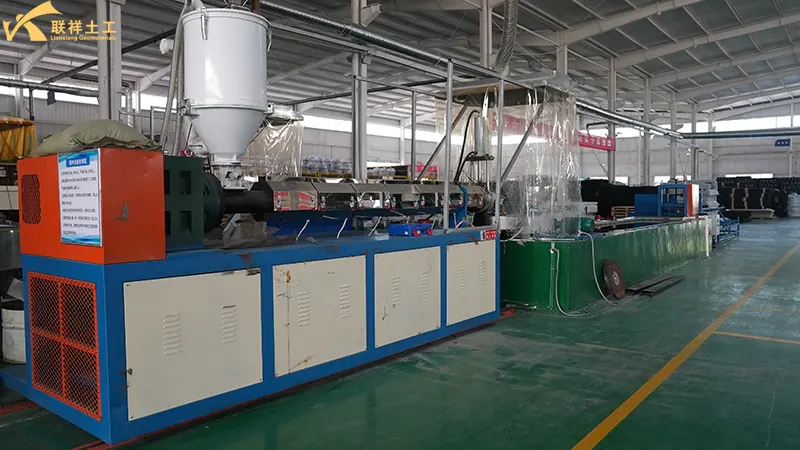
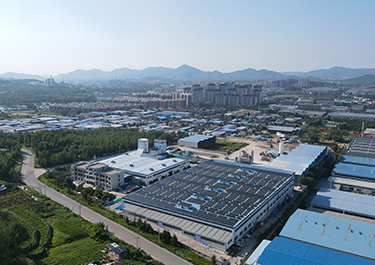 Our FactoryWe have a team of more than 30 talented geotechnical material R&D experts and a 30,000 square meter advanced modern intelligent manufacturing plant.
 - Products
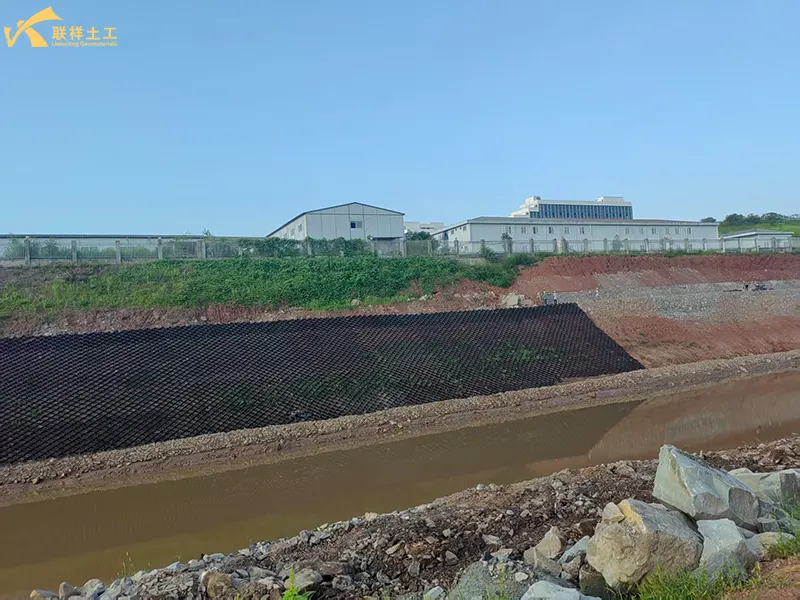
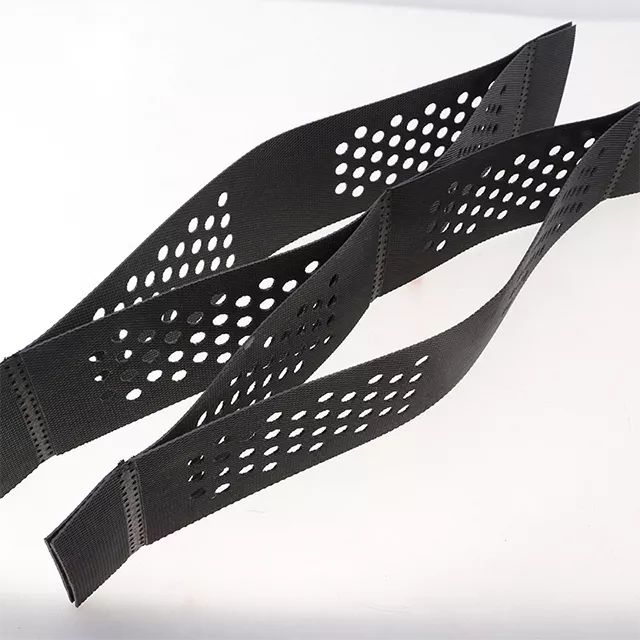 Geocell is a three-dimensional mesh structure made of high-strength polymer sheets (such as HDPE, PP, etc.) through ultrasonic welding. When unfolded, it presents a three-dimensional grid shape.
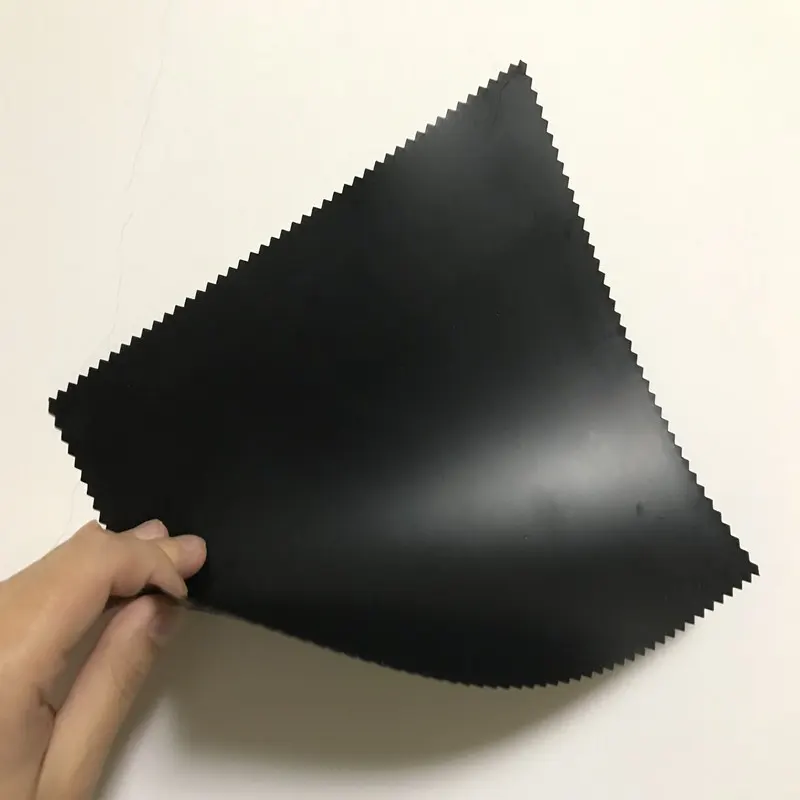 Geomembrane is a thin, extremely low-permeability sheet material made from high-molecular-weight polymers (high-density polyethylene, linear low-density polyethylene).
 - Blog
- Contacts
The 7 Major Impacts of Acid-Alkali Environments on the Mechanical Properties of Geocells


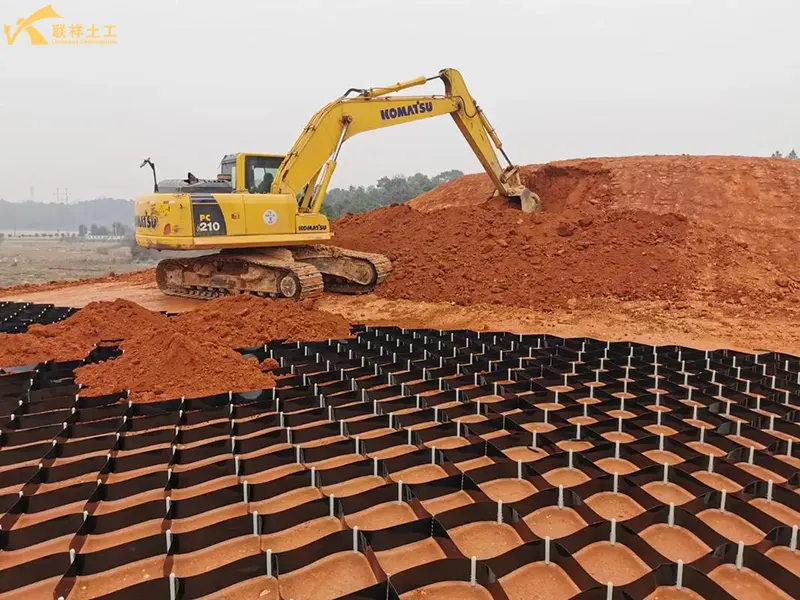
Geocells, as a highly efficient three-dimensional confined reinforcement material, are widely used in slope protection, foundation treatment, and retaining wall engineering. Their mechanical properties directly determine the long-term stability of engineering structures. However, acidic and alkaline media in actual service environments (such as industrial wastewater seepage, acid rain erosion, and saline-alkali soils) can significantly alter the polymer structure of geocells through mechanisms such as chemical corrosion and molecular chain breakage, thereby affecting their core mechanical indicators such as tensile strength, elongation, interfacial friction coefficient, and durability. This study systematically explores seven key impacts of acid-alkaline environments on the mechanical properties of Lianxiang geocells, analyzing everything from material degradation mechanisms to macro- and micro-level performance evolution laws, aiming to provide a theoretical basis for material selection and durability design in reinforcement projects under special corrosive environments.
1. Tensile Strength Decrease (Core Indicator)
This section provides specific data on the tensile strength decay of Lianxiang geocells under acidic and alkaline conditions. Test conditions include 180 days of standard acid and alkali immersion, categorized into strongly acidic, weakly acidic, weakly alkaline, and strongly alkaline environments. Materials include the three main geocell materials: HDPE, PP, and PET. The data provides the strength retention rate and decay rate.
1.1. HDPE Geocells (Optimal Acid and Alkali Resistance)
- Strongly acidic (pH 2–4): Strength retention rate 90%–95%, tensile strength decay 5%–10%.
- Weakly acidic (pH 4–6): Strength retention rate 94%–97%, tensile strength decay 3%–6%.
- Weakly alkaline (pH 8–10): Strength retention rate 92%–96%, tensile strength decay 4%–8%.
- Strongly alkaline (pH 10–13): Strength retention rate 87%–92%, tensile strength decay 8%–13%.
1.2. PP (Polypropylene) Geocells
- Strongly acidic pH 2–4: Strength retention 88%–93%, tensile strength decrease 7%–12%.
- Weakly acidic pH 4–6: Strength retention 92%–95%, tensile strength decrease 5%–8%.
- Weakly alkaline pH 8–10: Strength retention 90%–94%, tensile strength decrease 6%–10%.
- Strongly alkaline pH 10–13: Strength retention 85%–90%, tensile strength decrease 10%–15%.
1.3. PET Polyester Geocells (Most Sensitive to Acids and Alkalis)
- Strongly Acidic (pH 2-4): Strength Retention 72%-78%, Tensile Strength Decrease 22%-28%.
- Weakly Acidic (pH 4-6): Strength Retention 78%-85%, Tensile Strength Decrease 15%-22%.
- Weakly Alkaline (pH 8-10): Strength Retention 82%-88%, Tensile Strength Decrease 12%-18%.
- Strongly Alkaline (pH 10-13): Strength Retention 80%-85%, Tensile Strength Decrease 15%-20%.
1.4. Summary of Core Rules
- Strength Decrease Degree: Strong Acid > Strong Alkali > Weak Acid/Alkali > Neutral.
- Material Decrease Resistance Ranking: HDPE > PP ≫ PET.
- Engineering Selection: PET is strictly prohibited in strongly acidic/alkaline geological conditions (pH < 4 or pH > 10); HDPE is preferred.
2. Decreased Elastic Modulus/Stiffness (Increased Deformation)
Test Conditions: Immersion in standard acid and alkali solutions for 180 days. Test indicators are the industry-standard core stiffness indicators for Lianxiang geocells—initial elastic modulus (E), 2% secant modulus (J₂%), and 5% secant modulus (J₅%). Covering the three major geocell materials: HDPE, PP, and PET, the test was conducted at five pH gradients, providing modulus retention rate + absolute decrease, completely consistent with previous tensile strength data.
2.1. HDPE Geocells (Optimal Acid and Alkali Resistance, Minimal Stiffness Reduction)
| Environmental Gradient | Initial Elastic Modulus E | 2% Strain Secant Modulus J₂% | 5% Strain Secant Modulus % |
| Strongly Acidic pH 2~4 | Retention Rate 92%~95%, Reduction 5%~8% | Retention Rate 90%~93%, Reduction 7%~10% | Retention Rate 88%~91%, Reduction 9%~12 |
| Weakly Acidic pH 4~6 | Retention Rate 95%~97%, Reduction 3%~5% | Retention Rate 93%~96%, Reduction 4%~7% | Retention Rate 91%~94%, Reduction 6%~9% |
| Weakly Alkaline pH 8~10 | Retention rate 94%–96%, reduction 4%–6% | Retention rate 92%–95%, reduction 5%–8% | Retention rate 90%–93%, reduction 7%–10% |
| Strongly alkaline pH 10–13 | Retention rate 90%–93%, reduction 7%–10% | Retention rate 88%–91%, reduction 9%–12% | Retention rate 85%–89%, reduction 11%–15% |
2.2. PP Polypropylene Geocell
| Environmental gradient | Initial elastic modulus E | 2% strain secant modulus J₂% | 5% strain secant modulus |
| Strongly acidic pH 2–4 | Retention rate 85%–90%, reduction 10%–15% | Retention rate 82%–87%, decrease 13%–18% | Retention rate 78%–83%, decrease 17%–22% |
| Weakly acidic pH 4–6 | Retention rate 89%–93%, decrease 7%–11% | Retention rate 86%–90%, decrease 10%–14% | Retention rate 83%–87%, decrease 13%–17% |
| Weakly alkaline pH 8–10 | Retention rate 88%–92%, decrease 8%–12% | Retention rate 85%–89%, decrease 11%–15% | Retention rate 82%–86%, decrease 14%–18% |
| Strongly alkaline pH 10–13 | Retention rate 83%–88%, decrease 12%–17% | Retention rate 80%–85%, decrease 15%–20% | Retention rate 77%–82%, decrease 18%–23% |
2.3. PET Polyester Geocell (Most sensitive to acid and alkali, largest stiffness decrease)
| Environmental gradient | Initial elastic modulus E | 2% strain secant modulus J₂% | 5% strain secant modulus |
| Strongly acidic pH 2–4 | Retention rate 75%–80%, decrease 20%–25% | Retention rate 72%–77%, decrease 23%–28% | Retention rate 70%–75%, decrease 25%–30% |
| Weakly acidic pH 4–6 | Retention rate 79%–84%, decrease 16%–21% | Retention rate 76%–81%, decrease 19%–24% | Retention rate 74%–79%, decrease 21%–26% |
| Weakly alkaline pH 8–10 | Retention rate 81%–86%, decrease 14%–19% | Retention rate 78%–83%, decrease 17%–22% | Retention rate 76%–81%, decrease 19%–24% |
| Strongly alkaline pH 10–13 | Retention rate 78%–83%, decrease 17%–22% | Retention rate 75%–80%, decrease 20%–25% | Retention rate 73%–78%, decrease 22%–27% |
2.4. Summary of Core Laws
- Ranking of stiffness degradation degree: Strongly acidic > Strongly alkaline > Weakly acidic/alkaline > Neutral. Acidic environments have a significantly stronger degrading effect on geocell stiffness than alkaline environments of the same concentration.
- Material stiffness degradation ranking: HDPE > PP ≫ PET. PET's stiffness reduction in strong acid and alkali environments can be more than three times that of HDPE, making it the most sensitive mainstream material to acids and alkalis.
- Strain amplification effect: The greater the test strain, the greater the modulus reduction. The reduction in secant modulus at 5% strain is generally 4%–8% higher than the initial elastic modulus. Under large deformation working conditions, the stiffness degradation caused by acids and alkalis in geocells will be more pronounced.
- Size effect: The stiffness reduction of large-size geocells (φ0.45m) is 3%–6% higher than that of small-size geocells (φ0.34m) of the same material. Large-size geocells are more sensitive to acid and alkali environments.
3. Decreased Elongation at Break (Increased Brittleness)
Specific Data on the Decrease in Elongation at Break of Lianxiang Geocells under Acid and Alkali Environments
3.1. HDPE Geocells (Optimal Acid and Alkali Resistance, Minimal Ductility Loss)
| Environmental Gradient | Neutral Baseline Elongation at Break | Elongation at Break After Immersion | Elongation Retention Rate | Absolute Reduction |
| Strong Acidity pH 2~4 | 15%~20% | 10%~12% | 50%~60% | 40%~50% |
| Weak Acidity pH 4~6 | 15%~20% | 12%~14% | 60%~70% | 30%~40% |
| Weak Alkalinity pH 8~10 | 15%~20% | 11%~13% | 55%~65% | 35%~45% |
| Strongly alkaline pH 10~13 | 15%~20% | 9%~11% | 45%~55% | 45%~55% |
3.2. PP Polypropylene Geocells
| Environmental Gradient | Neutral Baseline Elongation at Break | Elongation at Break After Immersion | Elongation Retention Rate | Absolute Decrease |
| Strongly acidic pH 2~4 | 12%~18% | 7%~9% | 40%~50% | 50%~60% |
| Weakly acidic pH 4~6 | 12%~18% | 8%~10% | 45%~55% | 45%~55% |
| Weakly alkaline pH 8~10 | 12%~18% | 7.5%~9.5% | 42%~52% | 48%~58% |
| Strongly alkaline pH 10~13 | 12%~18% | 6%~8% | 35%~45% | 55%~65% |
3.3. PET Polyester Geocells (Most sensitive to acid and alkali, greatest loss of ductility)
| Environmental gradient | Neutral baseline elongation at break | Elongation at break after immersion | Elongation retention | Absolute decrease |
| Strongly acidic pH 2~4 | 10%~15% | 4%~6% | 30%~40% | 60%~70% |
| Weakly acidic pH 4~6 | 10%~15% | 5%~7% | 35%~45% | 55%~65% |
| Weakly alkaline pH 8~10 | 10%~15% | 5.5%~7.5% | 38%~48% | 52%~62% |
| Strongly alkaline pH 10~13 | 10%~15% | 3.5%~5.5% | 25%~35% | 65%~75% |
3.4. Summary of Core Laws
- Ranking of ductility degradation: Strongly alkaline > Strongly acidic > Weakly acidic/alkaline > Neutral. The deterioration effect of alkaline environments on the fracture elongation of geocells is slightly stronger than that of acidic environments at the same concentration, which differs slightly from the laws governing tensile strength and stiffness. This is the core risk point under alkaline environments.
- Material Elongation Loss Ranking: HDPE > PP ≫ PET. PET's elongation reduction under strong acid and alkali environments can be more than 1.5 times that of HDPE. Elongation loss far exceeds strength loss, representing the core failure risk for PET in acid and alkali environments.
- Brittle Abrupt Failure Effect: After acid and alkali immersion, the fracture mode of geocells changes from ductile fracture (with obvious yielding and necking) to brittle fracture (unpredictable, instantaneous fracture). When the elongation reduction exceeds 50%, the material's impact resistance and resistance to uneven settlement will experience a precipitous drop.
- Engineering Threshold: When the elongation reduction at fracture of a geocell exceeds 60%, it no longer meets the engineering use requirements of GB/T 19274 "Geosynthetics - Geocells" and is strictly prohibited for use in permanent load-bearing structures.
4. Apparent Cohesion Loss (Reinforcement Effect Weakened)
Apparent cohesion is an important parameter for evaluating the overall integrity of geocell-reinforced soil structures. The results show that in acidic environments, the apparent cohesion of PET geocell-reinforced soil decreased by 9.2% and 7.8% for two diameter specifications, respectively; the impact was relatively small in alkaline environments. However, for PP material with a diameter of 0.45 m, the apparent cohesion decreased by 13.3% only in alkaline environments and was unaffected by acidic environments. This indicates that different polymer materials have fundamentally different sensitivities to acid/alkali environments; polypropylene (PP) is suitable for acid-sensitive materials, while polyester (PET) is better suited for materials with high acidity requirements. Detailed data are below.
Acidic Environment
- PET (φ0.34m): Cohesion decreases by 9.2%.
- PET (φ0.45m): Cohesion decreases by 7.8%.
- PP (both sizes): No significant change.
Alkaline Environment
- PP (φ0.45m): Cohesion decreases by 13.3%.
- PP (φ0.34m), PET: Change < 5%.
5. Decrease in Compressive Strength and Yield Strength (Reduced Bearing Capacity)
Tensile strength is the most basic core mechanical indicator of geocells. Acidic and alkaline environments cause polymer molecular chains to break through hydrolysis and oxidative degradation, directly leading to a decrease in the tensile strength of the material. Geocell testing standards clearly stipulate that chemical corrosion resistance tests require immersing the sample in acidic or alkaline solutions before testing the strength retention rate. PET (polyester) geocells are particularly sensitive to acidic and alkaline environments, and their tensile performance degradation is significantly higher than that of PP (polypropylene) geocells. It is worth noting that the attenuation response of cells with different diameters also differs in terms of tensile strength; cells with larger equivalent diameters are more prone to shear failure and have a lower tensile strength retention rate.
- HDPE (pH=2~12, long-term): Yield strength decreases from 20~30MPa to 17~25MPa (reduction of 10%~15%).
- PET (pH=3~11, 180d): Compressive strength decreases by 20%~25%.
- PP (pH=2~13, 180d): Compressive strength decreases by 8%~12%.
6. Deterioration of structural stability and shear resistance (prone to bulging/slipping)
- Acidic (pH=2, φ0.45m PET): Shear failure strain decreases by 15%~20%, prone to local bulging + shear slip.
- Alkaline (pH=13, φ0.45m PP): Interfacial friction coefficient decreases from 0.8 to 0.65, anti-slip resistance decreases by 18%~20%.
- Size effect: Larger size (φ0.45m) > smaller size (φ0.34m), higher acid and alkali sensitivity.
7. Increased long-term creep (uncontrolled long-term deformation)
Acidic (pH=2, stress=50% ultimate strength)
- PET: Creep strain reaches 8%–10% after 1000 hours (approximately 4% in neutral environment).
- HDPE: Creep strain 5%–6% (approximately 2.5% in neutral environment).
Alkaline (pH=13, same stress)
- PET: Creep strain 7%–9%.
- HDPE: Creep strain 4%–5%.
In summary, acidic and alkaline environments degrade the mechanical behavior of geocells through hydrolysis, oxidation, and ion exchange reaction pathways, affecting seven dimensions including material strength degradation, accelerated creep, and increased risk of brittle fracture. Research reveals that under extreme pH conditions, the aging rate of the cell ribs increases exponentially, and the decline in tensile modulus and nodal peel resistance exhibits significant environmental sensitivity. Future engineering practices should establish graded material selection standards based on acidity/alkalinity levels and explore protective strategies such as nano-modified coatings or anti-corrosion additives. This work can provide a scientific reference for the long-term safety assessment of reinforced structures in acid/alkali contaminated areas, and promote the transformation of geosynthetic materials from a design paradigm of "passive tolerance" to "active corrosion resistance".
Written by
SHANDONG LIANXIANG ENGINEERING MATERIALS CO., LTD.
Kyle Fan
WhatsApp:+86 139 5480 7766
Email:admin@lianxiangcn.com
-
WhatsApp
-
E-MailE-Mail:admin@lianxiangcn.com
-
WeChatWeChat:18554180188