
- Home
- Company
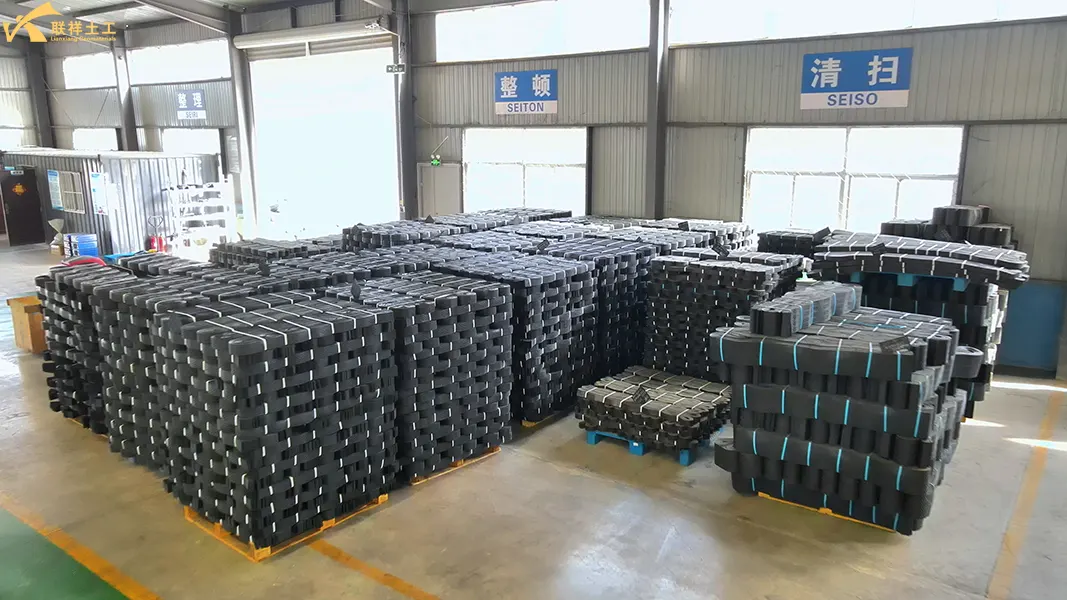
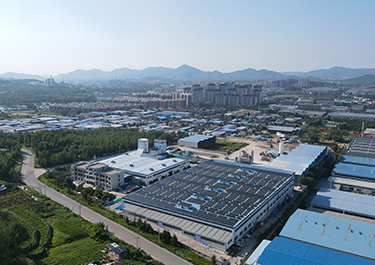 Our FactoryWe have a team of more than 30 talented geotechnical material R&D experts and a 30,000 square meter advanced modern intelligent manufacturing plant.
 - Products
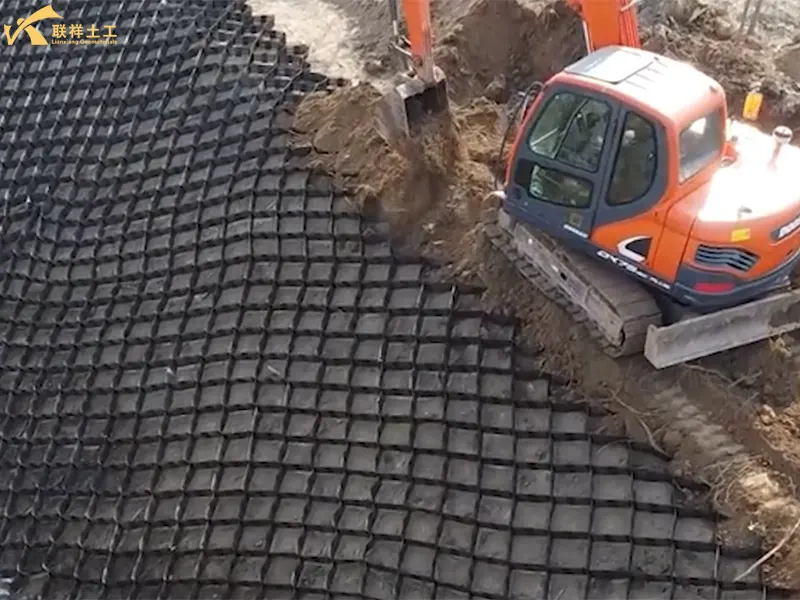
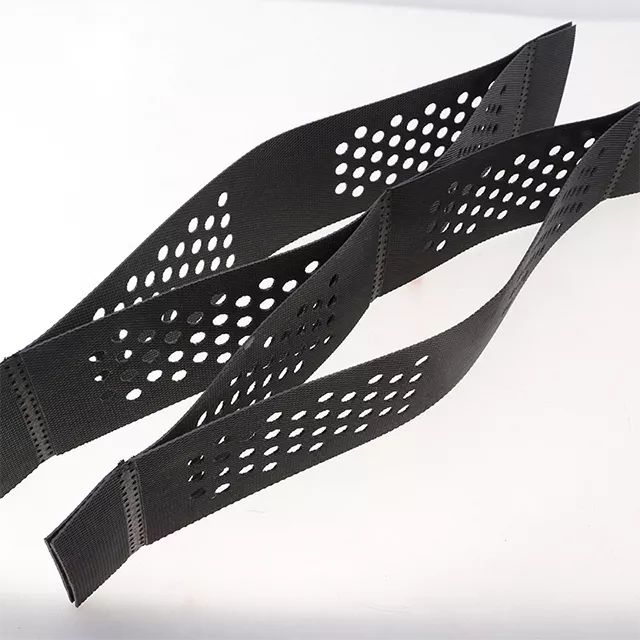 Geocell is a three-dimensional mesh structure made of high-strength polymer sheets (such as HDPE, PP, etc.) through ultrasonic welding. When unfolded, it presents a three-dimensional grid shape.
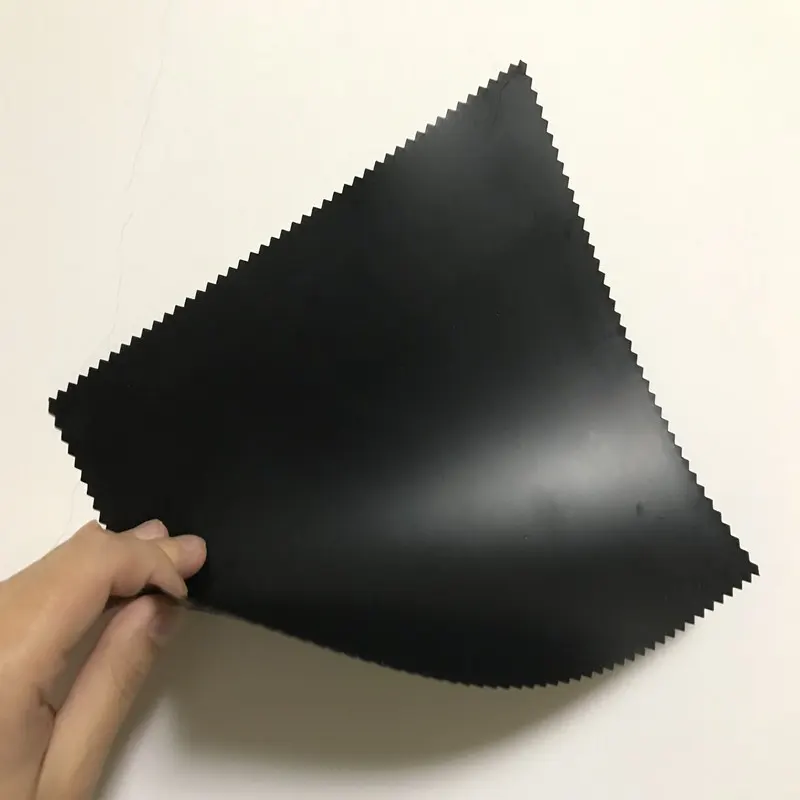 Geomembrane is a thin, extremely low-permeability sheet material made from high-molecular-weight polymers (high-density polyethylene, linear low-density polyethylene).
 - Blog
- Contacts
The 9 Irreplaceable Roles of Geocells in Riverbank Protection


Riverbanks are constantly subjected to erosion from regular flowing water and the impact of floods during the rainy season, making them highly susceptible to problems such as slope toe erosion, gully formation, and landslides. Traditional slope protection methods have weak erosion resistance and poor durability, failing to meet long-term protection needs. Lianxiang geocells, constructed from reinforced HDPE sheets through high-strength welding, form a three-dimensional honeycomb mesh structure. This structure is flexible, easy to install, and possesses excellent erosion resistance and soil and water conservation capabilities, making it the preferred material for highly effective erosion resistance in riverbank protection, solving the problem of riverbank damage at its source.
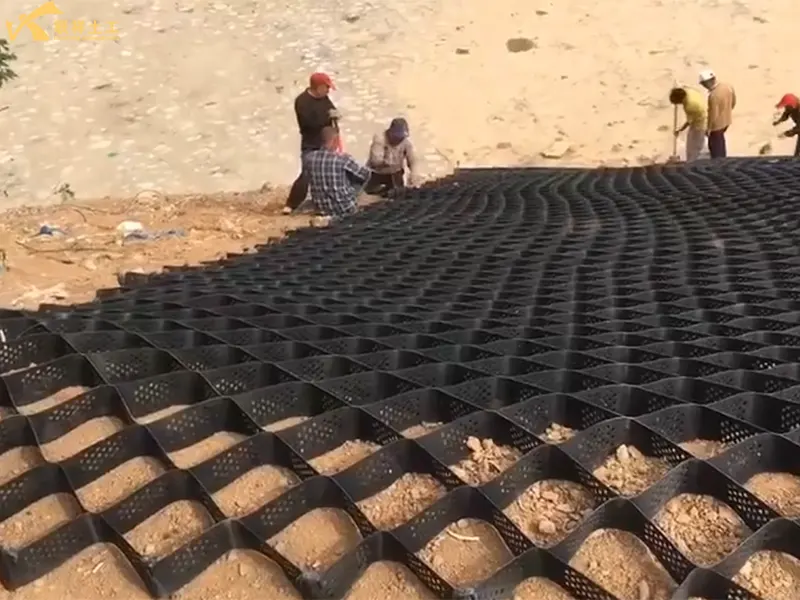
1. Highly Effective Erosion Resistance
Lianxiang Geocells for Riverbank Protection – Highly Effective Erosion Resistance
Core Function
- Utilizing a honeycomb three-dimensional constraint structure, it integrally locks in the slope soil and gravel filler, preventing direct erosion of the slope base and toe by water flow. This fundamentally inhibits gully formation, landslides, and landslides, making it suitable for both regular river flow and flood impacts during the rainy season.
Quantitative Data Demonstration
- Extreme resistance to water flow velocities of 4.5–5.0 m/s, capable of withstanding flood erosion during river flood seasons lasting 10 to 100 years;
- Compared to ordinary earthen slope protection, soil erosion is reduced by >=82%, with no shallow erosion or stripping on the slope surface;
- Compared to masonry and rigid concrete slope protection under the same conditions, erosion resistance and durability are improved by more than 3 times;
- The overall constraint effect of the cells reduces the shear stress of water flow on the slope surface by more than 40%, preventing erosion and suspension at the slope toe;
- The high-toughness HDPE material is resistant to water flow abrasion, maintaining a structural integrity rate of >=95% under long-term water flow conditions.
Engineering Advantages
- It is not washed away by floods during the flood season, does not form gullies, and does not collapse or slide, balancing flood control safety and long-term slope stability. It replaces traditional loose gravel and ordinary geotextiles, offering irreplaceable erosion protection performance.
2. Three-Dimensional Soil Stabilization and Slide Prevention
Quantitative Data Demonstration
- Significantly improved slope stability coefficient: Compared to ordinary slopes without geocells, the stability coefficient is increased by 30%-50%, completely avoiding the risk of shallow landslides;
- Suitable for steep slope protection: Under 1:1 steep slope conditions (where conventional unprotected slopes are prone to collapse), it can maintain long-term stability without any sliding or bulging;
- Significantly improved soil shear strength: Actual measurements show that the shear strength of the slope soil increases by 2-4 times after installation, effectively resisting lateral soil displacement;
- For easily sliding bases such as soft soil and sand, it can reduce lateral soil displacement by >=75%, preventing soil extrusion at the slope toe and slope collapse;
- Under long-term immersion and rainwater erosion conditions, the overall integrity retention rate of the geocell-stabilized soil is >=98%, with no local soil spillage or sliding risks.
Mechanism of Action:
- The three-dimensional honeycomb structure "locks" loose soil within the cell units. Utilizing the lateral resistance of the cell walls, it restricts the lateral movement of soil particles while simultaneously dispersing slope loads and transferring localized stress to the entire cell system, forming a collaborative "cell-soil" stress system that prevents slippage at its source.
Engineering Advantages:
- Unlike traditional planar protection methods like geotextiles and wire mesh, three-dimensional constraint is more targeted. It eliminates the need for additional concrete reinforcement, achieving stable protection for steep slopes and soft soil foundations. Construction is simple, and the soil stabilization effect is long-lasting. In riverbank protection, its role in preventing slippage and stabilizing the foundation is irreplaceable, effectively extending the service life of the slope.
3. Ecological Restoration and Vegetation Symbiosis
Quantitative Data Demonstration
- Significantly improved vegetation growth efficiency: Within 6 months of installation, slope vegetation coverage reaches >=90%, a 4-fold increase compared to traditional hardened slope protection (vegetation coverage less than 20%).
- Cell porosity reaches >30%, effectively retaining soil moisture and providing ample space for root growth, increasing root survival rate by >=85%.
- Vegetation roots can penetrate the cell walls, forming a composite protective layer with the soil and cells, increasing soil-fixing capacity by 3 times and further enhancing slope stability.
- Provides habitat and foraging space for aquatic organisms and small birds, increasing biodiversity around the river by >=50% compared to traditional slope protection.
- Long-term use increases slope soil organic matter content by >=25%, gradually restoring the original slope ecosystem and achieving ecological self-circulation.
Mechanism of Action
- The three-dimensional honeycomb structure of Lianxiang geocells effectively locks in loose soil on slopes, improves fill material, and prevents soil erosion caused by rainwater runoff. Simultaneously, it retains sufficient air and moisture, providing a favorable growth environment for plant seed germination and root growth. During plant root growth, it penetrates the cell walls and reaches deep into the soil, forming a three-dimensional synergistic system of "cell-soil-vegetation." This enhances soil stabilization through plant roots and achieves slope ecological restoration through vegetation cover, opening up ecological connectivity between land and water and improving the ecological environment around river channels.
Engineering Advantages
- Unlike traditional rigid slope protection methods such as concrete and masonry (which completely block ecological connectivity, preventing vegetation growth) and planar protection methods like ordinary geotextiles (which cannot effectively retain soil moisture and have low vegetation survival rates), Lianxiang geocells achieve integrated "protection + ecology." No additional vegetation substrate is required; native vegetation can be directly sown within the cells, simplifying construction and controlling costs. Vegetation cover effectively reduces soil erosion on slopes, while simultaneously purifying slope runoff and improving water quality, balancing project stability and ecological sustainability. In river ecological slope protection projects, its core role of "ecological restoration and vegetation symbiosis" is irreplaceable, meeting both flood control safety requirements and achieving long-term restoration and protection of the river's ecology, aligning with the core needs of current ecological and environmental protection projects.
4. Adaptability to Foundation Deformation (Flexible Crack Resistance)
Quantitative Data Demonstration
- Excellent adaptability to uneven foundation settlement, allowing for uneven settlement <=5% without damaging the protective structure, and exhibiting no cracking, bulging, or detachment;
- For rivers in permafrost regions, after freeze-thaw cycles (-30oC to 25oC, 50 cycles), the settlement of the protective structure is only 3cm, far below the standard requirement of <=15cm, with a structural integrity retention rate >=95%;
- Excellent seismic performance, with twice the seismic resistance of traditional rigid slope protection, capable of withstanding foundation sway caused by earthquakes below magnitude 6, preventing bank collapse;
- Under conditions of localized deformation caused by riverbed settlement and scour, the cells can adaptively expand and contract, with a recovery rate >=80% after deformation, without affecting the overall protective effect;
- In long-term use, it can adapt to slow settlement of the riverbed (average annual settlement <=2cm), with no damage to the protective structure and consistently meeting stability standards.
Engineering Advantages
- Unlike traditional rigid slope protection methods such as concrete and masonry (which are hard and inflexible, prone to cracking, detachment, or even complete collapse due to slight foundation deformation, resulting in high maintenance costs and unsuitability for soft soil foundations, frozen soil areas, and other easily deformable sites), and the planar protection of ordinary geotextiles (which only protect against soil erosion on the slope surface, lack deformation resistance, and are easily torn when the foundation deforms, losing their protective function), Lianxiang geocells achieve integrated "protection + deformation adaptation."
- Their flexible material can adaptively extend and contract with foundation deformation, effectively dispersing foundation stress and avoiding structural damage caused by localized stress concentration; no complex replacement or reinforcement treatment is required for easily deformable foundations, allowing for direct laying, simple construction, and controllable costs; suitable for various easily deformable sites such as soft soil, frozen soil, and sandy soil foundations, while also ensuring slope protection stability. In riverbank protection projects with easily deformable foundations, its core role of "adapting to foundation deformation" is irreplaceable.
- Furthermore, its flexible characteristics prevent protection failure due to foundation deformation, reduce the frequency and cost of later maintenance, and extend the service life of the slope protection. It meets flood control safety requirements and is adaptable to various complex foundation conditions, aligning with the core requirements of "long-term stability and strong adaptability" in riverbank protection engineering.
5. Significantly Reduced Project Costs
- Data: Compared to masonry/concrete, costs are reduced by 25%–35%; no large machinery is required, reducing labor costs by 40%; later maintenance costs are reduced by 70%.
- Mechanism: Lightweight (only 1/10 the weight of concrete), fast transportation and installation, and locally sourced fill materials (soil/sand/gravel).
6. Extremely Fast Construction and Shortest Construction Period
- Data: Efficiency increased by 3 times, 1000m2/day can be completed; no curing required, 100% strength achieved upon completion; construction can be carried out during the rainy season without delays.
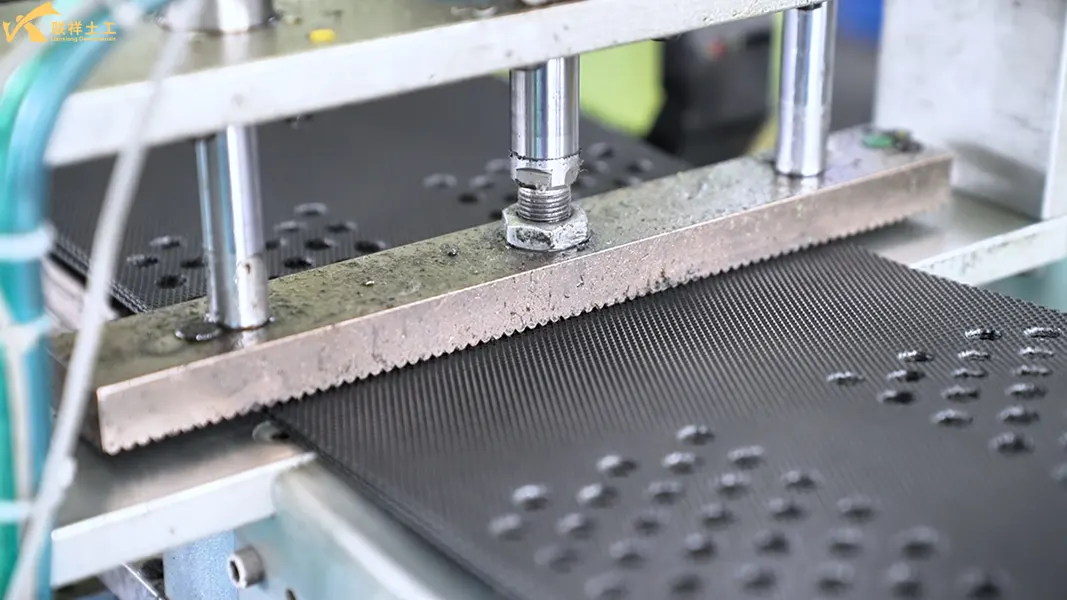
- Mechanism: Factory prefabrication and on-site deployment and fixing eliminate slow processes such as concrete curing/masonry grouting.
7. Durable, Anti-aging, and with an exceptionally long lifespan
- Data: With >=2% carbon black anti-aging agent, the lifespan is >=50 years; resistant to acids and alkalis, UV radiation, and retains >=90% of its strength in extreme environments.
- Mechanism: HDPE molecules are stable, resisting hydrolysis/corrosion/aging, far exceeding traditional materials (concrete 20–30 years, masonry 10–15 years).
8. Purifies water quality and improves the aquatic environment
- Data: SS (suspended solids) removal rate >=40%; ammonia nitrogen degradation rate >=25%; dissolved oxygen increase >=3mg/L.
- Mechanism: The cell-cell structure combined with vegetation forms a natural filter layer, intercepting sediment, adsorbing pollutants, promoting microbial degradation, and improving the aquatic ecosystem.
9. Flexible application and strong terrain adaptability
- Data: Suitable for 0°–90° slopes, curved bank slopes, deep pools and shallow beaches; can be directly laid in soft soil/sand/gravel soil without replacement.
- Mechanism: The honeycomb structure is expandable and deformable, conforming to complex terrain and providing comprehensive protection, making it particularly suitable for winding river channels and irregular shorelines.
In riverbank protection, Lianxiang geocells serve as both high-strength engineering armor (erosion resistance/stability/durability) and an ecological restoration carrier (vegetation/water purification/biological symbiosis), achieving low cost, rapid construction, and maintenance-free operation. It is a revolutionary alternative to traditional rigid slope protection, offering nine irreplaceable functions. Combining the advantages of high-velocity resistance, strong soil stabilization and sand locking, and resistance to water flow erosion, Lianxiang geocells completely overcome the shortcomings of traditional slope protection in erosion resistance, achieving multiple values of flood control safety, long-term stability, and durability for riverbanks. It is an indispensable core protective material for modern river ecological slope protection projects.
Written by
SHANDONG LIANXIANG ENGINEERING MATERIALS CO., LTD.
Kyle Fan
WhatsApp:+86 139 5480 7766
Email:admin@lianxiangcn.com
-
WhatsApp
-
E-MailE-Mail:admin@lianxiangcn.com
-
WeChatWeChat:18554180188