
- Home
- Company
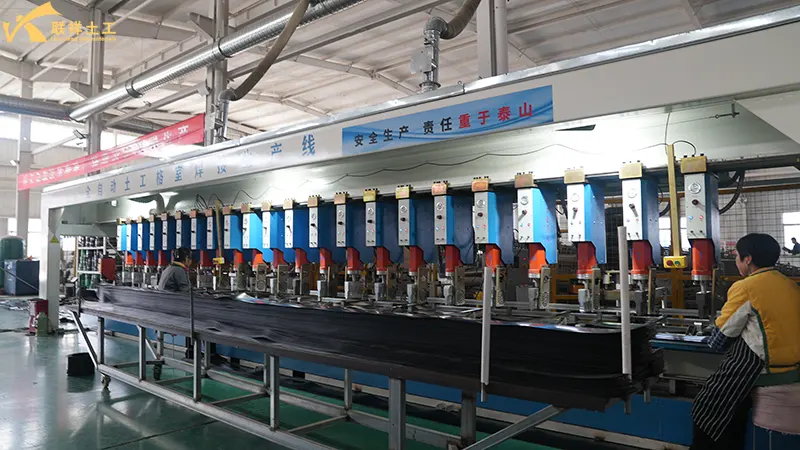
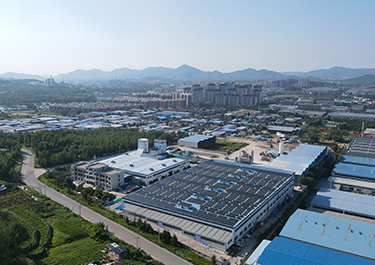 Our FactoryWe have a team of more than 30 talented geotechnical material R&D experts and a 30,000 square meter advanced modern intelligent manufacturing plant.
 - Products
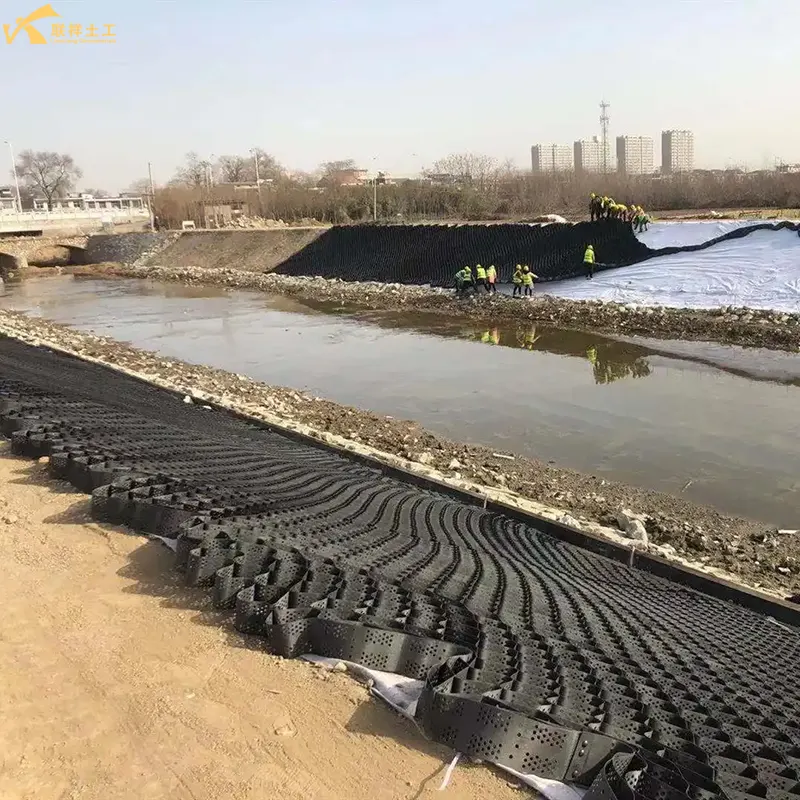
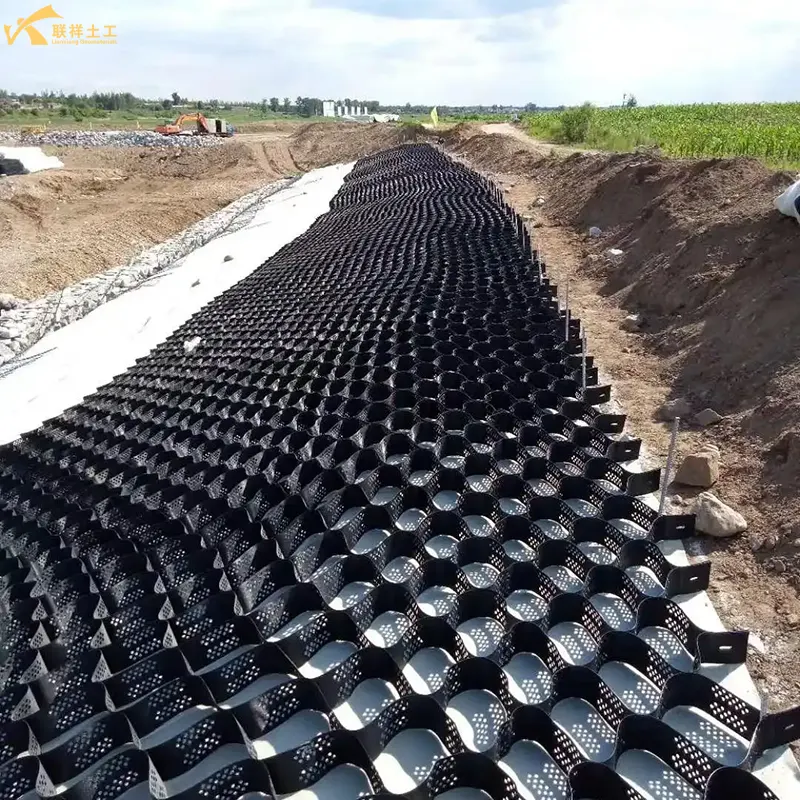
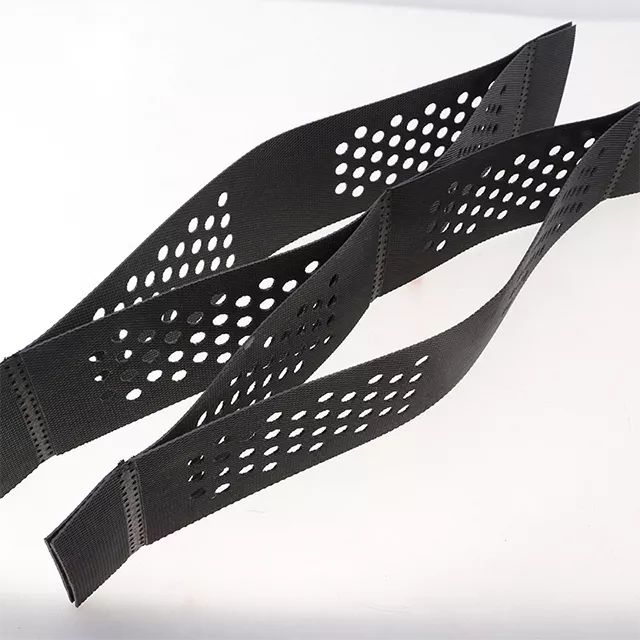 Geocell is a three-dimensional mesh structure made of high-strength polymer sheets (such as HDPE, PP, etc.) through ultrasonic welding. When unfolded, it presents a three-dimensional grid shape.
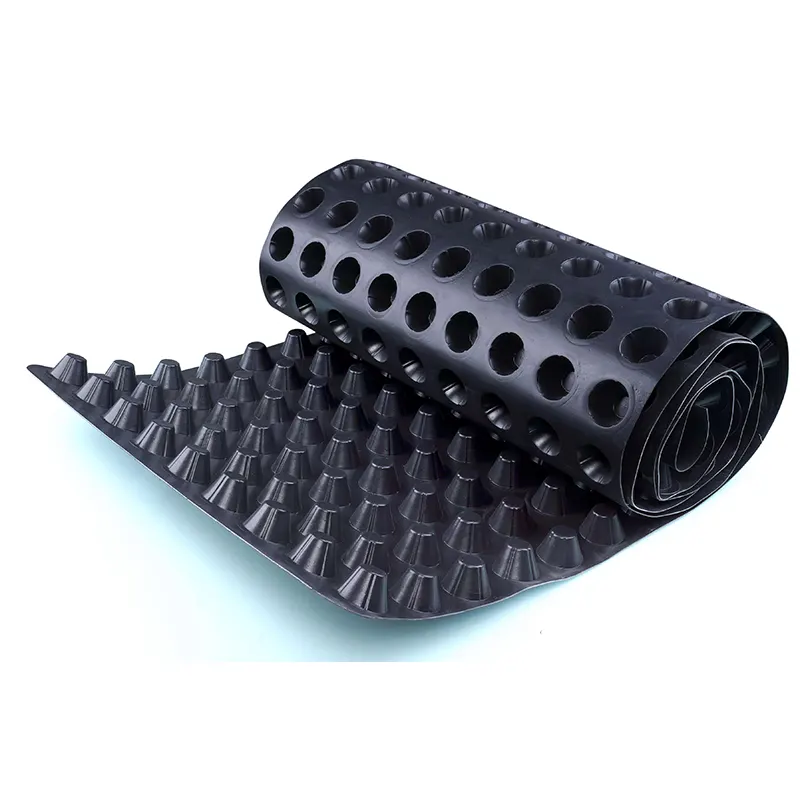
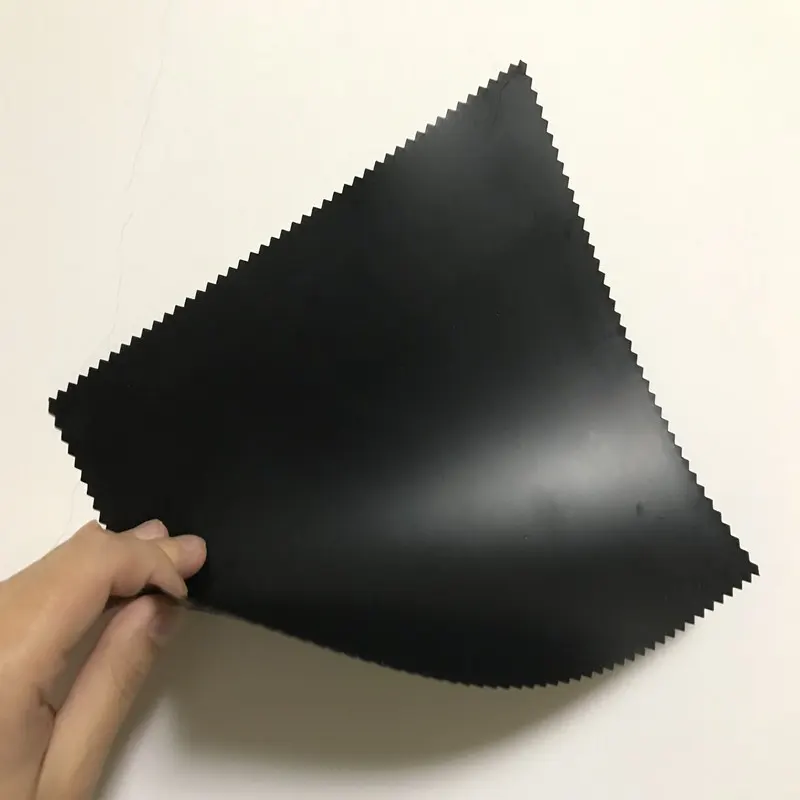 Geomembrane is a thin, extremely low-permeability sheet material made from high-molecular-weight polymers (high-density polyethylene, linear low-density polyethylene).
 - Blog
- Contacts
The 8 Key Factors Affecting the Tensile Strength of Geocells


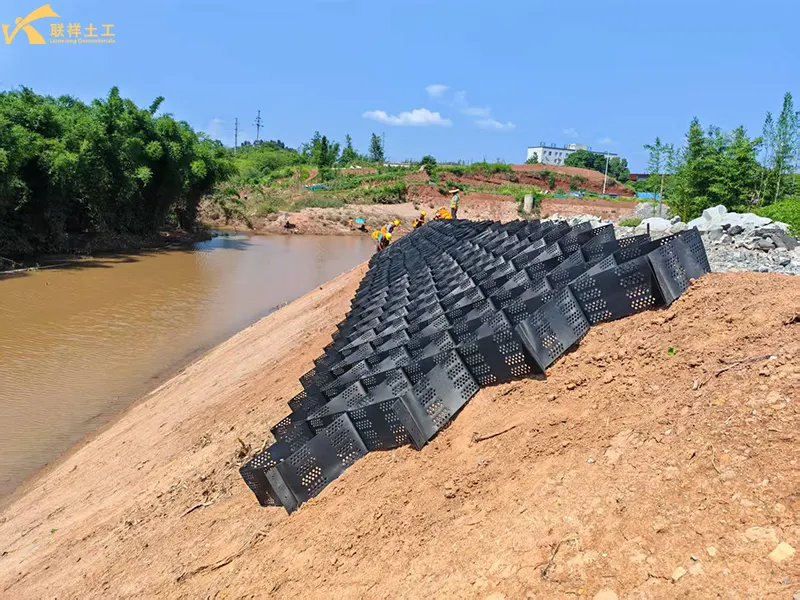
Geocells, as a highly efficient three-dimensional reinforcement material, are widely used in engineering fields such as roadbed reinforcement, slope protection, and soft soil treatment. Their core mechanical indicator—tensile strength—directly determines the load-bearing capacity and long-term stability of the reinforced structure. However, the actual tensile strength of geocells is not determined by a single factor, but rather by the coupled effects of multiple factors, including geometric parameters, joint performance, material properties, testing conditions, and environmental aging. Studies have shown that measured tensile strength values under different conditions can differ by several times or even an order of magnitude. Ignoring key influencing factors during design or material selection can easily lead to hidden engineering problems. Therefore, systematically identifying and quantifying the key factors affecting the tensile strength of geocells is of significant engineering practical importance for optimizing product design, rational material selection, and scientific construction. This article summarizes eight core influencing factors from five dimensions: geometric structure, joint characteristics, material properties, testing conditions, and service environment, aiming to provide a reference for relevant technical personnel at Lianxiang Geotechnical.
1. Cell Height
1.1. Increased Bending/Tensile Moment of Inertia
- The greater the height, the stronger the bending and tensile deformation resistance of the cell structure, making it less prone to bulging, twisting, and disintegration under tension.
1.2. Increased Filler Interlocking Friction
- The taller the cell, the larger the contact area between the filler and the cell wall, resulting in stronger soil-cell frictional interlocking. This significantly improves the synergistic tensile strength of the soil and cell, leading to a substantial increase in overall composite tensile strength.
1.3. More Optimal Node Stress
- Higher cells offer better structural stability after deployment, dispersing stress under tension, reducing stress concentration at nodes, preventing premature shear failure at nodes, and indirectly preserving overall tensile strength.
2. Node/Weld Spacing
2.1. Smaller Load-Bearing Units, Dispersed Stress
- Increased weld spacing and smaller individual cell sizes allow stress to be distributed among more nodes under tension, preventing localized stress concentration.
2.2. Doubled Number of Nodes, Improved Shear/Peel Resistance
- Under overall tension, 90% of geocell failures occur first at the welded nodes.
- The denser the nodes, the larger the total welded stress area, significantly improving the node's resistance to tensile cracking and shear failure.
2.3. Stronger Overall Constraint
- Smaller weld spacing meshes have higher stiffness and are less prone to twisting, expansion, and misalignment. Better interlocking and synergistic stress distribution between the geocells leads to a substantial improvement in the overall tensile and lateral tensile strength of the composite foundation.
2.4. Large Weld Spacing (300-500mm)
- Slightly higher tensile force --> Welded joints tear and break open first.
- Large tensile deformation of cells, overall relaxation, and grid distortion.
- Mostly used for ordinary slope protection, landscaping, and low-load scenarios.
2.5. Small Weld Spacing (200-250mm)
- Sufficient joint strength, no initial weld breakage.
- Final failure is the tensile fracture of the parent material.
- High overall stiffness, tensile strength, and fatigue resistance; suitable for roadbed reinforcement, soft soil foundation, and fill reinforcement.
3. Joint Connection Methods and Strength
3.1. Measured Core Strength Data for Four Mainstream Joints
| Joint Connection Method | Joint Peel Strength (N/joint) | Joint Shear Strength (N/joint) | Joint Strength Ratio to Parent Material | Failure Mode |
| Ultrasonic Double-Sided Welding | >=1250 | >=2100 | 90%-98% | Base material fracture, weld intact |
| Hot-melt double-layer reinforcement welding | 1000-1150 | 1700-1950 | 75%-88% | Base material occasional fracture, minor micro-weld cracks |
| Ordinary single-layer hot-melt welding | 600-850 | 1100-1500 | 55%-70% | Preferred weld seam opening, tearing |
| Mechanical riveting/plastic clips | 300-500 | 600-900 | 30%-48% | Hole tearing, clip detachment, rivet shearing |
3.2. Overall ultimate tensile strength comparison data
Based on single-layer hot-melt welding (1.0):
- Ultrasonic double-sided welding: 1.47 times.
- Ordinary single-layer hot-melt welding: 1.00 times (baseline).
- Riveting/Snap-fit Connection: 0.59 times
4. Aperture Ratio/Hole Type
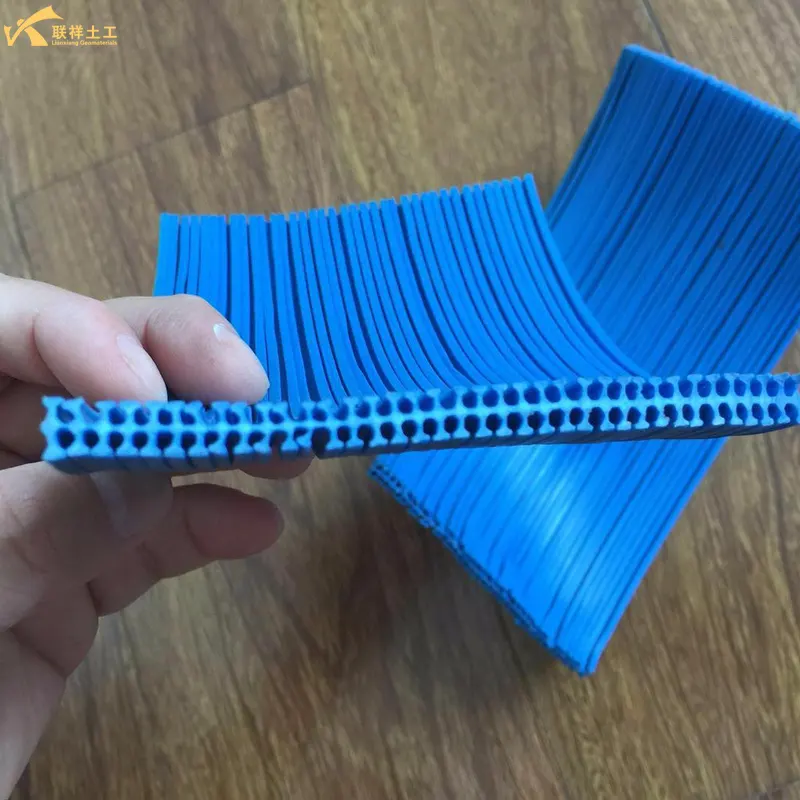
- Mechanism of Influence: Apertures designed for drainage or other functional requirements weaken strip strength. In terms of tensile strength: Round holes > Oval holes > Square holes.
- Best Practice: Research recommends a round hole arrangement with an aperture ratio of 26.5% to balance drainage performance and strength loss.
5. Manufacturing Process and Tensile Orientation
- Extrusion and Stretching: Sheets undergo unidirectional/bidirectional stretching, orienting the molecular chains and increasing strength by 3–5 times (up to 150 MPa).
- Cooling and Shaping: Rapid and uniform cooling reduces internal stress, preventing later strength decay and cracking.
- Welding Quality Control: Matching of temperature, pressure, and time parameters; both incomplete welds and over-welds significantly reduce joint strength.
6. Environmental Temperature and Aging Effects
- Temperature Effects: High temperatures (>60oC) cause softening and strength reduction; low temperatures (< -20oC) cause embrittlement and easy breakage; HDPE has better temperature resistance than PP.
- UV Aging: Long-term exposure to sunlight degrades molecular chains, resulting in a strength loss of 30%–50%; carbon black must be added and surface protection applied.
- Chemical Corrosion: Long-term exposure to acids, alkalis, oil, and groundwater weakens the strength of the material and joints.
7. Loading Rate and Stress State
- Loading Rate: The faster the loading rate, the higher the measured strength (strain rate sensitive); strength decreases under long-term static loads.
- Stress Direction: Strength is highest along the tensile direction of the strip; joints are prone to shear failure under oblique/transverse stress.
- Constraint Conditions: The better the constraint of the filling soil, the stronger the overall tensile and deformation resistance of the cell, and the higher the collaborative efficiency.
8. Long-Term Creep and Fatigue Characteristics
- Creep: Under long-term constant load, the material deforms slowly, and its strength decreases over time; HDPE creep is less than PP.
- Fatigue: Under repeated loading (traffic/vibration), microcracks easily form at joints and strips, and cumulative damage leads to a decrease in strength.
- Time Effect: The design must consider long-term strength reduction (taking 50%–70% of short-term strength) to ensure the safety of the project's life cycle.
Conclusion
The factors affecting the tensile strength of geocells are complex and interrelated, requiring comprehensive consideration from material selection in design to actual working conditions.
| Key Factors | Influencing Mechanism/Manifestation | |
| Geometric Structure | 1. Height 2. Weld Spacing/Dimensions | The most significant influence; increasing the height and decreasing the weld spacing can significantly improve the overall tensile strength. |
| Nodes and Strips | 3. Node Connection Method/Strength 4. Strip Material/Strength | Nodes are the core; their connection method, strength, and compatibility with the strips collectively determine the upper limit. |
| External Conditions | 5. Loading Rate 6. Temperature 7. Aperture Ratio/Cave Type 8. UV Aging | Loading rate, temperature, aperture details, and long-term aging all alter actual service performance. |
In summary, the eight factors affecting the tensile strength of geocells cover the entire chain, from manufacturing processes (nodes, weld spacing, apertures) to raw material selection (strip material), from laboratory testing conditions (tensile rate, temperature) to field service environment (UV aging). Among these, the cell height and weld spacing contribute most significantly to the overall tensile bearing capacity, while the node connection method is the "throat" determining whether strength can be effectively transferred. External conditions such as tensile rate and temperature remind us that there may be significant differences between test results and actual engineering performance, requiring adjustments based on specific working conditions. In addition, the long-term strength reduction caused by UV aging should be given special consideration in high-durability engineering projects.
Written by
SHANDONG LIANXIANG ENGINEERING MATERIALS CO., LTD.
Kyle Fan
WhatsApp:+86 139 5480 7766
Email:admin@lianxiangcn.com
-
WhatsApp
-
E-MailE-Mail:admin@lianxiangcn.com
-
WeChatWeChat:18554180188