
- Home
- Company
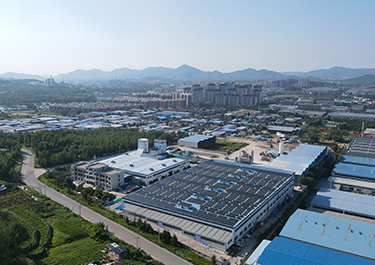 Our FactoryWe have a team of more than 30 talented geotechnical material R&D experts and a 30,000 square meter advanced modern intelligent manufacturing plant.
 - Products
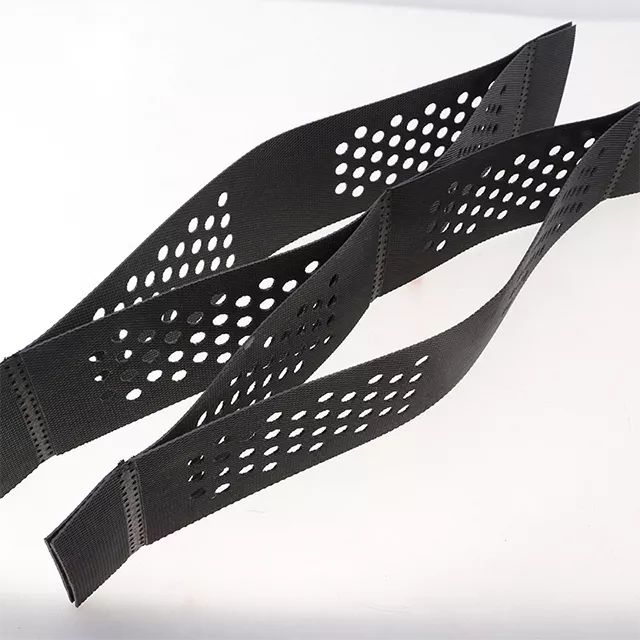 Geocell is a three-dimensional mesh structure made of high-strength polymer sheets (such as HDPE, PP, etc.) through ultrasonic welding. When unfolded, it presents a three-dimensional grid shape.
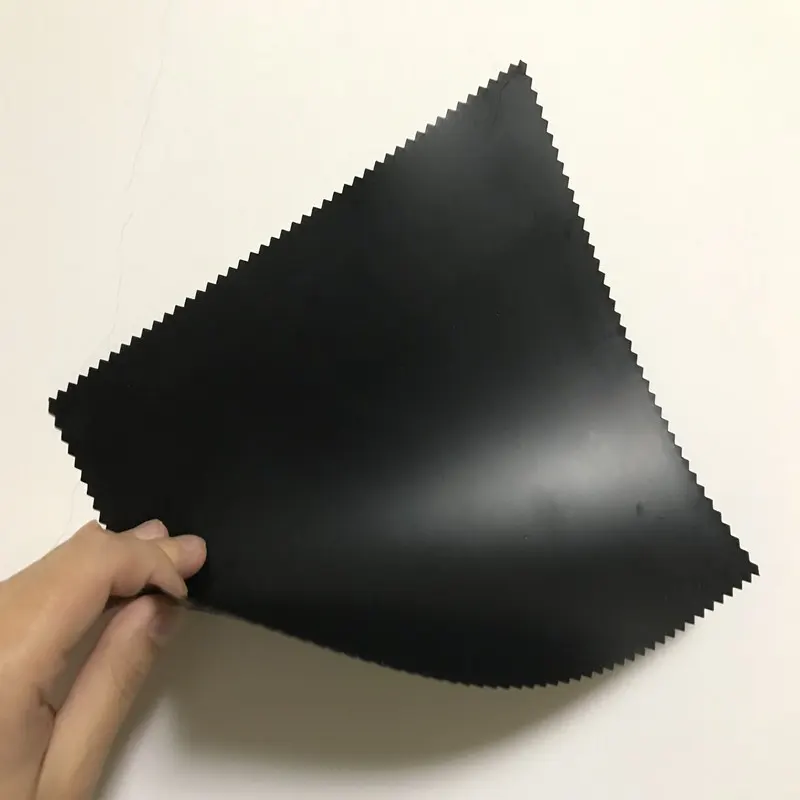 Geomembrane is a thin, extremely low-permeability sheet material made from high-molecular-weight polymers (high-density polyethylene, linear low-density polyethylene).
 - Blog
- Contacts
Geotextile Road Construction: Top 7 Benefits for Long-Lasting Pavement


Discover the top 7 benefits of using geotextile in road construction—separation, drainage, reinforcement, cost savings, and more. Learn how geotextile extends pavement life and improves subgrade stability. Lianxiang Group supplies high-quality geotextiles worldwide.
In modern road construction, geotextiles have become indispensable. These engineered, permeable fabrics—typically made from durable polymers like polypropylene or polyester—are placed between soil layers or between soil and structures to separate, stabilize, filter, and protect engineered systems. Their ability to maintain soil structure, control water flow, and distribute loads makes them essential in everything from highways to airport runways.
Geotextiles perform five primary functions: separation, filtration, drainage, reinforcement, and protection. But what does this mean for your pavement? Here are the top 7 benefits you can't afford to ignore.
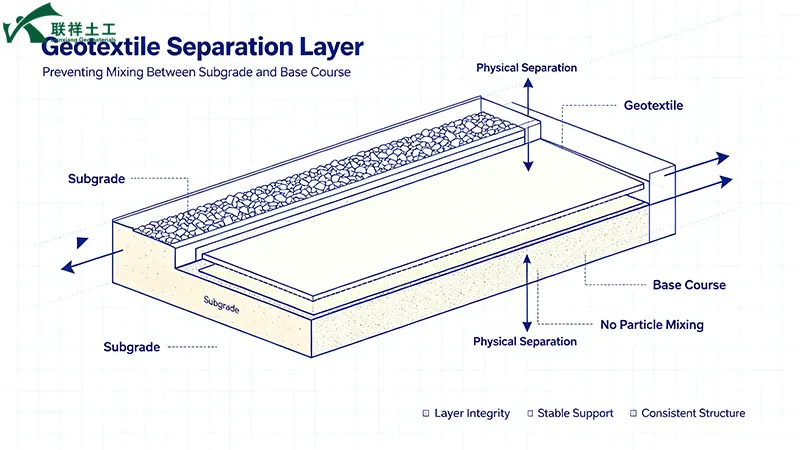
1. Superior Layer Separation – Preventing Premature Failure
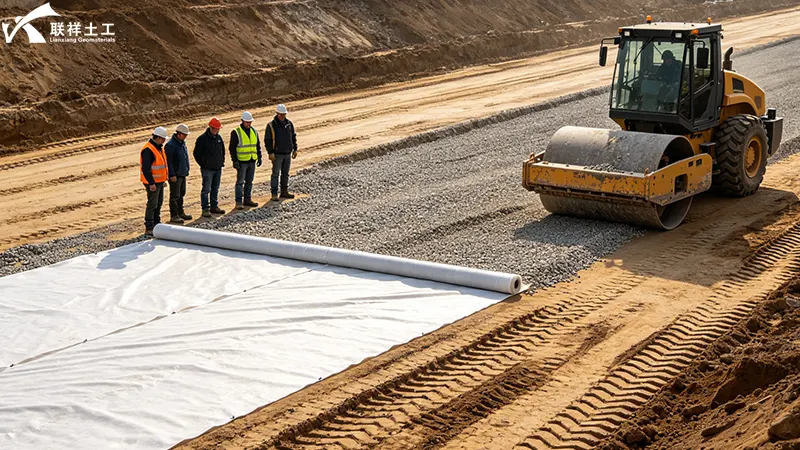
When fine subgrade soils mix with granular base materials, the structural capacity of both layers degrades—leading to rutting, deformation, and premature pavement failure.
How geotextile helps: A separation geotextile prevents this intermixing while still permitting vertical drainage. It maintains layer integrity, reduces maintenance, and prolongs pavement life. In road construction—both paved and unpaved—this is one of the most common and critical applications. The geotextile keeps large-particle base course separate from finer subgrade soil, ensuring each layer performs its intended function.
The result: Longer-lasting pavements with fewer structural failures.
2. Enhanced Subgrade Strength – Building on a Solid Foundation
Weak subgrade soils are a leading cause of pavement distress. Geotextiles directly address this challenge.
How geotextile helps: Geotextiles provide tensile resistance that soils cannot mobilize on their own. Through interface friction and interlock, they distribute loads more widely, control deformation, and increase bearing capacity. Research shows that geotextile reinforcement can reduce potential vertical rise (PVR) in expansive subgrades by up to 85% under swell pressures. Studies also demonstrate that geotextiles effectively enhance subgrade strength across various soil types.
The result: Stronger, more stable subgrades that support heavier loads without excessive deformation.
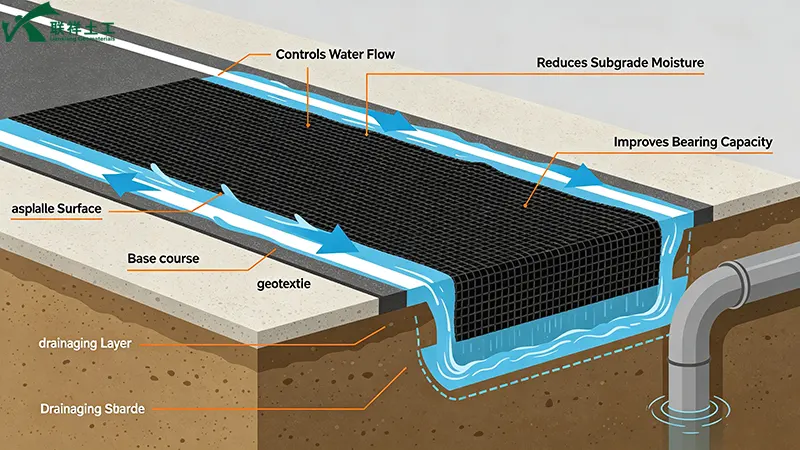
3. Effective Drainage & Moisture Control – Keeping Water Where It Belongs
Water is the enemy of pavement durability. Excess moisture weakens subgrade soils, causes frost heave, and accelerates pavement deterioration.
How geotextile helps: Geotextiles facilitate moisture reduction and provide drainage by allowing water to move within the plane of the fabric or through a geotextile-geonet composite. They collect groundwater and pore water and convey it to controlled outlets, reducing pore pressure and preventing localized saturation. Field performance studies confirm that woven geotextiles effectively reduce subgrade moisture and enhance drainage performance.
The result: Drier, more stable subgrades with reduced risk of moisture-related failures.
4. Filtration – Stopping Soil Migration Before It Starts
Without proper filtration, fine soil particles can be washed into drainage layers, clogging systems and causing internal erosion.
How geotextile helps: Geotextiles retain soil particles while allowing water to pass through in a controlled manner. Good filtration design balances pore size, permeability, and thickness to avoid both clogging and soil loss. This prevents internal erosion and piping—common problems in road drainage systems.
The result: Clean, functional drainage systems that perform reliably over the long term.
5. Load Distribution & Reinforcement – Spreading the Weight
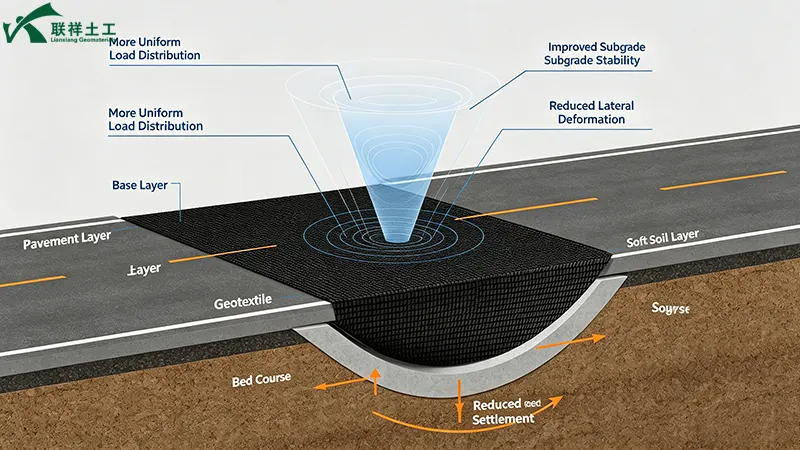
Roads face repeated, heavy loads from traffic. Without proper reinforcement, these loads concentrate on weak spots, leading to rutting and structural failure.
How geotextile helps: High-modulus woven geotextiles provide tensile capacity that distributes loads more widely and improves performance under repeated loads. Geotextile-stabilized sections exhibit higher stiffness and reduced surface deformation. Both reinforcements minimize stress transfer to pavement layers, enhancing overall stability and pavement performance.
The result: Pavements that handle heavy traffic loads with less deformation and longer service life.
6. Reduced Pavement Thickness & Material Savings – Doing More with Less
One of the most compelling economic benefits of geotextiles is their ability to reduce required pavement thickness while maintaining—or even improving—performance.
How geotextile helps: Studies show that incorporating geotextiles into pavement construction allows for reduced pavement thickness while retaining strength comparable to conventional pavements. Geotextiles enable the construction of flexible pavements that are both efficient and cost-effective. This translates directly into material savings—less aggregate, less asphalt, and lower overall construction costs.
The result: Significant cost savings without compromising pavement quality or longevity.
7. Extended Pavement Life & Reduced Maintenance – The Ultimate Payoff
Perhaps the most important benefit of all: geotextiles make roads last longer.
How geotextile helps: By performing all the functions above—separation, drainage, reinforcement, and filtration—geotextiles collectively extend the service life of pavements. They reduce maintenance needs and improve overall structural performance by mitigating subgrade deformation and stabilizing the base layer. Research indicates that geotextiles have the ability to significantly increase the lifespan of roads. Case studies show that geotextile applications can reduce pavement costs per kilometer by 12–23% while delivering superior long-term performance.
The result: Roads that last longer, require less frequent repair, and deliver better return on investment.
Quick Reference: Top 7 Geotextile Benefits at a Glance
| Benefit | Key Impact |
| 1. Superior Separation | Prevents layer intermixing, maintains structural integrity |
| 2. Enhanced Subgrade Strength | Reduces heave up to 85%, increases bearing capacity |
| 3. Effective Drainage | Reduces moisture, prevents saturation and frost damage |
| 4. Filtration | Stops soil migration, prevents clogging and erosion |
| 5. Load Distribution | Spreads loads, reduces deformation and rutting |
| 6. Reduced Thickness | Cuts material costs while maintaining performance |
| 7. Extended Pavement Life | Reduces maintenance, delivers long-term ROI |
Final Thoughts
Geotextiles are not just an add-on—they are a fundamental component of modern, durable road construction. From separation and drainage to reinforcement and cost savings, the benefits are clear and measurable.
Whether you're building a new highway, rehabilitating an existing road, or constructing an unpaved haul road, specifying the right geotextile can make the difference between a pavement that fails prematurely and one that performs for decades.
Lianxiang Group supplies high-quality woven and nonwoven geotextiles, along with geomembranes, geocells, and geogrids for road construction and civil engineering projects worldwide. Our technical team can help you select the right geotextile type based on your subgrade conditions, traffic loads, and project requirements. Contact us for free samples, technical data sheets, or a customized solution.
Written by
SHANDONG LIANXIANG ENGINEERING MATERIALS CO., LTD.
Kyle Fan
WhatsApp:+86 139 5480 7766
Email:admin@lianxiangcn.com
-
WhatsApp
-
E-MailE-Mail:admin@lianxiangcn.com
-
WeChatWeChat:18554180188