
- Home
- Company
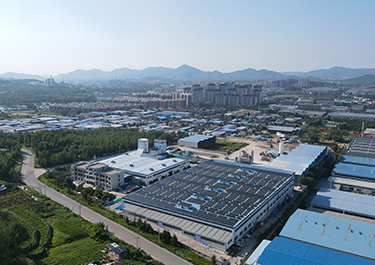 Our FactoryWe have a team of more than 30 talented geotechnical material R&D experts and a 30,000 square meter advanced modern intelligent manufacturing plant.
 - Products
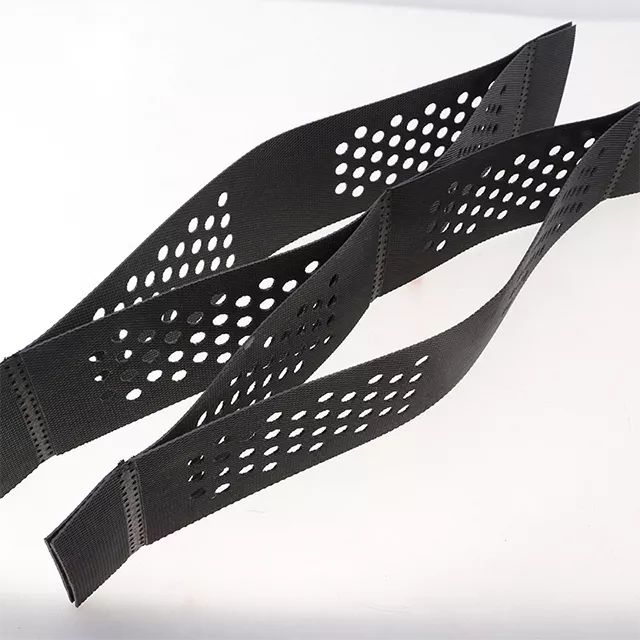 Geocell is a three-dimensional mesh structure made of high-strength polymer sheets (such as HDPE, PP, etc.) through ultrasonic welding. When unfolded, it presents a three-dimensional grid shape.
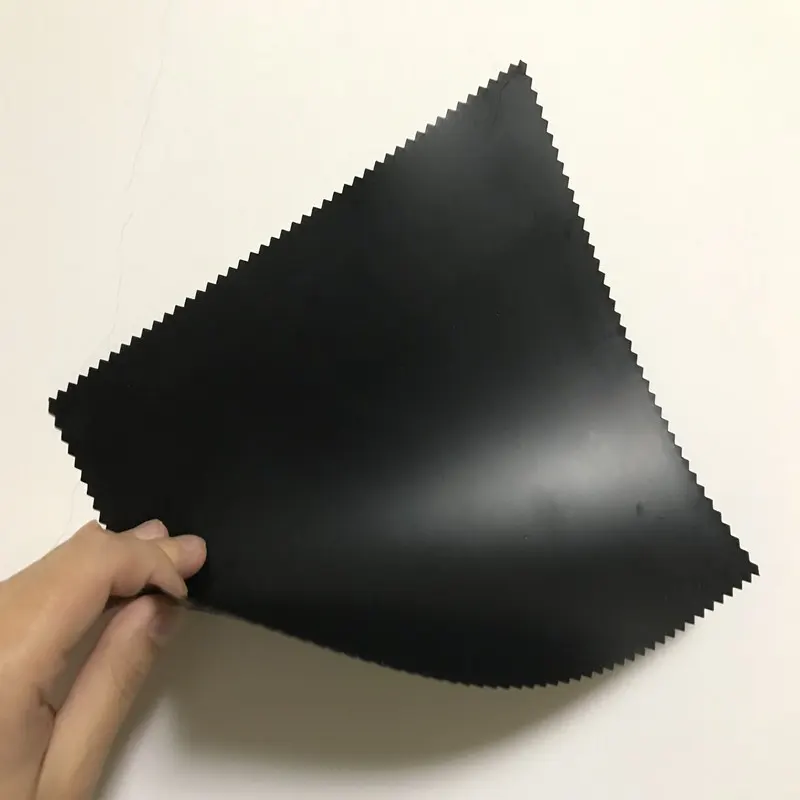 Geomembrane is a thin, extremely low-permeability sheet material made from high-molecular-weight polymers (high-density polyethylene, linear low-density polyethylene).
 - Blog
- Contacts
Geomembrane Thickness Guide: 10 Things You Must Know Before Buying


Choosing the right geomembrane thickness isn’t just about picking a number on a spec sheet. It's one of the most critical decisions you'll make—and getting it wrong can lead to liner failure, costly repairs, environmental liability, and years of regret.
Walk onto almost any project site, and you'll hear opinions masquerading as facts: "Thicker is always better.","Just follow the minimum standard.","All 1.5mm liners are the same."
None of these are entirely true.
In reality, geomembrane thickness interacts with site conditions, chemical exposure, installation methods, long-term stress, and even your contractor's welding equipment. A thickness that works perfectly for a municipal landfill in Texas could be overkill—or dangerously under-specified—for a mining pond in the Andes.
And here's the kicker: thickness alone doesn't guarantee performance. A 60-mil liner made with virgin resins and superior antioxidants can outlast an 80-mil liner stuffed with cheap fillers and recycled content. We've seen 80-mil geosynthetics crack within 18 months—while properly formulated 60-mil liners have performed flawlessly for over 7 years under identical conditions.
That's why we've put together this comprehensive guide covering 10 critical factors you must consider before making your purchase. Whether you're an engineer preparing specs, a procurement officer evaluating bids, or a contractor planning installation, these insights will help you avoid costly mistakes and specify the right thickness—not just the one that looks good on paper.
1. Thickness Range: A Wide Selection from 0.2mm to 3.0mm
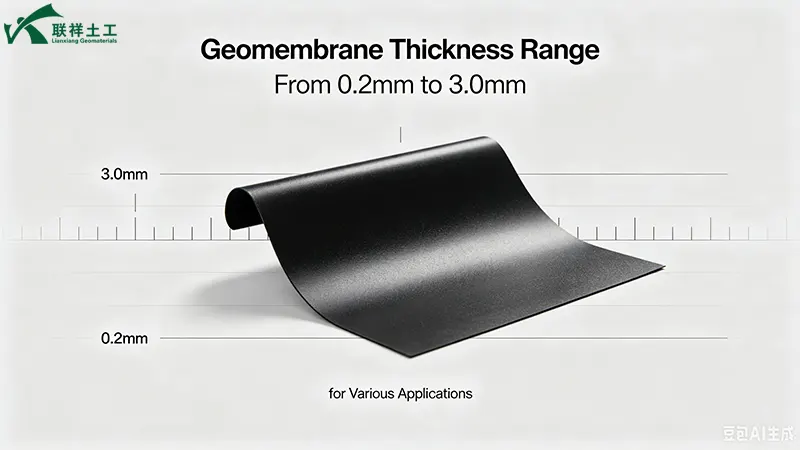
Geomembranes come in a wide range of thicknesses, typically from 0.2 mm (approximately 8 mils) to 3.0 mm (approximately 120 mils). Some specialized projects require even thinner or thicker specifications.
2. Application Scenarios Determine the Baseline Thickness
Different projects have vastly different thickness requirements, which is the primary basis for selection.
- Thin (0.2mm - 0.5mm): Suitable for temporary coverings, short-term seepage prevention, or landscape ponds.
- Medium (0.75mm - 1.5mm): The most widely used, commonly found in general landfills, water conservancy projects, sewage treatment plants, and agricultural aquaculture.
- Thick (≥2.0mm): Used in scenarios with extremely high requirements for strength and corrosion resistance, such as hazardous waste landfills and petrochemical pond linings.
3. Thickness and Performance: A Direct Correlation Between Strength, Puncture Resistance, and Impermeability
Thickness is the cornerstone determining the key performance characteristics of geomembranes.
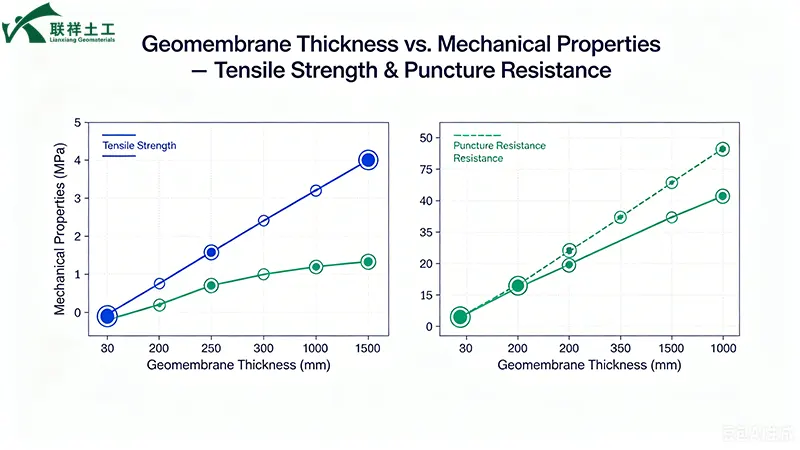
- Tensile Strength: There is a strong positive correlation between thickness and tensile strength. The thicker the membrane, the higher the structural density per unit area, and the stronger its resistance to external forces.
- Puncture Resistance: Membranes thicker than 1.5 mm can effectively resist damage from sharp rocks or construction machinery.
- Impermeability: The thicker the membrane, the longer the molecular pathway, the stronger its ability to block water molecules, and the lower the long-term permeability.
4. Chemical Resistance and Aging Resistance: The Hidden Value of Thickness
For projects involving contact with corrosive chemicals or high concentrations of organic pollutants, thicker membranes provide a better protective barrier. Furthermore, increasing thickness is also a necessary means to improve durability in environments with high UV exposure or extreme temperatures.
5. Project Conditions: Loads, Head, and Foundation Conditions
- Pressure and Loads: Projects requiring high pressure from liquids or soil (such as deep-water reservoirs and high-volume landfills) typically require membrane thicknesses of 1.5mm to 3.0mm.
- Foundation Conditions: The softer the foundation and the more sharp the objects, the higher the required thickness. For example, in karst areas or sites with a height exceeding 60 meters, the thickness should not be less than 2.0mm.
6. Regulations and Design Standards: Inviolable Limits
Many applications have specific regulatory requirements. For example, the minimum thickness requirement for HDPE geomembranes in hazardous waste landfills is typically 1.5mm. The US EPA also recommends a minimum thickness of 60 mil (approximately 1.5mm) for HDPE liners. When procuring, it is necessary to confirm that the product conforms to relevant standards such as ASTM GRI-GM13.
7. Cost and Budget: The Trade-off Between Thickness and Cost
This is the most direct influencing factor. Thicker membranes result in higher raw material costs, and transportation and installation costs may also increase. Therefore, the most cost-effective thickness should be selected while meeting performance requirements.
8. Installation Difficulty: Thicker Isn't Always Better
This is an often overlooked point. Excessively thick geomembranes increase welding difficulty, requiring higher temperatures and slower welding speeds, placing higher demands on the technical skills of construction workers, and potentially leading to leakage risks due to welding quality issues.
9. Common Misconception: Thickness Isn't the Only Indicator
This is the most crucial point. Material quality is more important than thickness. A 60 mil geomembrane made with high-quality virgin resin and a reasonable antioxidant system may have far superior long-term performance than an 80 mil inferior product mixed with large amounts of recycled materials or calcium carbonate filler. Cases have shown that an 80 mil thick membrane failed within 18 months due to stress cracking, while a high-quality 60 mil membrane lasted for over 7 years under similar conditions.
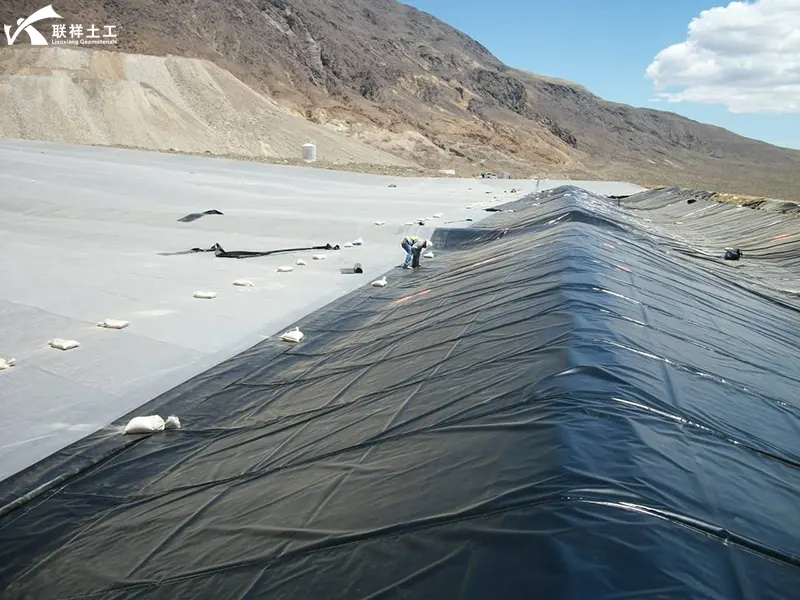
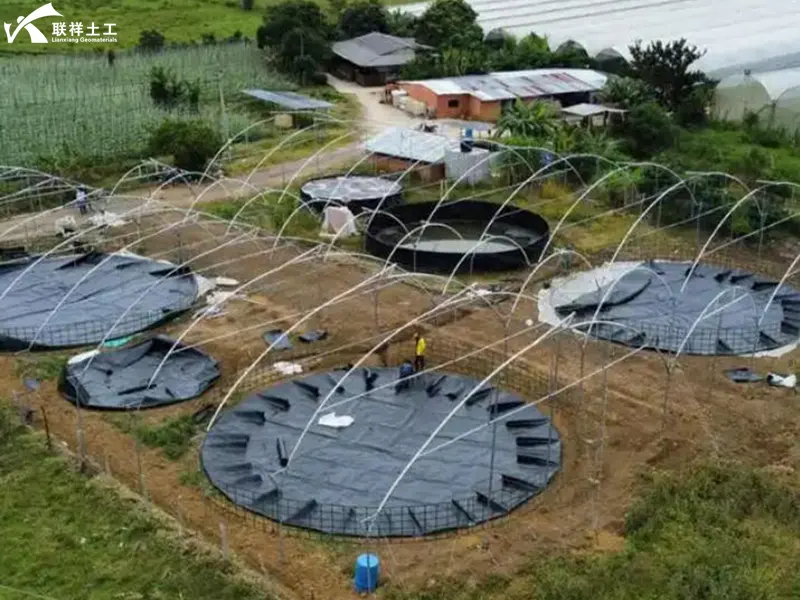
10. Procurement Checklist: Ask the Right Questions to Avoid Pitfalls
When procuring, in addition to thickness, be sure to confirm the following information with the supplier:
- Resin Source and Purity: Is it virgin resin?
- Additive Formulation: What are the content and dispersibility of antioxidants and UV stabilizers (such as carbon black)?
- Production Process: Is it blown film or flat extrusion? This will affect stress crack resistance.
- Thickness Uniformity: Can you provide thickness distribution data for the entire roll?
- Relevant Certifications: Does it meet the ASTM or GRI standards required for the project?
Selecting the right geomembrane thickness is not a one-size-fits-all decision. It requires balancing application requirements, site conditions, regulatory standards, budget constraints, and installation practicality.
But perhaps the most important takeaway is this: thickness is just one piece of the puzzle. Material quality, resin purity, additive formulation, and manufacturing consistency often matter more than a few extra mils on the spec sheet. A well-specified, high-quality 1.0mm liner from a trusted manufacturer will almost always outperform a poorly made 1.5mm liner filled with recycled content or calcium carbonate extenders.
Before you place your order, make sure you've answered these questions:
- What does the project's design standard or local regulation require?
- What chemicals, temperatures, and loads will the liner face?
- Is the subgrade clean, compacted, and free of sharp objects?
- Can your installation crew handle the thickness you're specifying?
- Is the supplier providing full material traceability and third-party test reports?
At Lianxiang Group, we don't just sell geomembranes—we help you make the right choice for your specific project. Our team of experienced engineers can guide you through the selection process, provide detailed technical data, and even support on-site installation.
From HDPE to LLDPE, from 0.2mm to 3.0mm, we manufacture high-performance geomembranes that meet ASTM and GRI-GM13 standards. We've served clients across 60+ countries, and we're ready to bring that expertise to your next project.
Ready to choose the right geomembrane thickness? Contact us today for a personalized recommendation, free samples, or a competitive quote.
Written by
SHANDONG LIANXIANG ENGINEERING MATERIALS CO., LTD.
Kyle Fan
WhatsApp:+86 139 5480 7766
Email:admin@lianxiangcn.com
-
WhatsApp
-
E-MailE-Mail:admin@lianxiangcn.com
-
WeChatWeChat:18554180188