
- Home
- Company
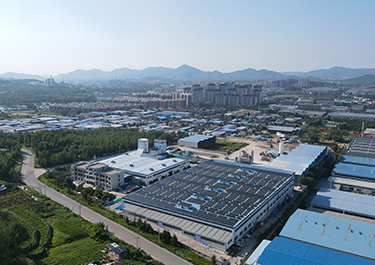 Our FactoryWe have a team of more than 30 talented geotechnical material R&D experts and a 30,000 square meter advanced modern intelligent manufacturing plant.
 - Products
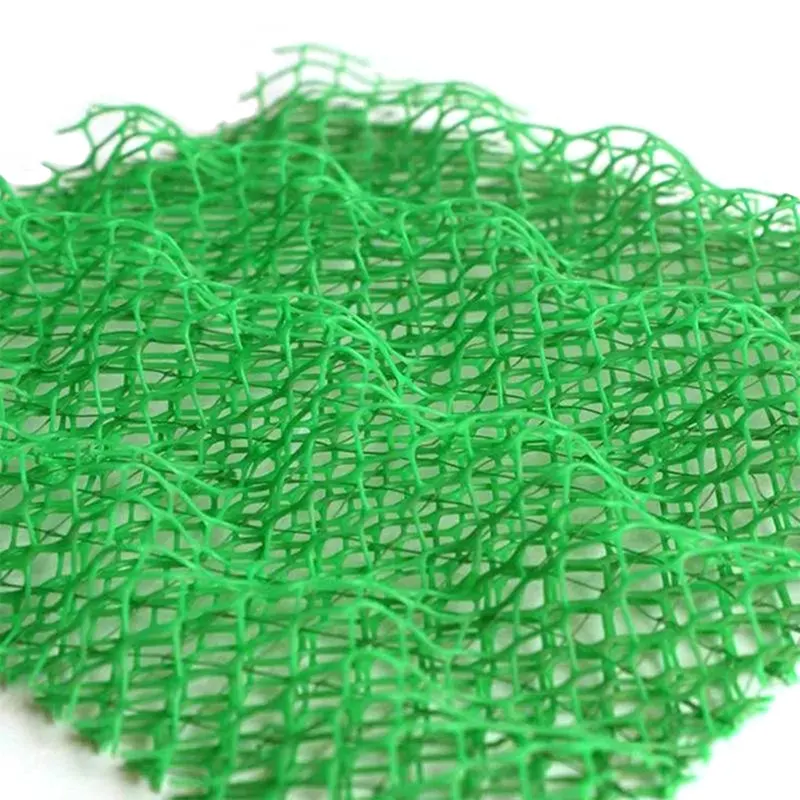
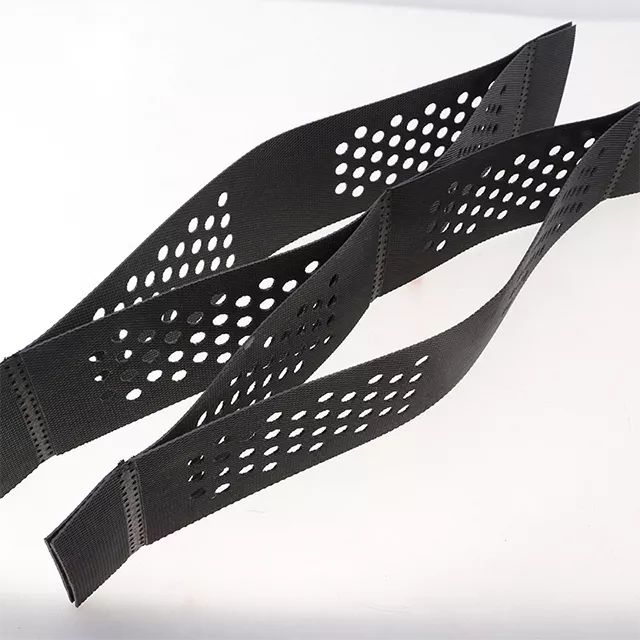 Geocell is a three-dimensional mesh structure made of high-strength polymer sheets (such as HDPE, PP, etc.) through ultrasonic welding. When unfolded, it presents a three-dimensional grid shape.
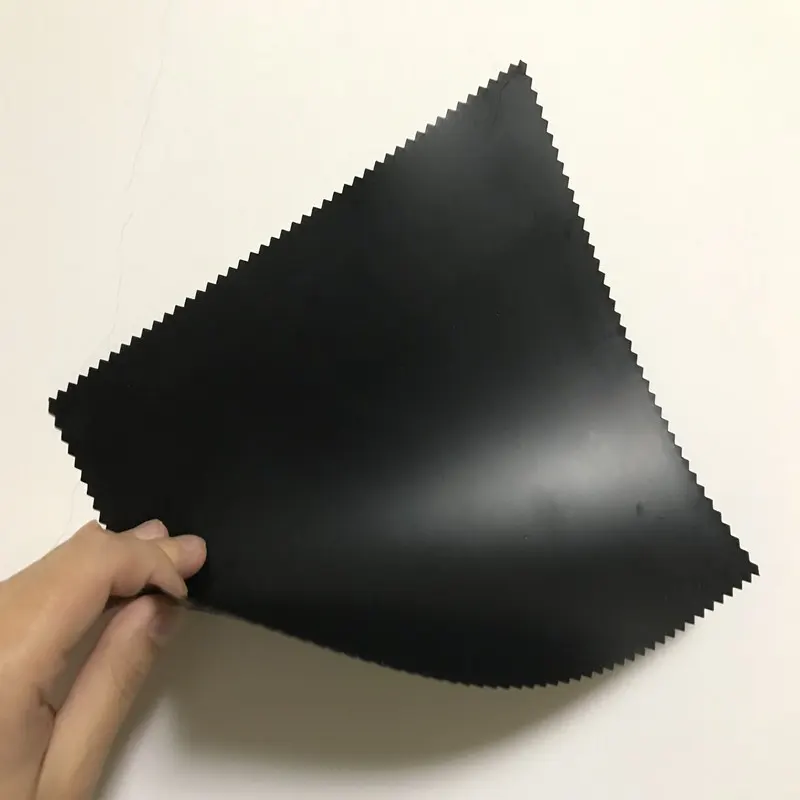 Geomembrane is a thin, extremely low-permeability sheet material made from high-molecular-weight polymers (high-density polyethylene, linear low-density polyethylene).
 - Blog
- Contacts
Geomembrane vs Geotextile: 5 Key Differences Every Engineer Should Know


When it comes to geosynthetic materials, few decisions carry as much weight as choosing between a geomembrane and a geotextile. Both are essential in civil and environmental engineering, but they serve fundamentally different purposes. Selecting the wrong material can compromise project integrity, lead to costly failures, and create environmental risks.
Here are the 5 key differences every engineer needs to understand.
1. Permeability: The Fundamental Distinction
This is the single biggest difference between geomembranes and geotextiles.
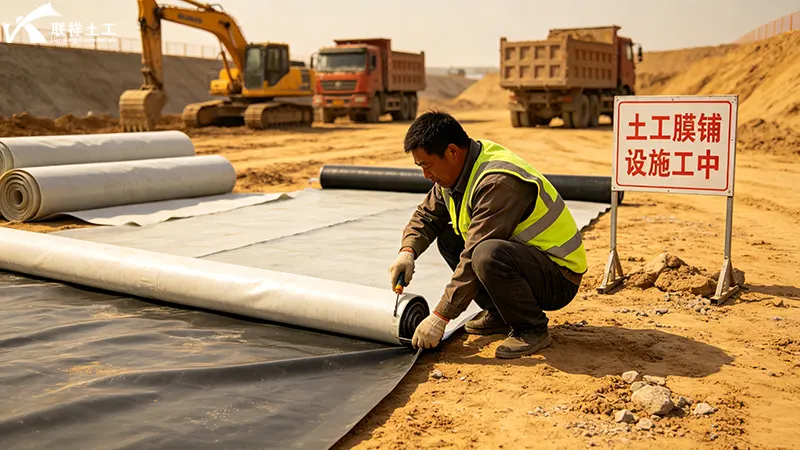
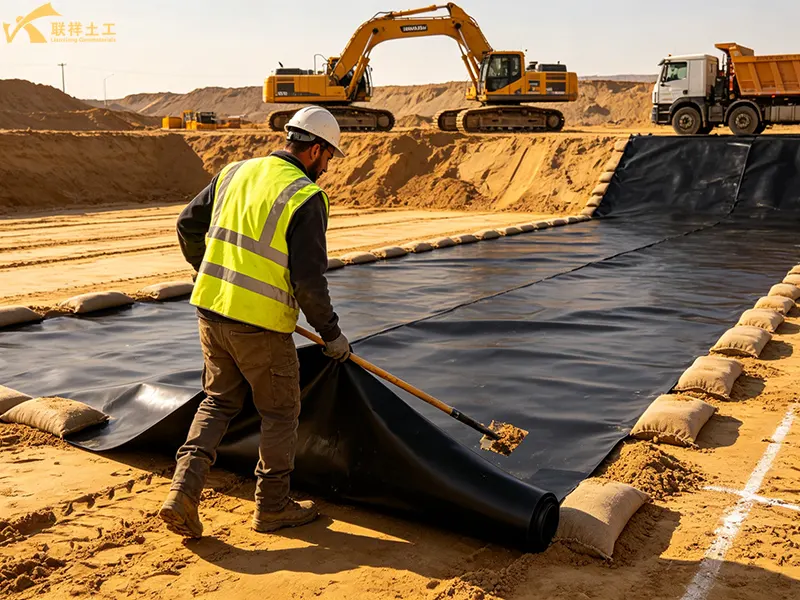
Geomembranes are impermeable synthetic liners designed to block the movement of fluids and gases. They act as complete barriers—nothing passes through.
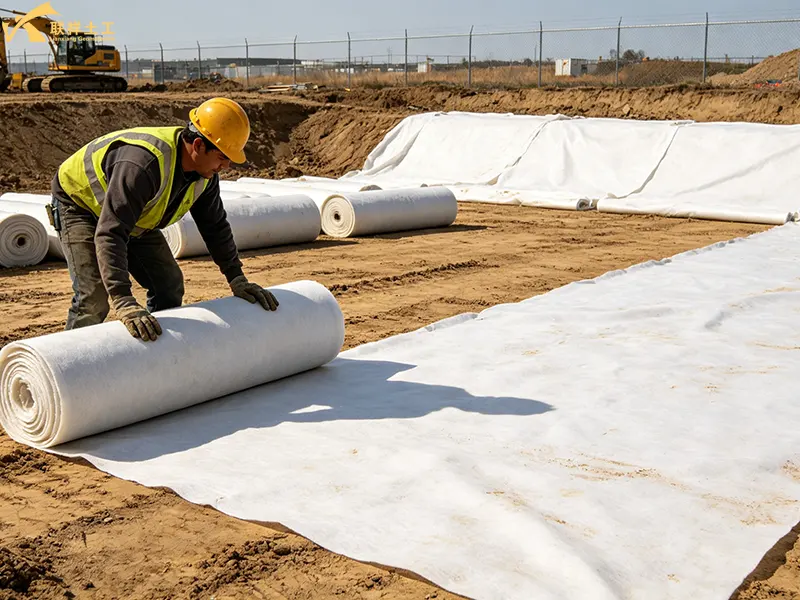
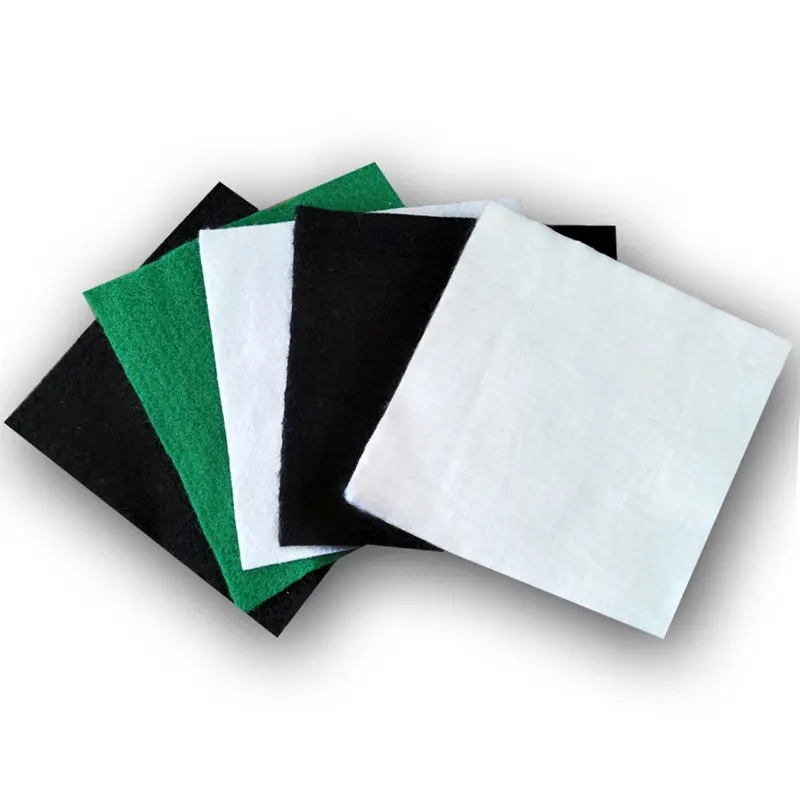
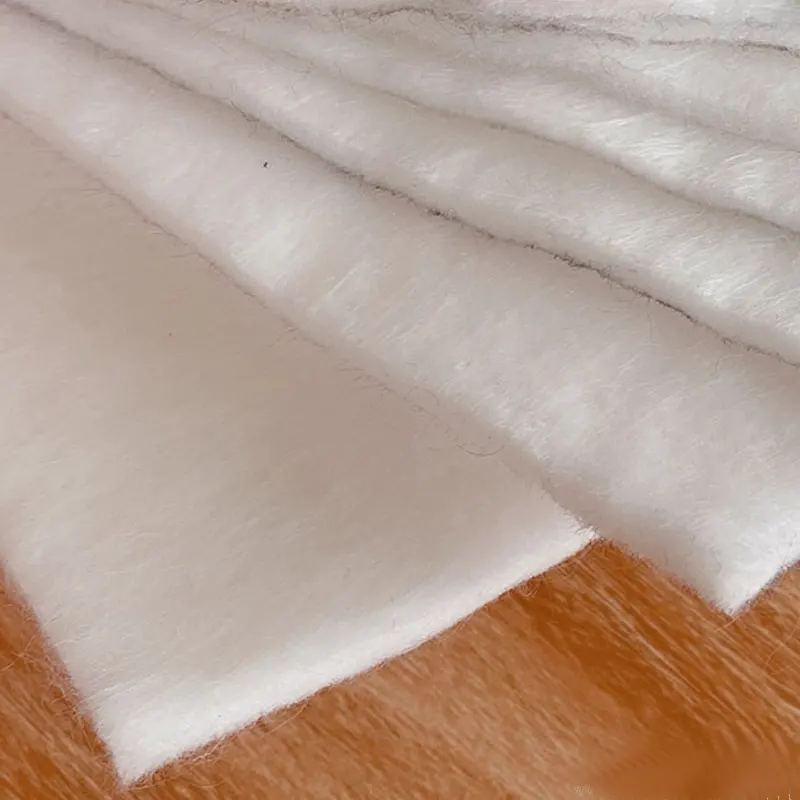
Geotextiles, on the other hand, are permeable fabrics that allow water and gases to pass through. Their porous structure enables drainage and filtration while controlling soil movement.
Engineer's takeaway: If your project requires complete containment or waterproofing, you need a geomembrane. If you need water to flow through while retaining soil, you need a geotextile.
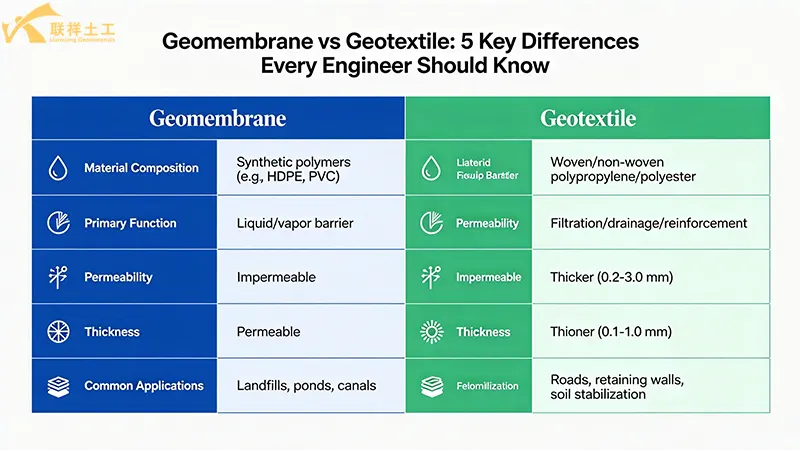
2. Primary Function: Barrier vs. Filtration
The permeability difference drives entirely different functional roles.
Geomembranes serve as barriers
- Prevent liquid, gas, or contaminant migration
- Provide waterproofing and containment
- Block leachate from contaminating soil and groundwater
Geotextiles serve multiple permeable functions
- Separation – keeping different soil layers apart
- Filtration – allowing water through while preventing soil erosion
- Drainage – channeling water away from structures
- Reinforcement – increasing soil stability
- Protection – cushioning and safeguarding other materials
Engineer's takeaway: A geomembrane is a barrier; a geotextile is a fabric that manages soil and water.
3. Material Composition: Plastic Sheet vs. Woven Fabric
The physical makeup of these two materials couldn't be more different.
Geomembranes are manufactured as continuous synthetic sheets or liners made from polymer materials such as:
- High-density polyethylene (HDPE)
- Linear low-density polyethylene (LLDPE)
- Polyvinyl chloride (PVC)
- Polypropylene (PP)
- EPDM
Geotextiles are fabrics manufactured from synthetic fibers, typically:
- Polypropylene
- Polyester
They come in two main categories:
- Woven geotextiles – produced by weaving yarns together for high tensile strength, ideal for soil reinforcement and stabilization
- Non-woven geotextiles – produced through needle-punching or heat-bonding, particularly effective for filtration, drainage, and cushioning
Engineer's takeaway: Geomembranes are impermeable plastic sheets; geotextiles are permeable fabrics.
4. Applications: Containment vs. Soil Management
These materials are deployed in vastly different project scenarios.
Common geomembrane applications
- Landfill liners and covers
- Pond and reservoir liners
- Wastewater lagoons
- Mining ponds and chemical storage
- Canal lining
- Aquaculture ponds
- Secondary containment systems
- Hazardous waste containment
Common geotextile applications
- Road base stabilization
- Retaining wall drainage
- Slope protection and erosion control
- Subgrade improvement
- Filtration in subsurface drainage systems
- Soil separation in embankments
- Geomembrane protection (as a cushion layer)
Engineer's takeaway: Use a geomembrane when you need to contain liquids or gases. Use a geotextile when you need to stabilize, filter, or drain soil.
5. Physical Properties: Rigidity and Handling
The physical characteristics of these materials affect installation, durability, and performance.
Geomembranes:
- Rigid and require careful installation
- High chemical resistance
- Excellent durability for long-term, high-risk applications
- Typically measured in thickness (mil or mm)
- HDPE geomembranes have high interface shear strength
Geotextiles:
- Softer and easier to handle
- Flexible and adaptable to various terrain
- Available in varying weights and strengths
- Can be cut and shaped on-site with relative ease
Engineer's takeaway: Geomembranes demand precision installation to avoid punctures and ensure seam integrity. Geotextiles are more forgiving and easier to work with in the field.
How They Work Together
While these materials are often compared as alternatives, they are frequently used together in engineered systems.
In a typical landfill liner system, for example:
- A geomembrane provides the impermeable barrier against leachate
- A geotextile layer sits above it for protection and drainage
The geomembrane stops leakage, while the geotextile protects the liner or manages soil and water movement. This combination delivers superior performance that neither material could achieve alone.
Quick Reference: Geomembrane vs. Geotextile
| Feature | Geomembrane | Geotextile |
| Permeability | Impermeable | Permeable |
| Primary Function | Barrier / Containment | Filtration / Separation / Drainage / Reinforcement |
| Material | Polymer sheet (HDPE, PVC, PP) | Woven or non-woven fabric (polypropylene, polyester) |
| Key Applications | Landfills, ponds, mining, containment | Roads, slopes, drainage, erosion control |
| Handling | Rigid, requires careful installation | Soft, flexible, easier to handle |
Final Thoughts
The choice between geomembrane and geotextile comes down to one fundamental question: Do you need to stop fluids or manage them?
- Choose geomembrane when your project demands a waterproof barrier—containment, liners, and environmental protection
- Choose geotextile when you need filtration, drainage, separation, or soil reinforcement
And remember—in many of the most demanding engineering projects, the best solution uses both. Understanding how these materials complement each other is what separates good engineers from great ones.
Lianxiang Group supplies high-quality geocell, geomembrane, and geotextile solutions for civil engineering and environmental projects worldwide. Contact us for expert guidance on material selection for your next project.
Written by
SHANDONG LIANXIANG ENGINEERING MATERIALS CO., LTD.
Kyle Fan
WhatsApp:+86 139 5480 7766
Email:admin@lianxiangcn.com
-
WhatsApp
-
E-MailE-Mail:admin@lianxiangcn.com
-
WeChatWeChat:18554180188