
- Home
- Company
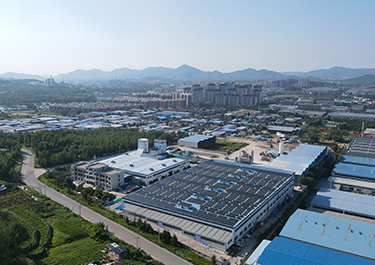 Our FactoryWe have a team of more than 30 talented geotechnical material R&D experts and a 30,000 square meter advanced modern intelligent manufacturing plant.
 - Products
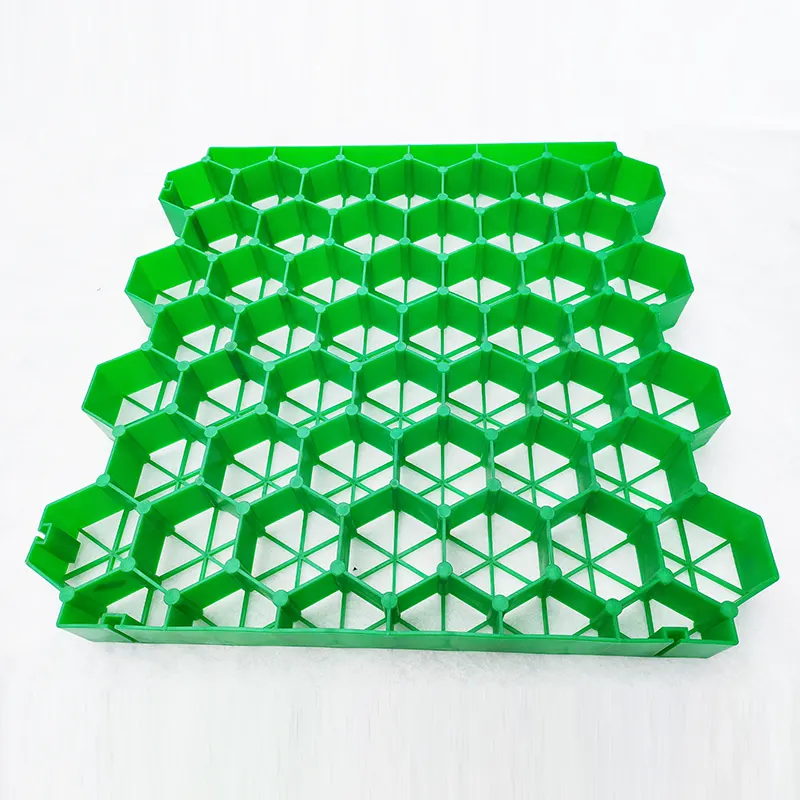
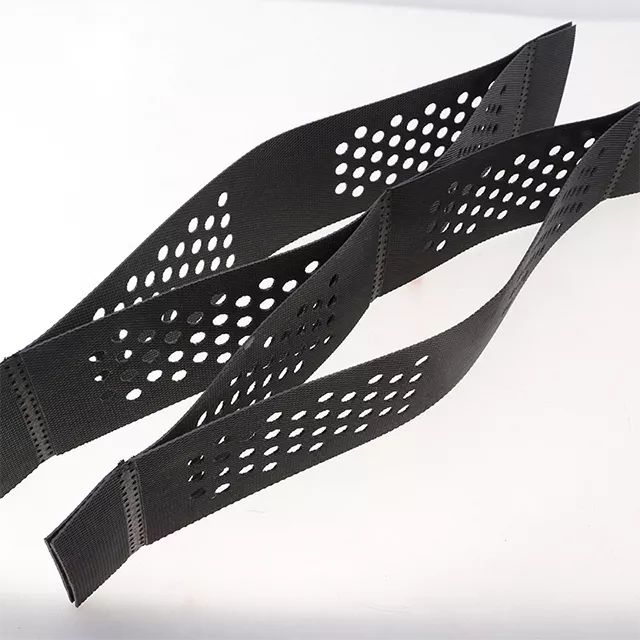 Geocell is a three-dimensional mesh structure made of high-strength polymer sheets (such as HDPE, PP, etc.) through ultrasonic welding. When unfolded, it presents a three-dimensional grid shape.
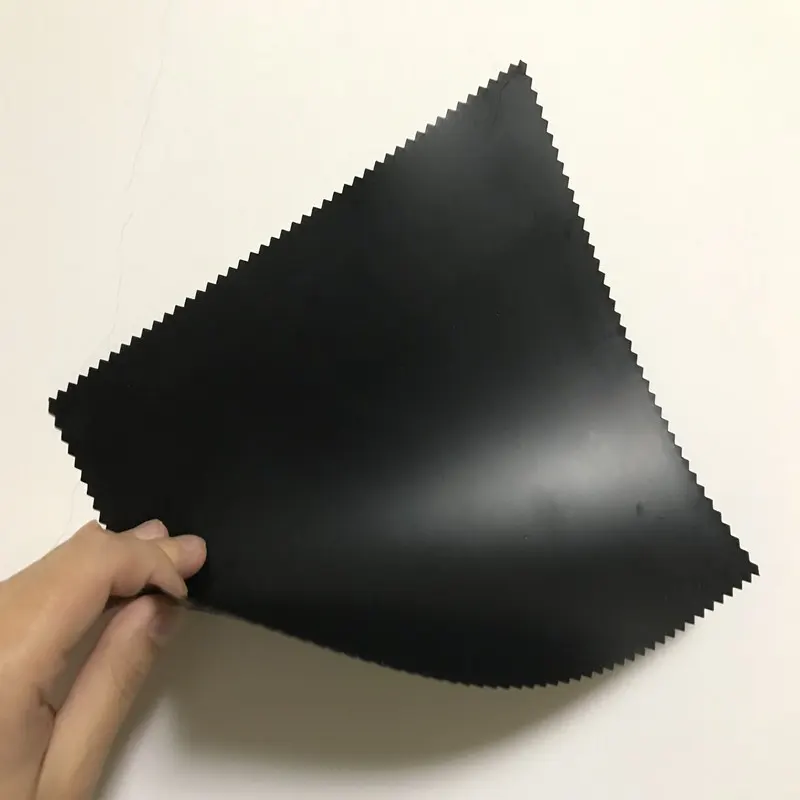 Geomembrane is a thin, extremely low-permeability sheet material made from high-molecular-weight polymers (high-density polyethylene, linear low-density polyethylene).
 - Blog
- Contacts
Best Tailings Pond Geomembrane: 7 Corrosion Protection Tips


Tailings ponds are among the most demanding containment applications in the mining industry. Unlike municipal landfills or agricultural ponds, tailings facilities must contain a highly aggressive cocktail of fine rock particles, process chemicals, heavy metals, and acidic or alkaline solutions—often for decades or even centuries.
A single failure in a tailings pond geomembrane can contaminate groundwater, trigger regulatory penalties exceeding millions of dollars, and permanently damage a mining company's social license to operate. According to industry data, the cost of remediating a confirmed liner leak averages USD 740,000—while the cost of proper design and installation is a fraction of that figure.
Choosing the right HDPE geomembrane for tailings containment is not simply a matter of picking the thickest sheet available. It requires a systematic understanding of chemical exposure, mechanical stress, installation quality, and long-term durability.
Here are the 7 corrosion protection tips every mining engineer and procurement professional should know before specifying a tailings pond liner.
1. Choose 100% Virgin HDPE Resin – Never Compromise on Material Quality
The foundation of any corrosion-resistant tailings pond geomembrane is the raw material itself. High-density polyethylene (HDPE) is the industry standard for mining containment because of its exceptional chemical resistance, low permeability, and mechanical strength.
However, not all HDPE geomembranes are created equal. The single most important specification decision is whether the liner is manufactured from 100% virgin HDPE resin or from recycled content.
| Parameter | Virgin HDPE Resin | Recycled Content |
| Service life (buried) | 50–100+ years | 5–15 years |
| Chemical resistance | Excellent | Inconsistent |
| Stress crack resistance | ≥500 hours (GRI-GM13) | Often below 200 hours |
| UV stability | 2–3% carbon black, uniform | Variable, prone to degradation |
Why it matters for tailings: Tailings slurry contains acidic process water, residual reagents, and heavy metal ions that attack polymer chains over time. Recycled resins contain contaminants and degraded additives that accelerate oxidative degradation—especially in the aggressive chemical environment of a tailings pond liner.
What to ask your supplier: Request a certificate of analysis (COA) confirming virgin resin content, along with third-party test reports for density (≥0.940 g/cc) and melt flow index.
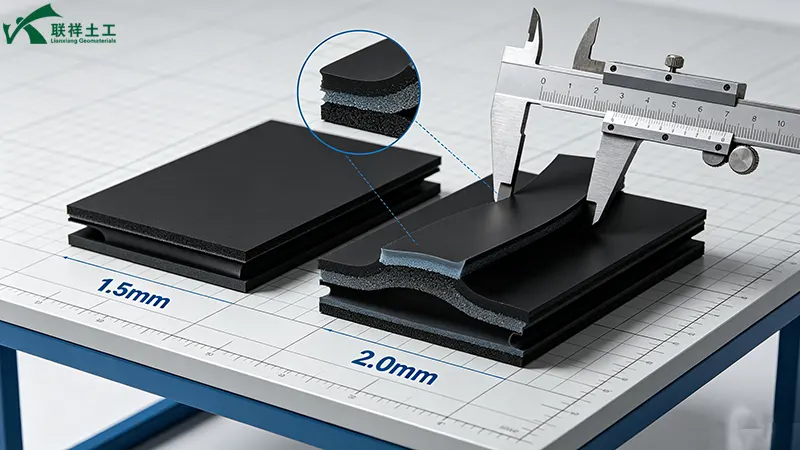
2. Select the Correct Thickness – 1.5mm vs. 2.0mm for Mining Applications
Thickness is the most visible specification on any tailings pond geomembrane datasheet—and one of the most frequently misunderstood. The rule is simple: thickness must match the engineering risk, not exceed it unnecessarily.
For tailings containment, industry standards and regulatory frameworks converge on the following minimum requirements:
| Application | Recommended Thickness | Key Rationale |
| Standard tailings pond liner | 1.5 mm (60 mil) | Minimum for containment barriers |
| High-stress / deep tailings | 2.0 mm (80 mil) | Puncture resistance ≥400 N |
| Acidic tailings (pH < 3) | 2.0 mm+ | Extended chemical exposure |
| Heap leach pads | 2.0–3.0 mm | Heavy loads, acid containment |
Performance data by thickness:
- 1.5 mm HDPE geomembrane: Puncture resistance ≥480 N; tear resistance ≥170 N; tensile yield strength ≥22 N/mm
- 2.0 mm HDPE geomembrane: Puncture resistance ≥640 N; tear resistance ≥250 N; tensile yield strength ≥29 N/mm
A 2.0 mm HDPE geomembrane provides approximately 33% greater puncture resistance than a 1.5 mm liner—a critical safety margin when tailings contain sharp, angular rock particles.
Practical guideline: For tailings dams with waste heights exceeding 30 meters, or where the subgrade contains angular rock fragments, specify a minimum of 2.0 mm. For shallower facilities with well-prepared subgrades, 1.5 mm may be acceptable—but always verify against local mining regulations.
3. Evaluate Chemical Resistance – pH, Acids, and Heavy Metals
Corrosion resistance is not a single property—it is a system of material responses to specific chemical exposures. A tailings pond geomembrane must withstand the unique chemistry of the ore body and processing method.
Key chemical exposure factors in tailings:
- pH range: Tailings can range from highly acidic (pH 2–3, common in gold and copper sulfide operations) to strongly alkaline (pH 10–12, common in alumina and uranium processing)
- Heavy metals: Arsenic, lead, cadmium, mercury, and other dissolved metals that can catalyze polymer degradation
- Process reagents: Residual cyanide, sulfuric acid, xanthates, and flotation chemicals
- Salinity: High dissolved solids content, particularly in arid-region mining operations
HDPE chemical resistance performance:
| Exposure | HDPE Performance |
| pH 2–13 | Stable |
| Sulfuric acid (up to 70%) | Resistant at ambient temperature |
| Sodium hydroxide (up to 50%) | Resistant |
| Heavy metal solutions | Resistant |
| Salinity up to 45 ppt | Resistant |
| Hydrocarbons / oils | Limited resistance—requires evaluation |
Critical note: HDPE is not universally resistant to all chemicals. Certain organic solvents, chlorinated hydrocarbons, and concentrated oxidizing agents can permeate or degrade the liner. Always conduct a chemical compatibility assessment based on the specific tailings composition before finalizing material selection.
4. Master Seaming & Welding – Preventing Corrosion at Joints
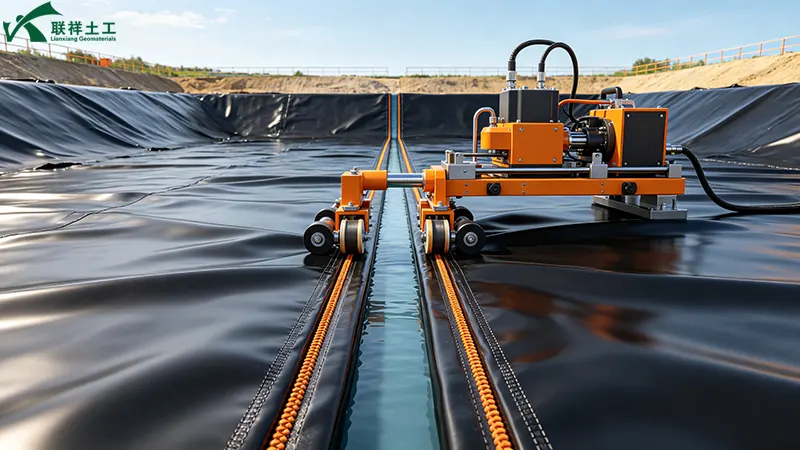
Approximately 80% of geomembrane leaks originate at seams. In a tailings pond liner, seam quality is not just a construction detail—it is the primary defense against corrosion-driven failure.
Welding methods for tailings pond geomembrane:
| Method | Application | Key Parameters |
| Dual-track hot-wedge welding | Straight panel seams | Temperature: 400–500°C; Speed: 1.5–3.0 m/min |
| Extrusion welding | Corners, pipe penetrations, repairs | Molten HDPE rod; 100% bond |
Best practices for corrosion-resistant seams:
- Clean and dry the seam area: Remove all moisture, dust, dirt, and debris before welding. Contamination is a leading cause of seam failure in mining applications.
- Control overlap width: Maintain 75–100 mm overlap for smooth HDPE; 100–150 mm for textured surfaces.
- Weld parallel to slope: Seams should run parallel to the line of maximum slope, never across it.
- Avoid welding in adverse conditions: Do not weld when ambient temperature is below 0°C, surface temperature exceeds 70°C, or during precipitation.
- Test 100% of seams: Perform air pressure testing on all dual-track fusion seams and vacuum box testing on all extrusion welds.
Performance standard: Peel strength should achieve ≥31 N/cm or 50% of parent sheet strength. Shear strength should meet or exceed parent material performance.
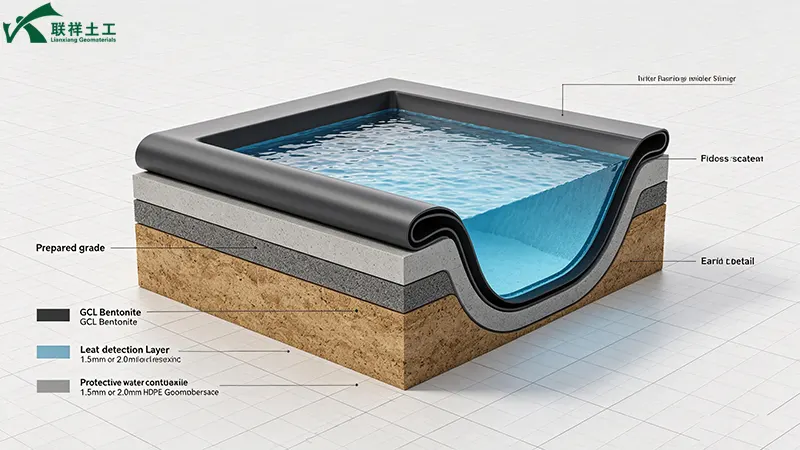
5. Install Leak Detection – Protecting Groundwater Before It's Too Late
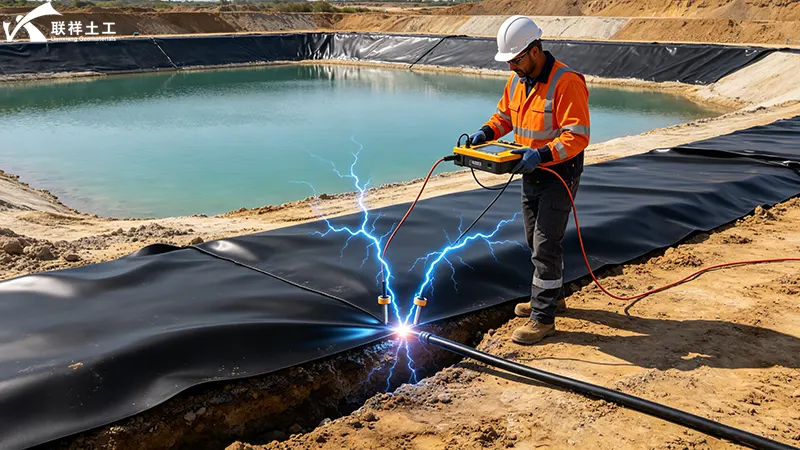
You cannot manage what you cannot measure. A leak detection system is not an optional add-on for tailings pond geomembrane installations—it is an essential component of environmental protection.
Why leak detection matters for tailings:
- Tailings leachate often contains heavy metals and acidic compounds that can contaminate groundwater within months of a breach
- Regulatory frameworks in most mining jurisdictions require documented leak detection and monitoring
- Early detection allows for targeted repair before contamination spreads
Leak detection technologies for tailings facilities:
| Method | Description | Best Application |
| Electrical leak location (ELL) | Measures potential distribution to pinpoint leaks | Double-liner systems, exposed liners |
| Secondary collection system | Sump and pump monitoring in leak detection zone | Double-liner facilities |
| Groundwater monitoring wells | Downstream water quality sampling | All tailings facilities |
Performance data: Projects with rigorous Construction Quality Assurance (CQA) and electrical leak location surveys consistently achieve 4 or fewer leaks per hectare. Without rigorous QA/QC, that figure rises to 22 leaks per hectare—a fivefold increase in environmental risk.
6. Design for UV & Weather Resistance – 2–3% Carbon Black Is Non-Negotiable
Many tailings ponds have exposed or partially exposed liner sections—particularly on beaches, slopes, and areas above the slurry line. UV exposure is a real and measurable threat to HDPE geomembrane performance.
The role of carbon black: Carbon black is added to HDPE geomembranes specifically to absorb UV radiation and prevent polymer chain degradation. The GRI-GM13 standard requires 2.0–3.0% carbon black content by weight.
UV performance data:
- Standard requirement: ≥50% OIT (Oxidative Induction Time) retention after 1,600 hours of UV exposure
- Real-world performance: Premium HDPE geomembranes with proper carbon black dispersion maintain functional properties for 20–50 years in exposed conditions
- Warning sign: Studies show that after extended UV exposure (8,760 hours), OIT values can decrease by as much as 89% compared to virgin material
What to specify: Request carbon black content test results (ASTM D1603 or D4218) and dispersion test results (ASTM D5596). Content percentage alone is insufficient—uniform dispersion is equally critical.
7. Implement Rigorous QA/QC – The 4-Leak vs. 22-Leak Difference
The final—and arguably most important—corrosion protection tip is also the most overlooked: rigorous quality assurance and quality control.
The CQC/CQA framework:
| Component | Responsible Party | Scope |
| Construction Quality Control (CQC) | Installer | Welding parameters, recording logs, initial testing |
| Construction Quality Assurance (CQA) | Third-party inspector | Compliance verification, independent testing, documentation |
Required testing for tailings pond geomembrane:
- Non-destructive testing: Air pressure test on 100% of dual-track fusion seams (30 psi, 5-minute hold, ≤20% decay)
- Non-destructive testing: Vacuum box test on 100% of extrusion welds
- Destructive testing: Peel and shear strength samples every 150 meters of seam length
- Electrical leak location: Post-installation survey to identify and repair any remaining defects
The bottom line: A tailings pond geomembrane that passes rigorous QA/QC is a verified barrier. One that does not is an unverified assumption—and assumptions are unacceptable when groundwater contamination is the risk.
Quick Reference: 7 Corrosion Protection Tips at a Glance
| # | Tip | Key Requirement |
| 1 | Use 100% virgin HDPE resin | ≥0.940 g/cc density; third-party COA |
| 2 | Select correct thickness | 1.5 mm minimum; 2.0 mm for high-stress or acidic tailings |
| 3 | Evaluate chemical resistance | pH 2–13; heavy metals; process reagents |
| 4 | Master seaming and welding | Dual-track fusion; 400–500°C; 100% seam testing |
| 5 | Install leak detection | Electrical leak location; secondary collection system |
| 6 | Design for UV resistance | 2–3% carbon black; ≥50% OIT retention after 1,600 hrs |
| 7 | Implement rigorous QA/QC | CQC + third-party CQA; 4 leaks/ha vs. 22 leaks/ha |
Final Thoughts: Protecting Both the Environment and Your Investment
A tailings pond geomembrane is more than a construction material—it is the primary environmental barrier between mining operations and the surrounding ecosystem. Selecting the right HDPE geomembrane, installing it correctly, and verifying its integrity through rigorous QA/QC are not optional expenses. They are essential investments in regulatory compliance, community trust, and long-term operational viability.
Remember these core principles:
- Material quality is non-negotiable: Virgin HDPE resin, certified to GRI-GM13 or GRI-GM42 standards
- Thickness must match risk: 1.5 mm minimum; 2.0 mm for aggressive chemical or high-stress applications
- Seams are the weakest link: 80% of leaks occur at joints—master welding and test everything
- Leak detection saves groundwater: Early warning prevents catastrophic contamination
- QA/QC delivers measurable results: 4 leaks per hectare vs. 22—the difference is rigorous oversight
The mining industry cannot afford to treat tailings containment as a commodity purchase. The right tailings pond geomembrane, properly installed and verified, can protect groundwater for generations. The wrong one can create liabilities that outlast the mine itself.
Lianxiang Group supplies certified HDPE geomembranes meeting GRI-GM13 and GRI-GM42 standards, in thicknesses from 1.0mm to 3.0mm, with smooth and textured options for tailings pond and mining containment applications. Our technical team can help you select the right specification for your specific tailings chemistry, site conditions, and regulatory requirements. Contact us for free samples, technical data sheets, or a customized quote.
Written by
SHANDONG LIANXIANG ENGINEERING MATERIALS CO., LTD.
Kyle Fan
WhatsApp:+86 139 5480 7766
Email:admin@lianxiangcn.com
-
WhatsApp
-
E-MailE-Mail:admin@lianxiangcn.com
-
WeChatWeChat:18554180188