
- Home
- Company
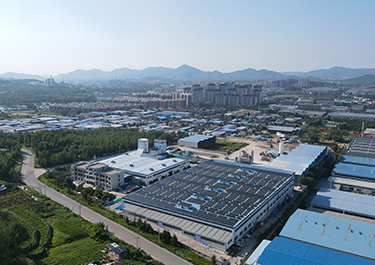 Our FactoryWe have a team of more than 30 talented geotechnical material R&D experts and a 30,000 square meter advanced modern intelligent manufacturing plant.
 - Products
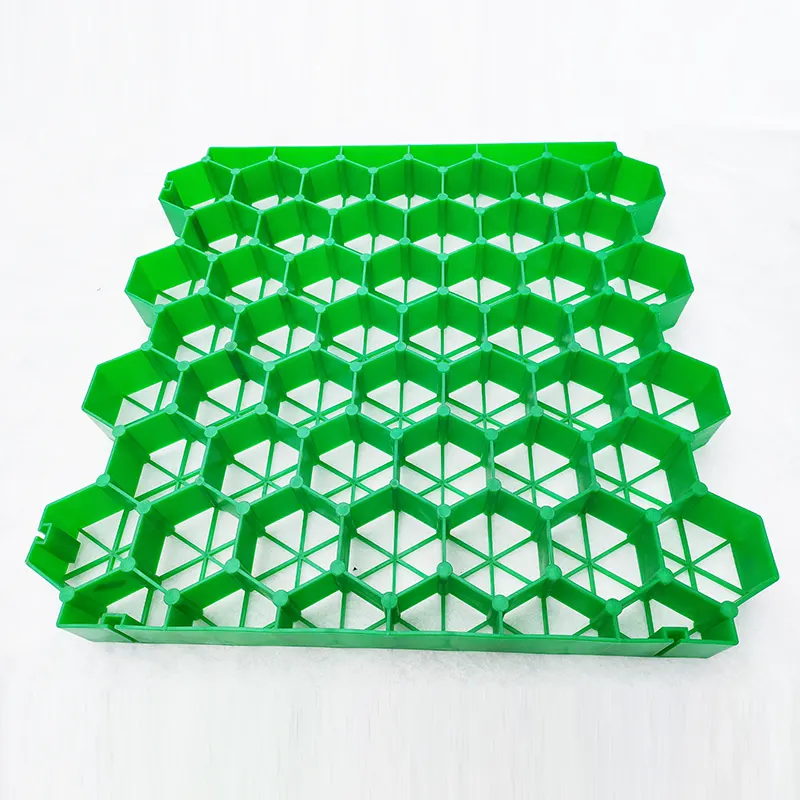
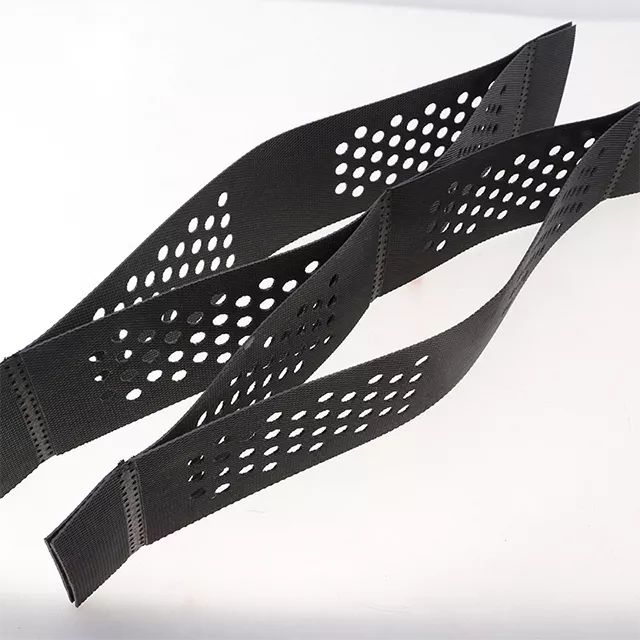 Geocell is a three-dimensional mesh structure made of high-strength polymer sheets (such as HDPE, PP, etc.) through ultrasonic welding. When unfolded, it presents a three-dimensional grid shape.
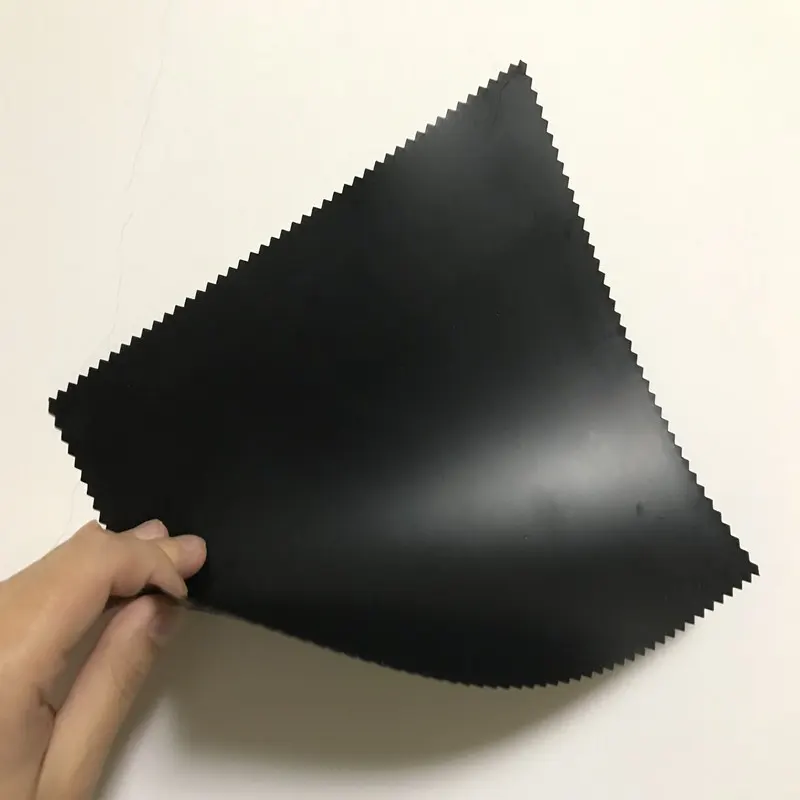 Geomembrane is a thin, extremely low-permeability sheet material made from high-molecular-weight polymers (high-density polyethylene, linear low-density polyethylene).
 - Blog
- Contacts
Composite vs Ordinary Geomembrane: Top 7 Water Project Tips


Water conservancy projects—reservoirs, canals, dams, and irrigation systems—demand containment materials that can withstand constant hydraulic pressure, UV exposure, and decades of service. The choice between a composite geomembrane and an ordinary geomembrane is one of the most consequential decisions an engineer or procurement specialist will make.
Get it right, and you have a barrier that performs for 50+ years with minimal maintenance. Get it wrong, and you face seepage losses, structural instability, and costly rehabilitation—sometimes within the first decade of operation.
But here's the challenge: the terms "composite geomembrane" and "ordinary geomembrane" are often used loosely, without clear definitions. Some suppliers use them interchangeably. Others apply them to products with fundamentally different structures and performance characteristics.
This guide cuts through the confusion. Here are the top 7 tips for selecting between a composite geomembrane and an ordinary geomembrane for water conservancy projects—backed by performance data and real-world application guidance.
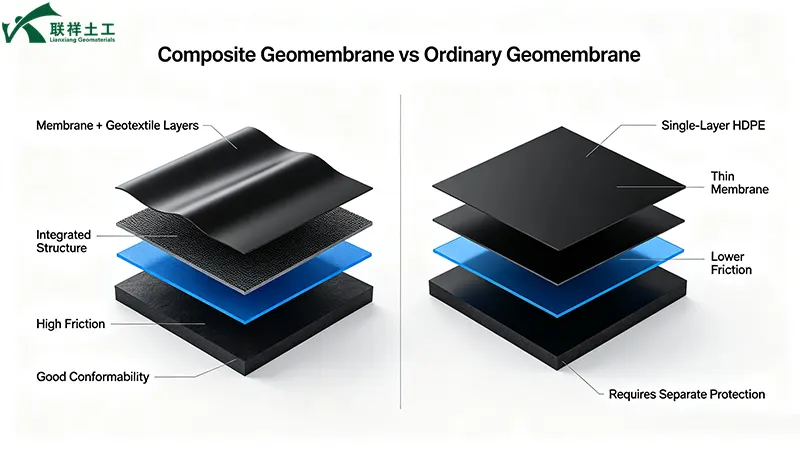
Tip 1: Understand the Structural Difference – Composite vs Ordinary
The first step in making the right choice is understanding what actually distinguishes a composite geomembrane from an ordinary geomembrane.
Ordinary geomembrane refers to a single-layer synthetic sheet—typically HDPE, LLDPE, or PVC—manufactured as a standalone impermeable barrier. It is a homogeneous membrane with no reinforcing or protective layers bonded to it.
Composite geomembrane refers to a multi-layer product that combines a geomembrane core with one or more layers of geotextile fabric. The geotextile is typically needle-punched or heat-bonded to one or both sides of the membrane, creating an integrated composite structure.
| Feature | Ordinary Geomembrane | Composite Geomembrane |
| Structure | Single-layer synthetic sheet | Geomembrane + geotextile layer(s) |
| Primary function | Impermeable barrier | Impermeable barrier + filtration + protection + drainage |
| Typical thickness | 0.2mm – 3.0mm | 1.0mm – 3.0mm (total composite) |
| Installation layers | Requires separate geotextile layers | Integrated—single installation step |
| Friction characteristics | Low (smooth surface) | High (geotextile surface provides grip) |
Key takeaway: An ordinary geomembrane is a pure barrier. A composite geomembrane is a barrier plus a functional geotextile layer that provides additional filtration, protection, and friction benefits.
Tip 2: Compare Impermeability & Leak Resistance
Both composite geomembrane and ordinary geomembrane products deliver excellent impermeability—but their leak resistance profiles differ in important ways.
Ordinary geomembrane impermeability: A high-quality HDPE ordinary geomembrane achieves a permeability coefficient of <10-13 cm/s—effectively impermeable. It is widely used in water conservancy projects where a simple, cost-effective barrier is required.
Composite geomembrane impermeability: The composite geomembrane delivers the same core impermeability, but with an added advantage: the bonded geotextile layer protects the membrane during installation and service. This reduces the risk of puncture-induced leaks—the leading cause of containment failure in water projects.
| Parameter | Ordinary Geomembrane | Composite Geomembrane |
| Permeability coefficient | <10-13 cm/s | <10-13 cm/s |
| Puncture protection | Requires separate geotextile | Integrated geotextile protection |
| Leak risk during installation | Higher | Lower |
| Long-term seepage control | Excellent | Excellent + added protection |
For water conservancy projects where seepage control is critical—such as reservoirs and canals—a composite geomembrane often provides a more robust, verifiable barrier system.
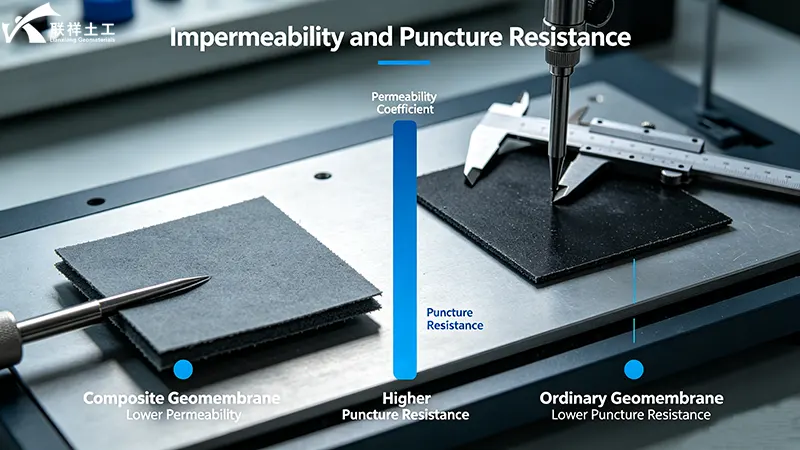
Tip 3: Evaluate Tensile Strength & Puncture Resistance
Water conservancy projects expose liners to a range of mechanical stresses: hydrostatic pressure, soil settlement, wave action, and installation traffic. The mechanical performance of a composite geomembrane versus an ordinary geomembrane is therefore a critical selection factor.
Tensile strength comparison:
| Product Type | Tensile Strength | Elongation at Break |
| Ordinary HDPE geomembrane (1.5mm) | ≥22 N/mm yield | ≥700% |
| Composite geomembrane (1.5mm + geotextile) | ≥22 N/mm yield (membrane) | ≥700% (membrane) |
Puncture resistance comparison:
| Product Type | Puncture Resistance | Effective Protection |
| Ordinary geomembrane (1.5mm) | ≥480 N | Requires separate cushion layer |
| Composite geomembrane (1.5mm + 200g/m² geotextile) | ≥480 N + geotextile cushioning | Integrated protection—higher effective resistance |
Why this matters for water projects: Canals and reservoirs often have subgrades containing gravel, roots, or uneven surfaces. The integrated geotextile layer in a composite geomembrane acts as a cushion, distributing point loads and reducing the risk of puncture—a common failure mode for an ordinary geomembrane installed without adequate protection.
Tip 4: Assess Chemical & UV Durability for Water Environments
Water conservancy projects expose liners to varying water chemistry—from neutral freshwater to alkaline or slightly acidic conditions—as well as continuous UV exposure on exposed slopes and freeboard areas.
Chemical resistance:
- Ordinary geomembrane (HDPE): Resistant to pH 2–13, salts, and most natural water constituents. Not recommended for direct contact with hydrocarbons or concentrated oxidizing agents.
- Composite geomembrane: Same chemical resistance as the base membrane, with the geotextile layer providing additional filtration of fine sediments that could otherwise accumulate and cause localized degradation.
UV resistance:
- Ordinary geomembrane: Requires 2–3% carbon black content for adequate UV protection. Exposed sections degrade if carbon black content or dispersion is insufficient.
- Composite geomembrane: The geotextile layer provides an additional UV barrier—particularly valuable for exposed slopes, canal banks, and reservoir freeboard where the liner remains uncovered.
Performance data: High-quality HDPE geomembranes with proper carbon black content maintain functional properties for 20–50 years in exposed conditions. The integrated geotextile in a composite geomembrane can extend this by reducing direct UV exposure to the membrane surface.
Tip 5: Consider Installation Efficiency & Seaming Quality
Installation quality is the single largest determinant of long-term performance—and it's an area where the composite geomembrane and ordinary geomembrane differ significantly.
Ordinary geomembrane installation:
- Requires separate placement of geotextile cushion layers (if specified)
- More installation steps = more opportunities for damage
- Seaming is performed on the membrane alone
- Requires careful handling to avoid puncture during deployment
Composite geomembrane installation:
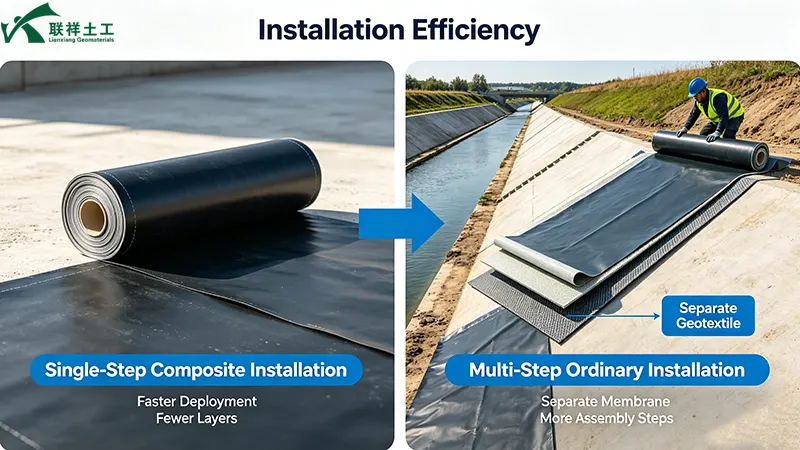
- Single-step deployment—membrane and geotextile installed together
- Fewer installation steps = lower risk of damage
- Seaming still performed on the membrane layer
- Integrated geotextile provides built-in protection during handling
| Installation Factor | Ordinary Geomembrane | Composite Geomembrane |
| Number of installation steps | Multiple (membrane + separate geotextile) | Single (integrated product) |
| Risk of installation damage | Higher | Lower |
| Seaming complexity | Standard | Standard |
| Labor requirements | Higher | Lower |
For large water conservancy projects, the single-step installation of a composite geomembrane can reduce labor costs and installation time while improving quality control.
Tip 6: Analyze Cost-Performance Ratio for Water Projects
Cost is always a factor—but the true cost comparison between a composite geomembrane and an ordinary geomembrane goes beyond the unit price per square meter.
Ordinary geomembrane cost profile:
- Lower material cost per m²
- Higher installation cost (separate geotextile placement)
- Higher risk of puncture damage = higher repair cost
- May require additional protective layers in aggressive conditions
Composite geomembrane cost profile:
- Higher material cost per m²
- Lower installation cost (single-step deployment)
- Lower risk of damage = lower repair cost
- Integrated protection reduces need for additional layers
| Cost Factor | Ordinary Geomembrane | Composite Geomembrane |
| Material cost | Lower | Higher |
| Installation labor | Higher | Lower |
| Ancillary materials | Requires separate geotextile | Integrated |
| Long-term repair risk | Higher | Lower |
| Total lifecycle cost | Often higher | Often lower |
The bottom line: While an ordinary geomembrane may have a lower upfront price, the total installed and lifecycle cost of a composite geomembrane is often competitive—or lower—when all factors are considered.
Tip 7: Match Material to Project Type – Reservoirs, Canals, Dams
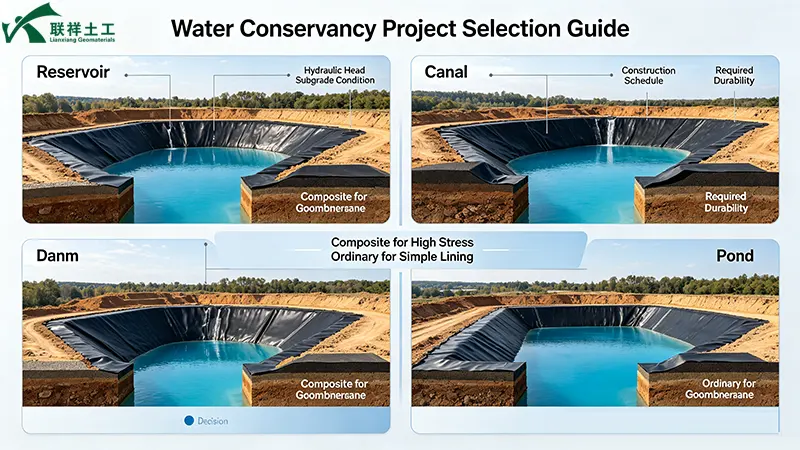
Different water conservancy projects have different requirements. Here's how to match the right product to the right application:
| Project Type | Recommended Product | Key Rationale |
| Large reservoirs | Composite geomembrane | Integrated protection; high friction on slopes; long service life |
| Irrigation canals | Composite geomembrane | UV protection on exposed banks; puncture resistance |
| Dams and dykes | Composite geomembrane | High friction; protection against settlement; seepage control |
| Small ponds / temporary works | Ordinary geomembrane | Cost-effective; adequate for low-risk applications |
| Landfill caps / covers | Ordinary geomembrane | Standard specification; separate geotextile often used |
| Fish ponds / aquaculture | Ordinary geomembrane | Cost-sensitive; smooth surface for easy cleaning |
General guideline:
- Choose composite geomembrane for large-scale, high-risk, or long-service-life water conservancy projects—especially where slopes are steep, subgrades are rough, or UV exposure is significant.
- Choose ordinary geomembrane for smaller, lower-risk projects where cost is the primary driver and site conditions are well-controlled.
Quick Reference: Composite vs Ordinary Geomembrane at a Glance
| # | Factor | Ordinary Geomembrane | Composite Geomembrane |
| 1 | Structure | Single-layer sheet | Membrane + geotextile |
| 2 | Impermeability | <10-13 cm/s | <10-13 cm/s + integrated protection |
| 3 | Tensile / Puncture | Requires separate cushion | Integrated cushioning |
| 4 | Chemical / UV | Good (with carbon black) | Better (geotextile UV barrier) |
| 5 | Installation | Multiple steps | Single step |
| 6 | Cost-Performance | Lower upfront, higher lifecycle | Higher upfront, lower lifecycle |
| 7 | Best Application | Small ponds, temporary works | Reservoirs, canals, dams |
Final Thoughts
Choosing between a composite geomembrane and an ordinary geomembrane for water conservancy projects is not about which product is "better" in absolute terms—it's about which product is right for your specific project conditions.
Remember these core principles:
- Ordinary geomembrane = pure barrier. Best for cost-sensitive, low-risk, or small-scale applications.
- Composite geomembrane = barrier + integrated protection. Best for large-scale, high-risk, or long-service-life water projects.
- Installation quality matters as much as material quality. A well-installed ordinary geomembrane will outperform a poorly installed composite geomembrane every time.
- Lifecycle cost, not unit price, is the true measure of value. Consider installation labor, ancillary materials, repair risk, and service life.
For water conservancy projects where seepage control is non-negotiable and service life is measured in decades, a composite geomembrane often delivers the most reliable, cost-effective solution over the long term. For smaller or temporary projects, an ordinary geomembrane may provide all the performance required at a lower upfront cost.
Lianxiang Group supplies both composite geomembranes and ordinary HDPE/LLDPE geomembranes, along with geotextiles, geocells, and geogrids for water conservancy and civil engineering projects worldwide. Our technical team can help you select the right product for your specific reservoir, canal, or dam application. Contact us for free samples, technical data sheets, or a customized quote.
Written by
SHANDONG LIANXIANG ENGINEERING MATERIALS CO., LTD.
Kyle Fan
WhatsApp:+86 139 5480 7766
Email:admin@lianxiangcn.com
-
WhatsApp
-
E-MailE-Mail:admin@lianxiangcn.com
-
WeChatWeChat:18554180188