
- Home
- Company
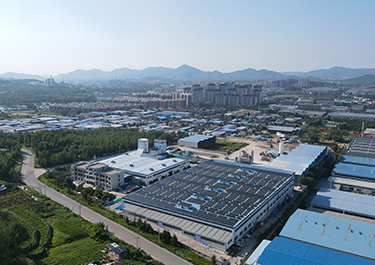 Our FactoryWe have a team of more than 30 talented geotechnical material R&D experts and a 30,000 square meter advanced modern intelligent manufacturing plant.
 - Products
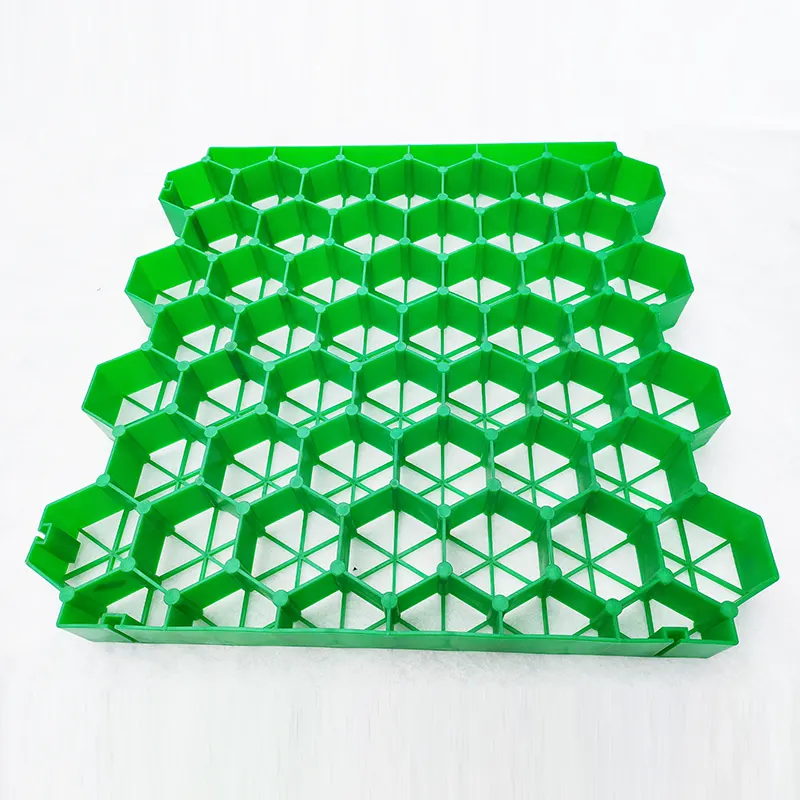
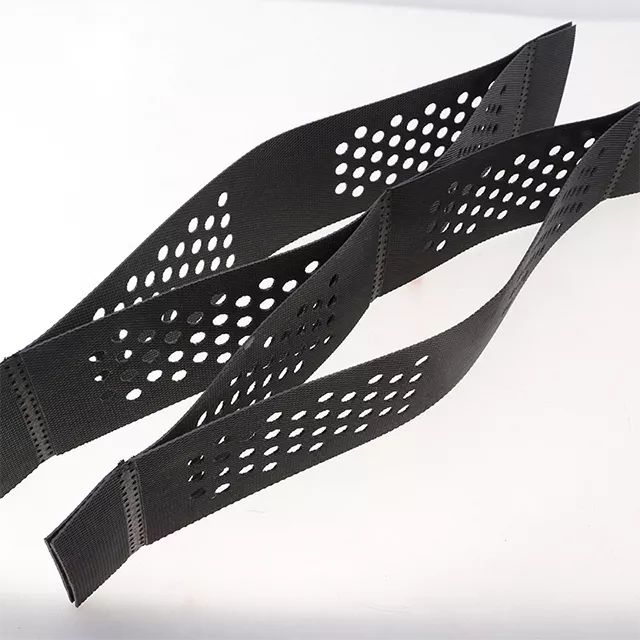 Geocell is a three-dimensional mesh structure made of high-strength polymer sheets (such as HDPE, PP, etc.) through ultrasonic welding. When unfolded, it presents a three-dimensional grid shape.
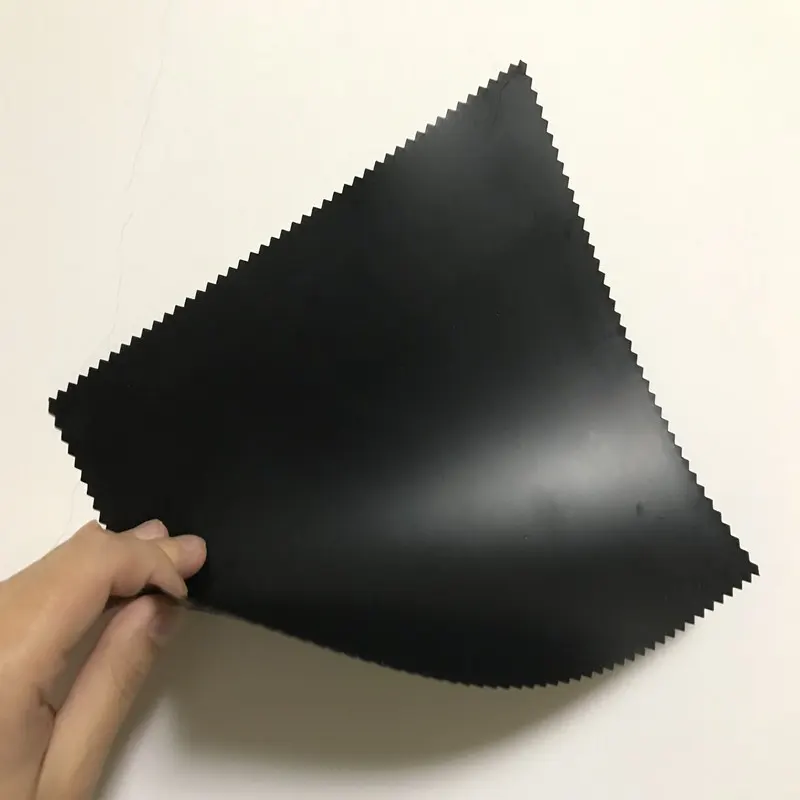 Geomembrane is a thin, extremely low-permeability sheet material made from high-molecular-weight polymers (high-density polyethylene, linear low-density polyethylene).
 - Blog
- Contacts
Top 7 Geotextile Filtration & Drainage Construction Tips


Water is the silent enemy of every civil engineering structure. It weakens subgrades, causes frost heave, destabilizes slopes, and corrodes buried structures. Yet water cannot simply be blocked—it must be managed. This is where geotextile filtration and drainage systems play their critical role.
A geotextile designed for filtration and drainage performs two seemingly contradictory functions simultaneously: it allows water to pass through freely while preventing soil particles from migrating. Get the balance right, and you have a drainage system that performs reliably for decades. Get it wrong, and you face clogging, piping, erosion, and eventual structural failure.
According to industry research, approximately 40% of drainage system failures are attributable to improper geotextile selection or installation—not to the drainage aggregate itself. The difference between success and failure often comes down to understanding a few key principles.
This guide provides the top 7 construction tips for geotextile filtration and drainage applications—backed by ASTM standards, design criteria, and real-world construction scenarios.
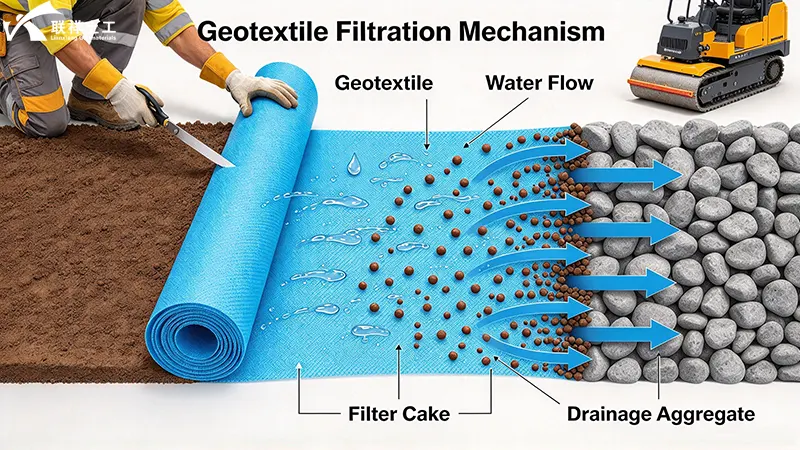
Tip 1: Understand the Filtration Mechanism – Soil Retention vs. Permeability
The fundamental function of a geotextile in filtration and drainage applications is to create a stable interface between soil and a drainage medium. This requires balancing two competing requirements:
- Soil retention: The geotextile must prevent fine soil particles from migrating into the drainage system (which would cause clogging)
- Permeability: The geotextile must allow water to flow through at a rate sufficient to prevent excessive hydrostatic pressure buildup
The filtration mechanism: When water flows from soil through a geotextile, a filter cake forms on the soil-geotextile interface. This filter cake—composed of the larger soil particles that cannot pass through—becomes the primary filtration layer. The geotextile itself acts as a support structure that allows this filter cake to form while maintaining adequate flow.
| Filtration Function | Requirement | Key Parameter |
|---|---|---|
| Soil retention | Prevent particle migration | AOS (Apparent Opening Size) |
| Permeability | Allow adequate water flow | Permittivity (ψ) |
| Clogging resistance | Maintain long-term flow | Porosity, thickness, fiber structure |
| Strength retention | Survive installation stresses | Tensile strength, puncture resistance |
Why this matters for construction: A geotextile that is too open allows soil particles to wash through, causing settlement and clogging of the drainage aggregate. A geotextile that is too tight prevents water from flowing, causing hydrostatic pressure buildup and potential structural instability. The design must satisfy both criteria simultaneously.
Tip 2: Select the Right Geotextile Type – Woven vs. Nonwoven
The choice between a woven geotextile and a nonwoven geotextile is the single most important material selection decision for filtration and drainage applications.
Woven geotextile is manufactured by weaving yarns together on a loom, creating a regular grid structure with high tensile strength but limited permeability. Woven geotextiles are generally not recommended for filtration and drainage applications because their uniform pore structure can allow soil particles to pass through or become clogged at the surface.
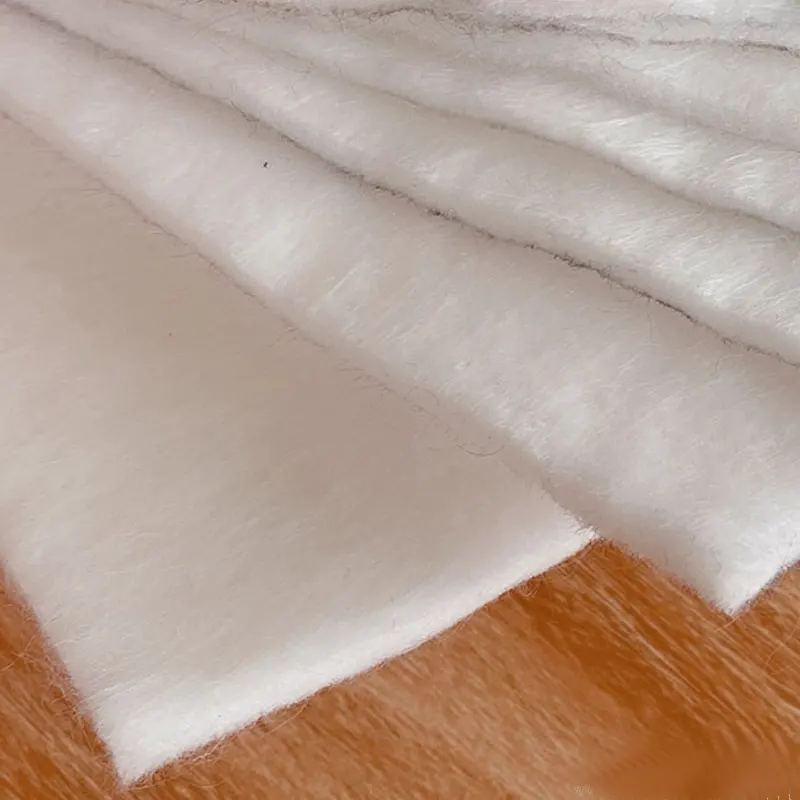
Nonwoven geotextile is manufactured by bonding synthetic fibers together through mechanical needling, thermal bonding, or chemical adhesion. The random fiber structure creates a three-dimensional pore network with high permeability and excellent soil retention. Nonwoven geotextiles are the preferred choice for filtration and drainage in most civil engineering applications.
| Property | Woven Geotextile | Nonwoven Geotextile |
|---|---|---|
| Structure | Regular grid | Random fiber network |
| Permeability | Moderate–low | High |
| Soil retention | Limited | Excellent |
| Clogging resistance | Moderate | Excellent |
| Filtration suitability | Limited | Excellent |
| Drainage suitability | Poor | Excellent |
Construction tip: For filtration and drainage applications—retaining wall drains, French drains, underdrains, and subsurface drainage systems—specify a nonwoven geotextile with a weight of 200–500 g/m2 depending on soil conditions and flow requirements. For separation and reinforcement applications, a woven geotextile may be more appropriate.
Tip 3: Determine the Correct AOS (Apparent Opening Size)
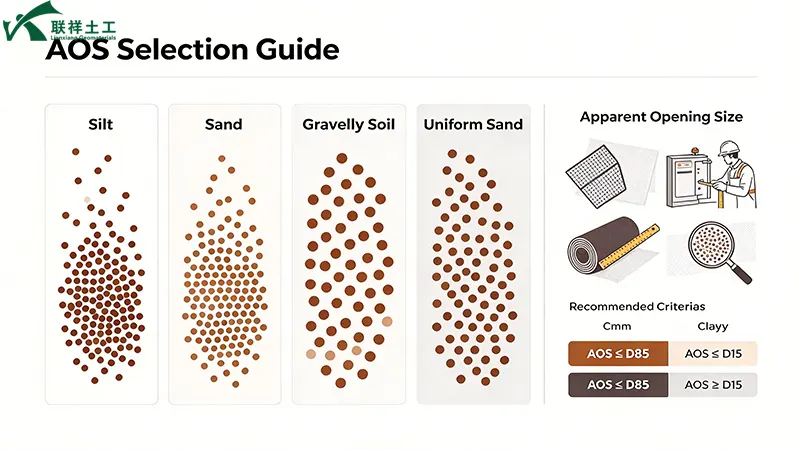
The Apparent Opening Size (AOS) —also known as the O95 size—is the most critical design parameter for geotextile filtration. It represents the diameter of the largest particle that can pass through the geotextile.
AOS is measured according to ASTM D4751 and is typically expressed in millimeters or sieve sizes. The AOS must be small enough to retain the critical soil particles but large enough to allow adequate water flow.
Design criteria for AOS selection:
| Soil Type | Recommended AOS | Rationale |
|---|---|---|
| Fine-grained soils (silt, clay) | 0.15–0.30 mm | Retain fine particles; prevent piping |
| Coarse-grained soils (sand) | 0.30–0.60 mm | Balance retention and permeability |
| Gravelly soils | 0.60–1.0 mm | Allow higher flow; retain larger particles |
| Uniform sands | 0.20–0.40 mm | Prevent migration of uniform particles |
Common design criteria:
- AOS ≤ D85 of the soil — ensures retention of the coarser fraction
- AOS ≥ D15 of the soil — ensures adequate permeability
- For critical applications: AOS between D15 and D85 of the soil gradation
Construction tip: Always request AOS test results from your geotextile supplier. A reputable manufacturer will provide ASTM D4751 test data for the specific product being supplied—not generic "typical values."
Tip 4: Design for Drainage Capacity – Permittivity and Flow Rate
While AOS governs soil retention, permittivity (ψ) governs the geotextile's ability to transmit water. Permittivity is defined as the volumetric flow rate per unit area per unit head of water—essentially, how easily water flows through the fabric.
Permittivity is measured according to ASTM D4491 and is expressed in units of 1/second (s-1). Typical values for nonwoven geotextiles range from 0.5 to 2.0 s-1, depending on weight and thickness.
| Geotextile Weight (g/m2) | Typical Permittivity (s-1) | Typical Flow Rate (l/m2/s) |
|---|---|---|
| 200 | 1.2–1.8 | 60–90 |
| 300 | 0.9–1.4 | 45–70 |
| 400 | 0.7–1.1 | 35–55 |
| 500 | 0.5–0.9 | 25–45 |
Design requirement: The geotextile's permittivity must be significantly higher than the permeability of the surrounding soil to ensure that water can flow freely into the drainage system. A common design rule is:
ψgeotextile ≥ 10 × ksoil
Where ψ is the geotextile permittivity and k is the soil permeability. This factor of safety accounts for potential clogging and long-term performance degradation.
Construction tip: For critical drainage applications—such as landfill leachate collection or deep retaining wall drains—specify a geotextile with permittivity at least 10 times the soil permeability. This ensures adequate flow capacity even if partial clogging occurs.
Tip 5: Prevent Clogging – Long-Term Performance Criteria
Clogging is the gradual reduction of a geotextile's permeability due to the accumulation of soil particles, chemical precipitates, or biological growth. It is the leading cause of long-term filtration and drainage system failure.
Types of clogging:
| Clogging Type | Cause | Prevention |
|---|---|---|
| Mechanical clogging | Soil particle migration into geotextile pores | Correct AOS selection; adequate permeability |
| Chemical clogging | Precipitation of minerals (calcium, iron) | Chemical compatibility assessment |
| Biological clogging | Bacterial growth, biofilm formation | Proper drainage design; avoid stagnant water |
Design criteria for clogging resistance:
- Porosity: Nonwoven geotextiles typically have porosity of 80–90% , providing ample void space for water flow even if partial clogging occurs
- Thickness: Thicker geotextiles (≥2mm) provide more flow paths and are more resistant to clogging
- Fiber structure: Random fiber orientation (nonwoven) provides more tortuous flow paths and better clogging resistance than uniform woven structures
- Gradient ratio test: ASTM D5101 can be used to evaluate long-term clogging potential
Construction tip: For projects where long-term clogging is a concern—such as landfill drains, mine drainage, or high-sediment environments—specify a nonwoven geotextile with a minimum thickness of 2mm and porosity of at least 80% . Consider conducting a gradient ratio test to verify performance.
Tip 6: Apply in Road & Railway Drainage Systems
Road and railway drainage systems are among the most common applications for geotextile filtration and drainage. These systems must handle large volumes of water while maintaining structural integrity under repeated dynamic loads.
Typical road drainage applications:
| Application | Function | Recommended Geotextile |
|---|---|---|
| Edge drains | Collect and convey subsurface water | Nonwoven, 200–300 g/m2 |
| Underdrains | Lower water table beneath pavement | Nonwoven, 300–400 g/m2 |
| French drains | Intercept and redirect groundwater | Nonwoven, 200–400 g/m2 |
| Bridge abutment drains | Prevent water buildup behind abutments | Nonwoven, 300–500 g/m2 |
| Railway ballast drains | Prevent ballast contamination | Nonwoven, 300–500 g/m2 |
Design considerations for road drainage:
- Dynamic loading: The geotextile must maintain permeability under repeated traffic loads. Specify a product with adequate puncture resistance (≥2.0 kN CBR)
- Sediment load: Road runoff carries fine sediments that can clog drainage systems. The geotextile must retain these particles while allowing water to flow
- Installation conditions: Road drainage systems are often installed in confined trenches with limited access. Specify a geotextile that is flexible and easy to handle
Construction tip: For highway edge drains and underdrains, wrap the drainage aggregate completely in a nonwoven geotextile with a minimum overlap of 300mm at all joints. This prevents soil migration into the drainage core while allowing water to enter from all directions.
Tip 7: Apply in Retaining Walls, French Drains & Slope Stabilization
Beyond road drainage, geotextile filtration and drainage systems are essential in retaining walls, French drains, and slope stabilization projects.
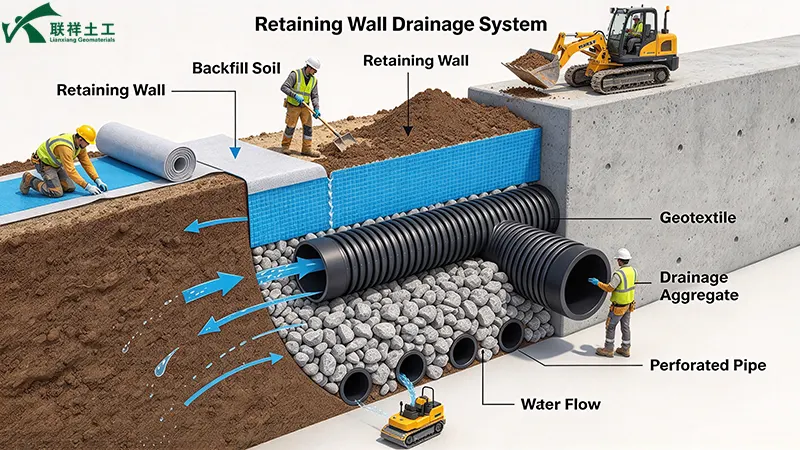
Retaining wall drainage: Water buildup behind retaining walls is a leading cause of wall failure. A geotextile filter layer between the backfill soil and the drainage aggregate prevents soil migration while allowing water to flow to the drainage outlet.
- Recommended: Nonwoven geotextile, 300–500 g/m2
- Installation: Place geotextile against the wall face, then place drainage aggregate, then wrap the geotextile over the aggregate to create a complete filter envelope
- Key requirement: The geotextile must overlap at least 300mm at all seams and be securely anchored to prevent displacement during backfilling
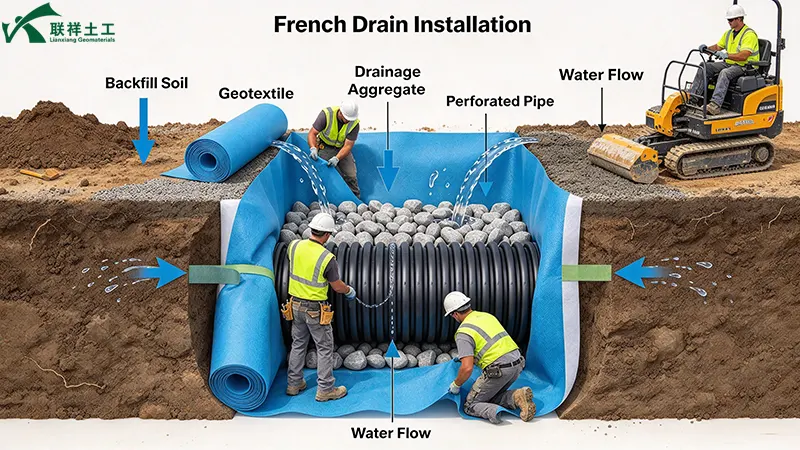
French drains: A French drain is a trench filled with gravel or crushed stone containing a perforated pipe that redirects surface and groundwater away from an area.
- Recommended: Nonwoven geotextile, 200–400 g/m2
- Installation: Line the trench with geotextile, place the perforated pipe, fill with drainage aggregate, then wrap the geotextile over the top to create a complete envelope
- Key requirement: The geotextile must completely surround the drainage aggregate to prevent soil infiltration from all sides
Slope stabilization: In slope stabilization applications, geotextiles are used to filter water from saturated slopes while preventing soil erosion.
- Recommended: Nonwoven geotextile, 200–400 g/m2
- Installation: Place geotextile on the prepared slope surface, cover with drainage aggregate or erosion control material, and secure with anchors
- Key requirement: The geotextile must conform to the slope surface without bridging or creating voids
| Application | Recommended Weight | Key Design Consideration |
|---|---|---|
| Retaining wall drainage | 300–500 g/m2 | Complete envelope; 300mm overlap |
| French drains | 200–400 g/m2 | Full encapsulation; proper slope |
| Slope stabilization | 200–400 g/m2 | Conform to surface; secure anchoring |
| Landfill drainage | 400–600 g/m2 | Chemical compatibility; high puncture resistance |
Quick Reference: Top 7 Geotextile Filtration & Drainage Tips
| # | Tip | Key Parameter | Design Criteria |
|---|---|---|---|
| 1 | Understand filtration mechanism | Soil retention + permeability | Balance both requirements |
| 2 | Select correct geotextile type | Nonwoven vs woven | Nonwoven for filtration/drainage |
| 3 | Determine correct AOS | ASTM D4751 | AOS between D15 and D85 |
| 4 | Design for drainage capacity | Permittivity (ASTM D4491) | ψ ≥ 10 × ksoil |
| 5 | Prevent clogging | Porosity ≥ 80% | Thickness ≥ 2mm; gradient ratio test |
| 6 | Road & railway drainage | 300–500 g/m2 | Complete encapsulation; 300mm overlap |
| 7 | Retaining walls & slopes | 300–500 g/m2 | Full envelope; secure anchoring |
Conclusion
Geotextile filtration and drainage systems are only as good as their design and installation. The difference between a drainage system that performs for 50 years and one that fails within a decade comes down to getting the details right:
- Correct material selection: Nonwoven geotextiles for filtration and drainage—not woven
- Proper AOS design: Balance soil retention and permeability based on soil gradation
- Adequate permittivity: Ensure flow capacity with a safety factor of at least 10
- Clogging resistance: Specify high-porosity, adequate-thickness geotextiles
- Proper installation: Complete encapsulation, adequate overlaps, and secure anchoring
Whether you are designing a highway edge drain, a retaining wall drainage system, or a slope stabilization project, the right geotextile selection and installation can mean the difference between a project that performs for decades and one that requires premature repair.
Lianxiang Group supplies high-quality nonwoven and woven geotextiles for filtration, drainage, separation, and reinforcement applications worldwide. Our technical team can help you select the right geotextile based on your soil conditions, flow requirements, and project specifications. Contact us for free samples, technical data sheets, or a customized solution.
Written by
SHANDONG LIANXIANG ENGINEERING MATERIALS CO., LTD.
Kyle Fan
WhatsApp:+86 139 5480 7766
Email:admin@lianxiangcn.com
-
WhatsApp
-
E-MailE-Mail:admin@lianxiangcn.com
-
WeChatWeChat:18554180188